avg —
Beetroot Pancakes 'Red Velvet' with Curd Filling

Instructions
To get a vivid beetroot juice I use raw beetroot – unlike boiled beetroot it gives a clean red colour without the characteristic 'earthy' aftertaste. I choose a dark burgundy root weighing about 200–250 g with no white streaks inside – such beetroot gives the richest colour. I wash the beetroot thoroughly with a brush under running water and peel it.
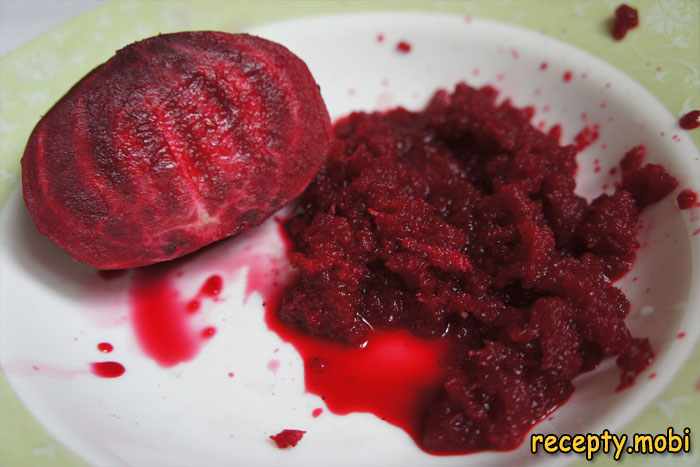
I grate the peeled beetroot on a fine grater into a deep bowl – the finer the grater, the more juice you can get. I transfer the grated mass into a doubled piece of cheesecloth and squeeze out the juice thoroughly into a separate container, twisting the cloth and pressing with my hands. One medium beetroot yields about 160 ml of pure beetroot juice – exactly the amount the recipe needs.
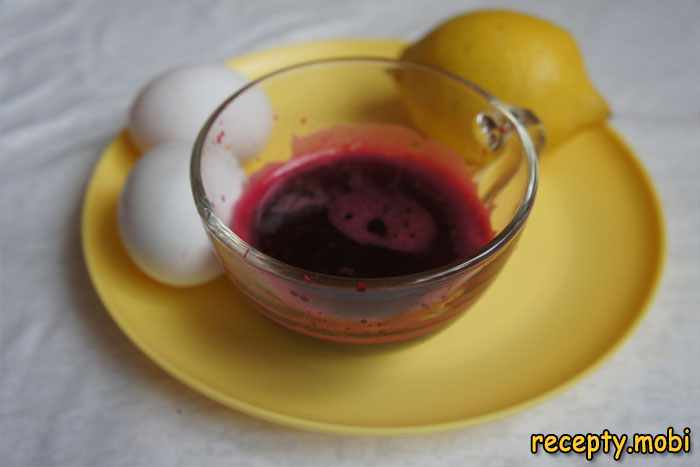
From half of a small lemon I squeeze 1 tsp of juice – it serves an important purpose: in an acidic environment the beetroot pigment (betacyanin) keeps its brightness and does not turn brown when heated. Without lemon juice the pancakes come out a dull brownish shade instead of a striking burgundy. I add the lemon juice to the beetroot juice and mix well.
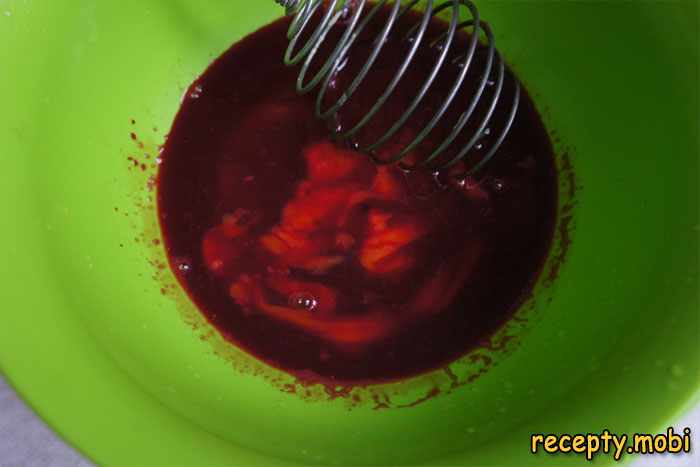
I pour the mixture of juices into a deep bowl for kneading the batter, add a pinch of salt (about ¼ tsp) and 1 tbsp of sugar. Salt brings out the flavour and strengthens the structure of the batter, while sugar provides a light caramelisation during frying – the pancakes will brown nicely at the edges.
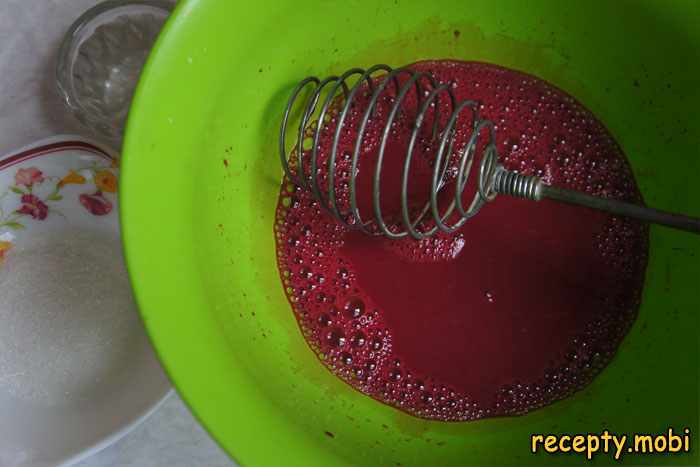
I whisk the contents of the bowl vigorously for 30–40 seconds until the salt and sugar dissolve completely. The crystals should disappear entirely – undissolved sugar will burn on the pan and leave dark spots on the pancakes, spoiling their appearance.
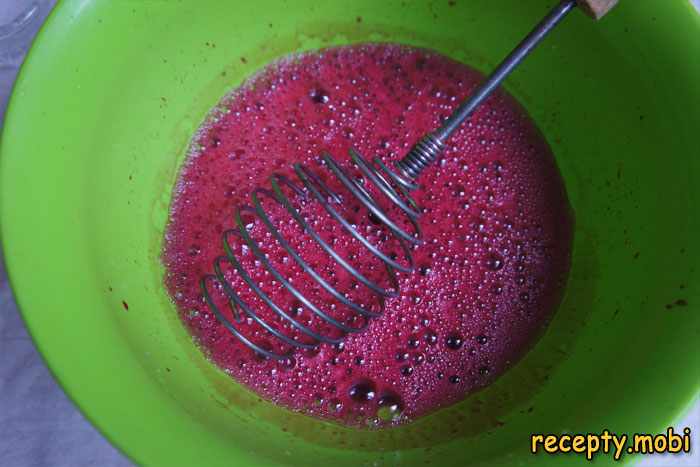
I sift 1 cup of premium wheat flour (about 150 g) together with 1 tbsp of potato or corn starch through a fine sieve. Starch makes the pancakes thinner, more elastic and tender – they come off the pan easily and do not tear when rolled. I add a pinch of vanillin for a subtle aroma.
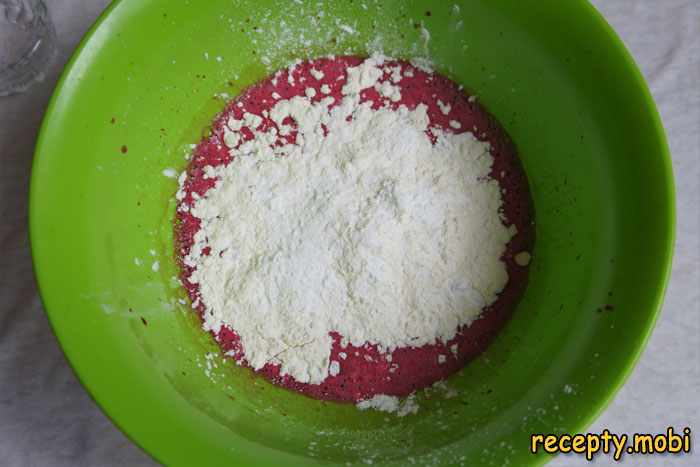
I sift in ½ tbsp of cocoa powder (it must be unsweetened) and add it to the batter. Cocoa serves a double purpose: it gives the pancakes a deep chocolate shade, turning the raspberry colour into a noble burgundy 'velvet', and it adds a light chocolate aroma that completely masks any possible beetroot taste.
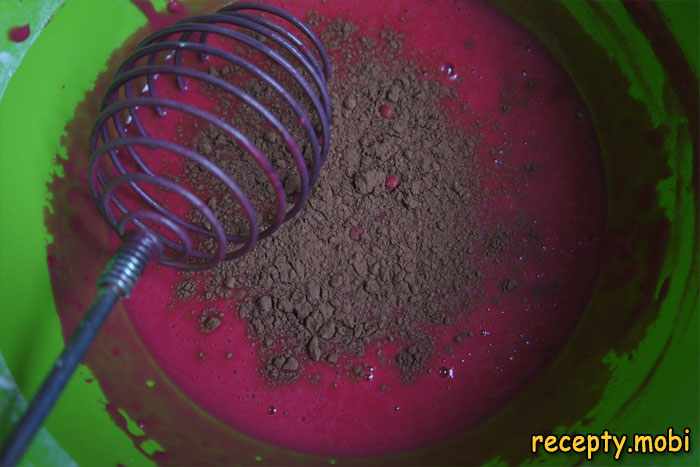
I gradually pour in 250 ml of room-temperature milk, whisking the batter continuously. I add the milk in portions of 50–70 ml, mixing thoroughly until smooth each time – this prevents lumps from forming. At this stage the batter is fairly thick, resembling sour cream.
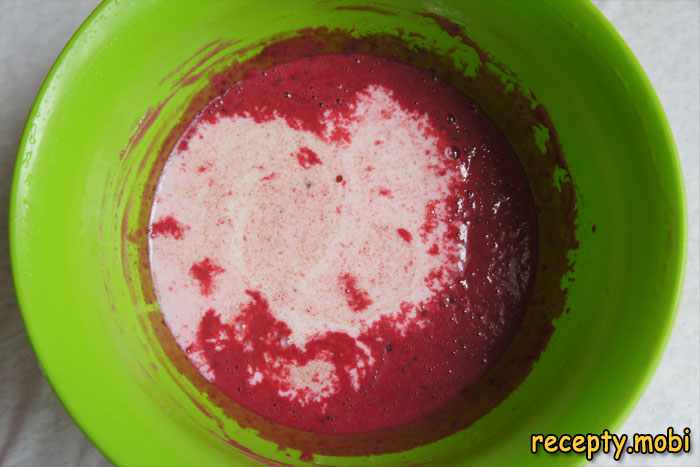
I cover the bowl of batter with a clean towel and leave it to 'rest' at room temperature for 15–20 minutes. During this time the gluten in the flour relaxes, the starch swells, and the batter becomes more uniform and elastic. This step should not be skipped – rested batter gives thinner, more delicate pancakes.
I heat a pancake pan (preferably non-stick) 22–24 cm in diameter over medium heat for 2–3 minutes. I lightly grease the surface with vegetable oil using a silicone brush or a napkin – only a few drops of oil are needed. I add 30 ml of vegetable oil to the batter and stir – this lets me fry the pancakes with almost no greasing.
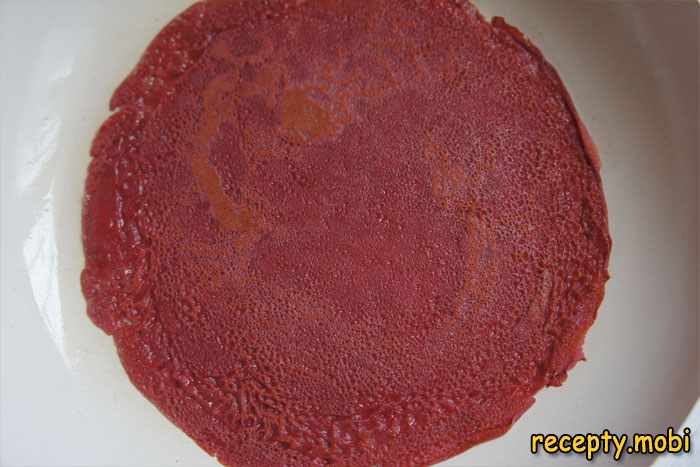
I pour the batter with a ladle (about 60–70 ml per pancake) onto the centre of the heated pan and quickly spread it in a thin layer with circular movements, tilting the pan. I fry over heat slightly below medium for 1–1.5 minutes on the first side – over high heat the beetroot pigment breaks down and the pancake turns brown instead of burgundy.
I flip the pancake when its surface becomes matte and stops glistening – this is a sign that the first side is done. I use a wide silicone spatula or simply toss the pancake in the air. I fry the second side for about 30–40 seconds – it cooks faster. I stack the finished pancakes on a plate.
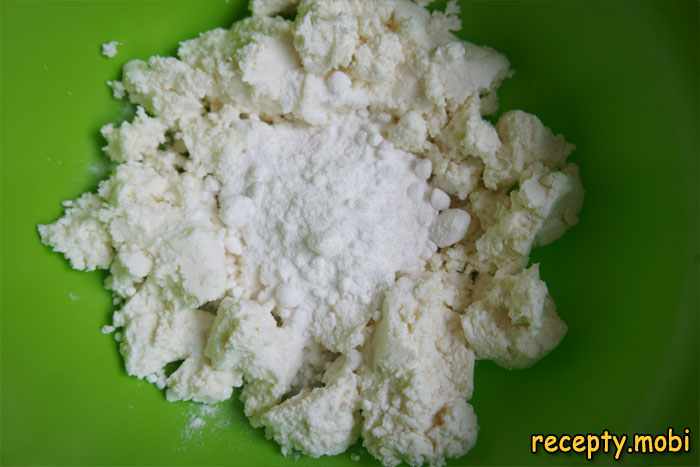
I prepare the curd filling: I put 400 g of cottage cheese (5–9% fat) into a deep bowl and add 2 tbsp of icing sugar. Icing sugar is preferable to granulated sugar – it dissolves instantly and does not feel gritty in the finished filling. I whip the cottage cheese with a blender or mixer for 2–3 minutes to an airy, creamy consistency.
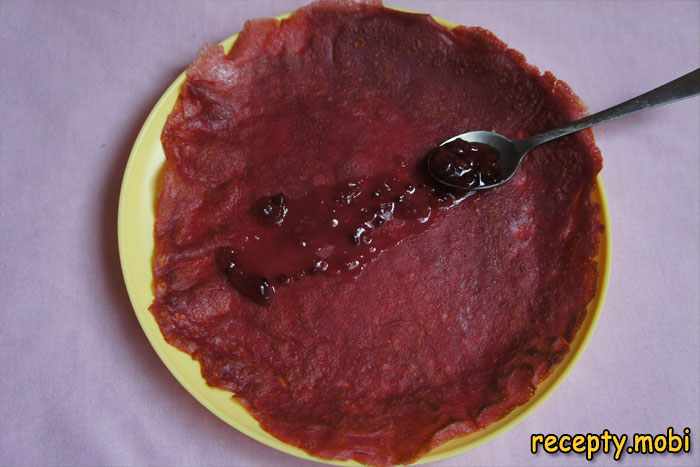
I place a cooled pancake on the work surface with its prettier (brighter) side down – when rolled, this side will be on the outside. Along the middle of the upper side I spread a stripe of strawberry jam (about 1 tbsp) – the jam adds sweetness and a lovely contrast when sliced.
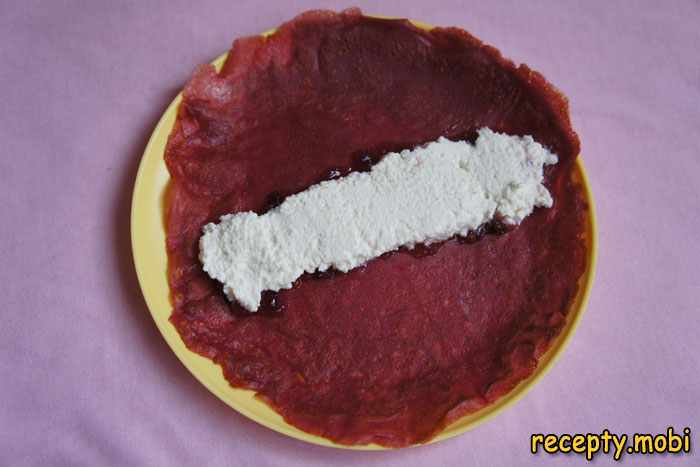
On top of the stripe of jam I place 2–3 tbsp of the whipped curd filling, forming an elongated roll along the diameter of the pancake. The filling should sit closer to one edge – this makes it easier to roll into a tube.
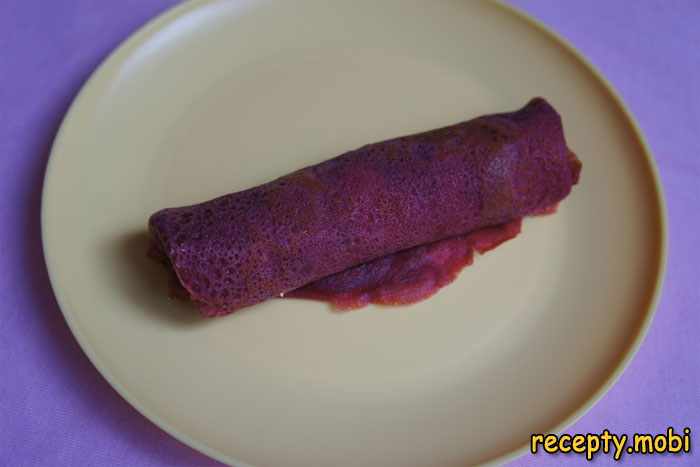
I roll the pancake into a tight tube, starting from the edge with the filling. I tuck the side edges of the pancake inward by about 2–3 cm – this closes the ends of the tube and stops the filling from leaking out. I form a neat little roll, pressing gently with my hand.
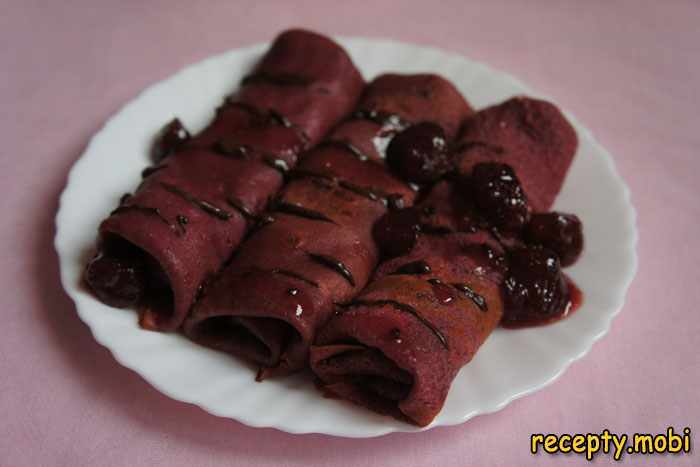
I melt 50 g of dark or milk chocolate in the microwave in bursts of 15–20 seconds at medium power, stirring after each heating. The chocolate should become completely liquid and glossy. I arrange the finished pancake rolls on a serving plate and drizzle melted chocolate over the top in a thin stream.
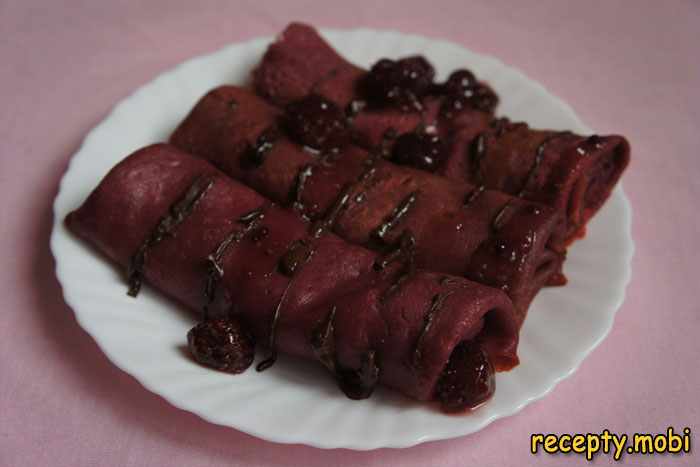
I decorate the finished 'Red Velvet' pancakes with fresh strawberries cut in half – the bright red berries against the burgundy pancakes look very elegant and appetising. The 'Red Velvet' beetroot pancakes with cottage cheese filling are ready! I serve them right after cooking, while the chocolate is still soft and the filling is cool.


Tips
- 1
Use the juice of raw beetroot only – boiled beetroot gives a less vivid colour and a characteristic 'earthy' aftertaste that is noticeable in the finished pancakes. Raw beetroot, on the other hand, gives no flavour at all.
- 2
Be sure to add lemon juice to the batter – it works as a colour fixative. In an acidic environment the beetroot pigment stays bright red even when heated; without it the pancakes turn a brownish shade.
- 3
Do not fry the pancakes over high heat – at a high temperature the red pigment breaks down and the pancake loses its bright burgundy colour. The ideal temperature is slightly below medium.
- 4
Instead of strawberry jam you can use any berry preserve – raspberry, cherry or blackcurrant. Tart berries go especially well with the sweet curd filling.
FAQ
What can replace the cocoa in the recipe? +
You can make the pancakes without cocoa – they will turn out a bright raspberry or pink colour instead of a deep burgundy. The taste will remain neutral, without the chocolate note. To replace the cocoa, increase the amount of flour by ½ tbsp.
Why did my pancakes come out pale or brown? +
There are two main reasons: the beetroot was not dark enough (choose richly burgundy roots with no white streaks) or the batter was overheated during frying. Also check whether you added the lemon juice – without it the colour is lost.
Can beetroot pancakes be frozen? +
Yes, pancakes without filling freeze very well for up to 1 month. Layer each pancake with cling film or baking paper and stack them in a bag. Defrost at room temperature or in the microwave.
Which cottage cheese is best for the filling? +
The optimal fat content for cottage cheese is 5–9%. Too fatty (18%) will make the filling heavy, while fat-free cottage cheese makes it dry and grainy. For a perfectly smooth texture, rub the cottage cheese through a sieve or whip it with a blender.
- Comment
or post as a guest
Be the first to comment.