avg —
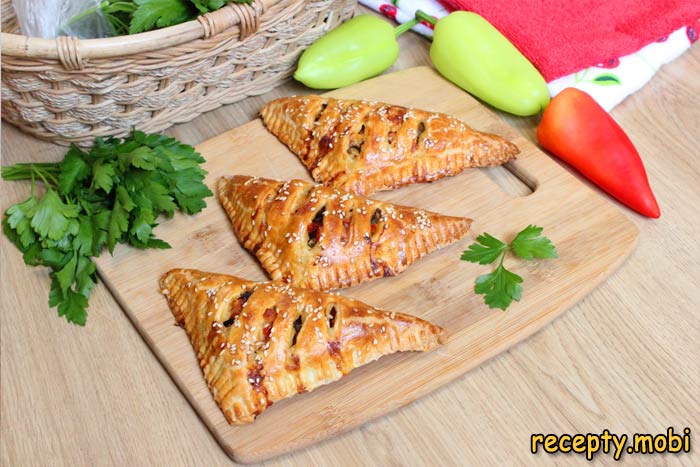
Puff Pastry Pockets with Mushrooms and Cheese

Instructions
Thaw the puff pastry at room temperature for 40–60 minutes until soft. Proper thawing is essential: in the microwave the dough will cook rather than thaw, and the layers will be ruined.
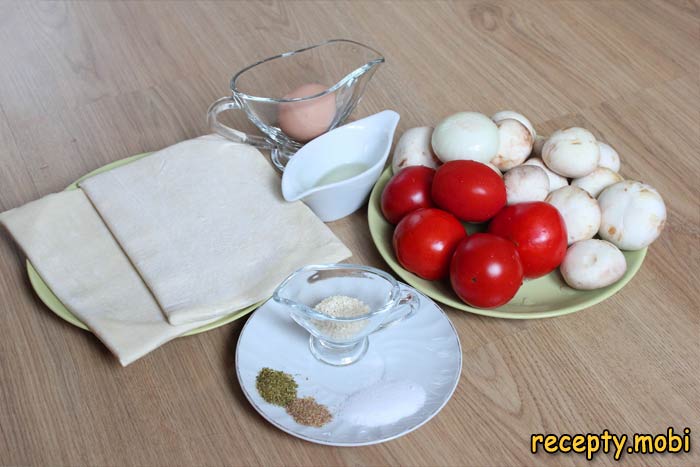
Cut the peeled champignons into 5 mm slices, and chop the onion into small 3–4 mm cubes.
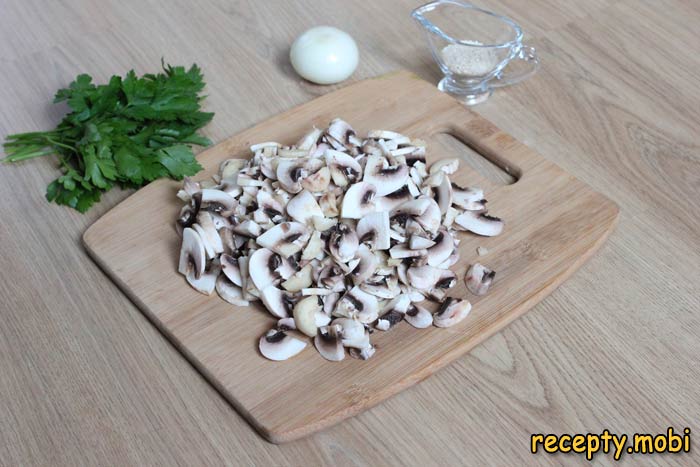
Fry the mushrooms and onion in heated vegetable oil for 5–7 minutes, until golden and all the liquid has evaporated. Wet mushrooms will spoil the puff pastry, as the moisture will seep into the layers. Frying until dry is an essential condition for a good puff pocket.
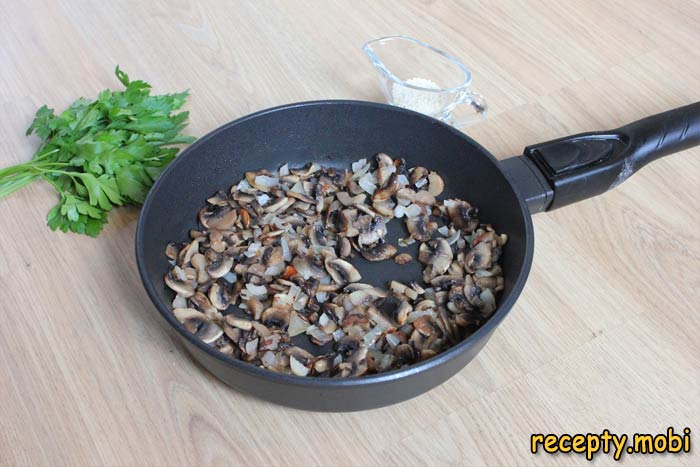
Cut the tomatoes into small 5–7 mm cubes and lightly squeeze out the juice in a colander. Without squeezing, the tomato liquid will soften the puff pastry. Use meaty varieties (plum tomatoes) – they are less watery and better suited to baking.
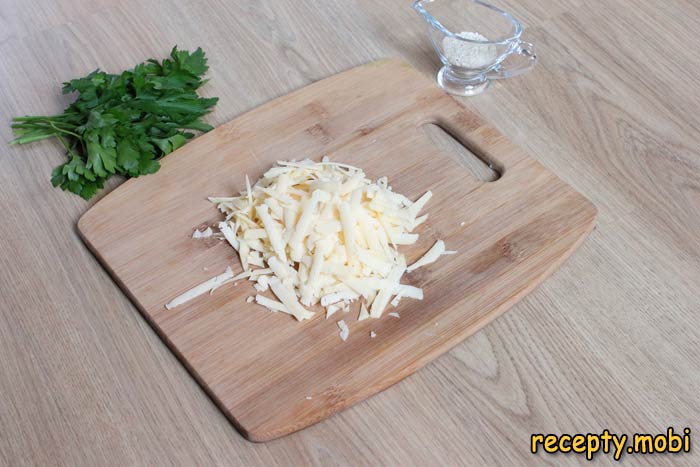
Grate the hard cheese (Parmesan, Gouda, or a Russian-style cheese) on the coarse side of the grater. A coarse grate gives a fluffy layer of cheese that melts beautifully during baking. Finely grated cheese forms a denser crust – also tasty, but visually less striking.
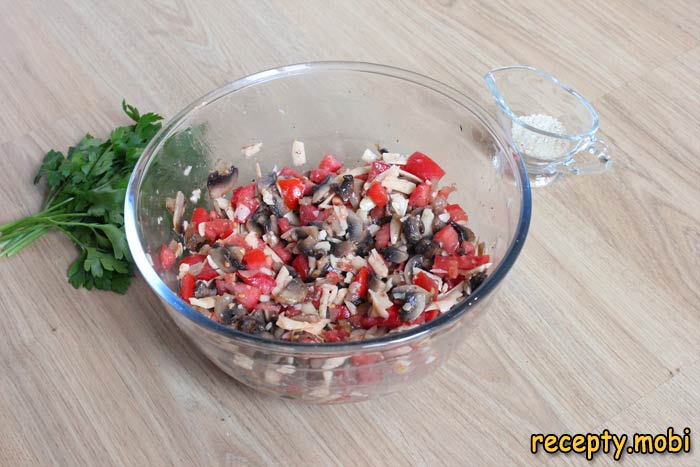
In a bowl, combine the fully cooled fried mushrooms and onion, the squeezed tomatoes, and the grated cheese. Add the salt, garlic pepper, and Provençal herbs. Mix thoroughly with a spatula. A cold filling is the key to an airy puff pocket: a hot one will melt the butter in the dough.
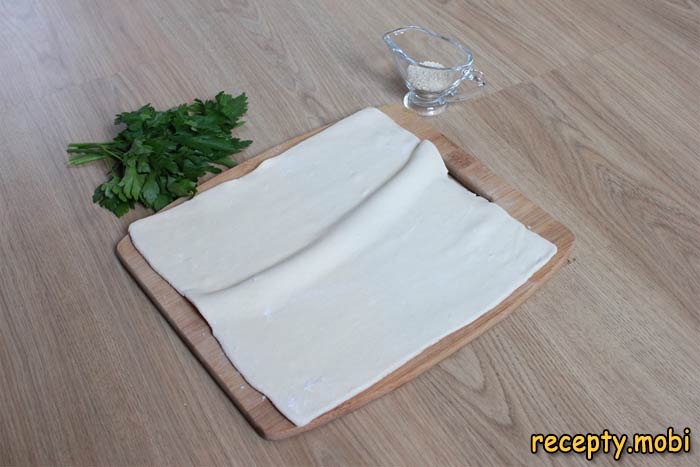
Roll out the thawed dough on a lightly floured surface to a thickness of 3–4 mm. Any thinner and the pockets will not rise properly; any thicker and they will not bake through inside. Cut the sheet into 4 equal squares with a sharp knife (not a serrated pastry knife).
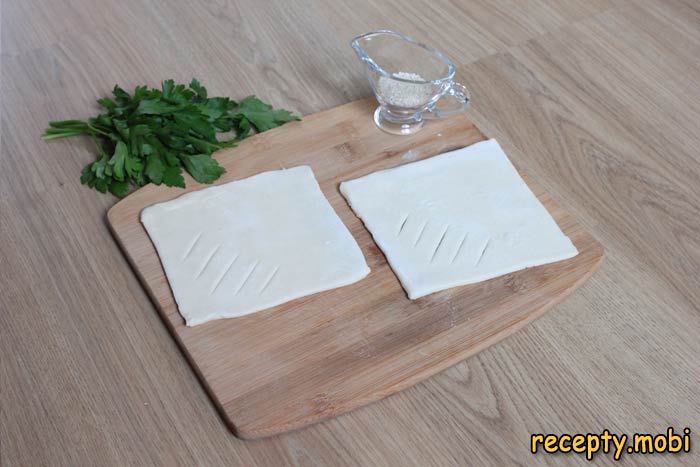
On one half of each square, make 5 parallel cuts with the knife, without cutting all the way to the edge. This part with the cuts will become the top of the pocket – during baking the cuts open up and the filling peeks attractively through them.
Place the chilled filling in the centre of the lower half of each square – about 2 tablespoons – leaving 1 cm of free edge. Cover with the upper part that has the cuts and press the edges firmly with a fork to seal them – this is the classic puff-pocket technique.
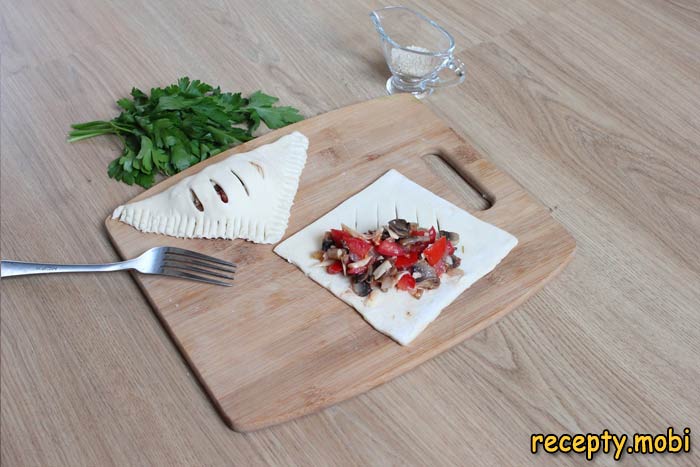
Carefully transfer the formed pockets to a baking sheet lined with parchment, leaving 2–3 cm between them – the pockets will increase in volume during baking. Do not skip the parchment – nothing will burn on it and the pockets come off easily.
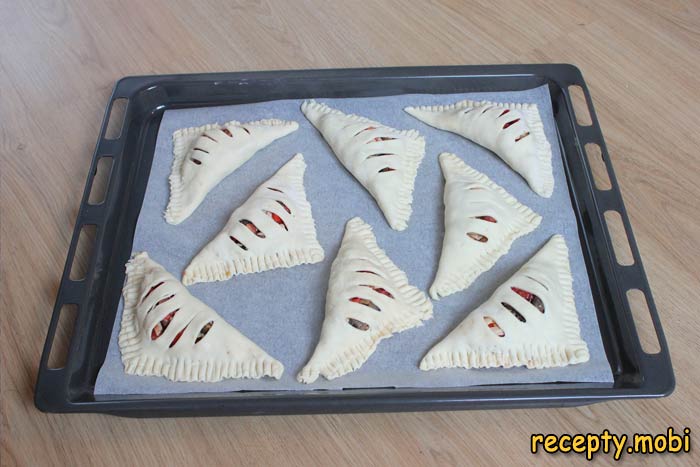
Brush the tops of the pockets with beaten egg yolk using a silicone brush – this gives a golden glaze during baking. Sprinkle with sesame straight away – it sticks to the moist yolk and creates a pretty decoration. You can use black and white sesame for effect.
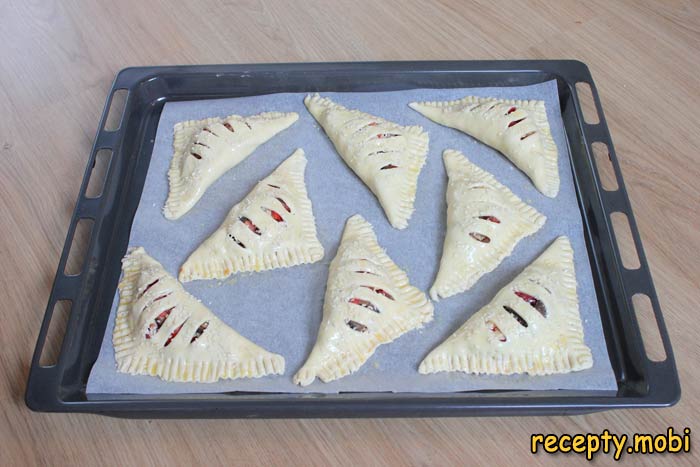
Bake for 30 minutes in an oven preheated to 180 °C, until golden and the layers have risen. For the first 20 minutes do not open the oven – the change in temperature will deflate the rising layers. Doneness is judged by the golden colour and the characteristic toasted aroma filling the kitchen.
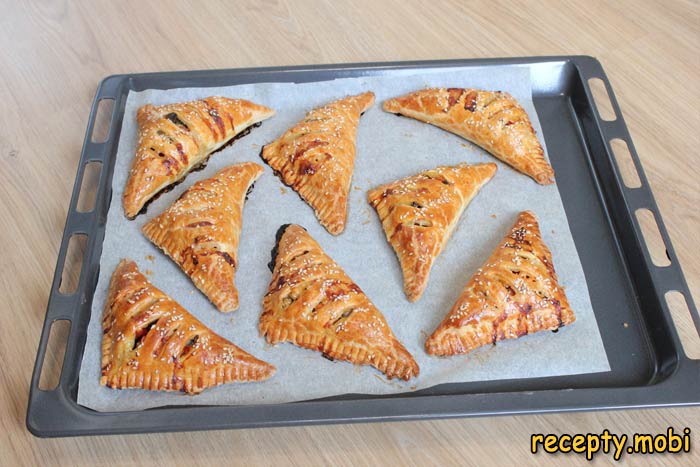
The puff pastry pockets with mushrooms and cheese are ready! I serve them warm – this is exactly how their full aroma comes through and the layers are perfectly crisp. You can serve them with tomato sauce, fresh herbs, or as a snack on their own with tea or coffee. For a festive table, garnish with a sprig of fresh dill or parsley.


Tips
- 1
Be sure to squeeze the juice out of the tomatoes – otherwise their liquid will soften the puff pastry and it will not rise as it should.
- 2
The cuts on the upper part let the filling peek attractively through during baking – this is the signature look of these pockets.
- 3
The mushrooms must cool completely before assembly – hot ones will melt the butter in the dough. I bake meat pie on a similar principle.
- 4
You can add ham, chicken, or bacon to the filling – various meat additions make the pockets even heartier and more flavourful.
FAQ
Can I use yeast puff pastry? +
Yes, but the pockets will turn out fluffier, airier, and more bread-like in character. Non-yeast dough gives the characteristic crisp, flaky structure of a classic French croissant. Yeast dough is softer and more bready. The choice depends on preference: for snack pockets use non-yeast dough, and for hearty meat pies use yeast dough. The baking time for yeast dough is a little longer – 35–40 minutes instead of 30.
What can replace the champignons in the filling? +
Oyster mushrooms (more delicate than champignons), wild mushrooms (porcini, chanterelles – the most fragrant option), or dried mushrooms after soaking in water for 30 minutes all work well. Boil wild mushrooms beforehand for 10–15 minutes. Thaw frozen mushrooms and drain off the excess liquid before frying. Without mushrooms you can use fried chicken, ham, or vegetables (spinach, broccoli) – a variety of fillings to experiment with on the classic recipe.
How should the finished pockets be stored? +
In the refrigerator in a tightly closed container – up to 2 days without loss of quality. Reheat strictly in the oven at 150 °C for 5–7 minutes under foil (so the top does not burn) – this partly restores the crispness of the crust. The microwave makes puff pastry rubbery and it loses its crunch. In the freezer in an airtight bag – up to 1 month. Before serving, reheat the frozen ones in the oven at 180 °C for 10–12 minutes – they will be as good as fresh.
What is best to serve the pockets with? +
With tea or coffee as snack baking – the most popular way to serve them. With tomato sauce, sour cream with herbs, or a yogurt-and-garlic dip – as a main dish for a buffet. For a restaurant-style presentation – with a rocket and Parmesan salad and a glass of dry white wine. For breakfast – with fried eggs or an omelette as part of a warm savoury spread. The pockets are good both as a dish on their own and as part of a snack assortment.
- Comment
or post as a guest
Be the first to comment.