avg —
Mchadi Georgian Style

Instructions
I get the ingredients ready for making mchadi Georgian style. I use water at room temperature.
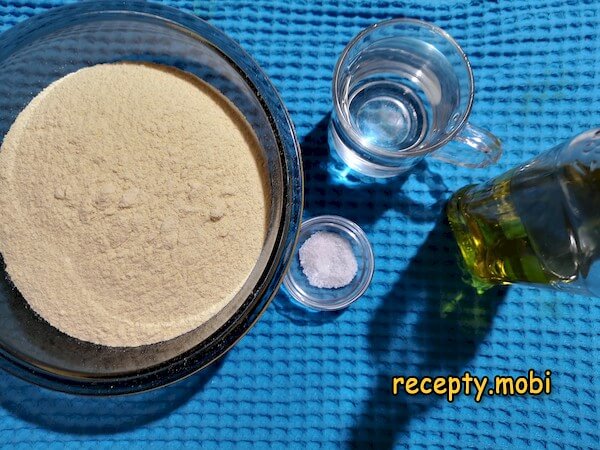
Sift the corn flour into a deep bowl.
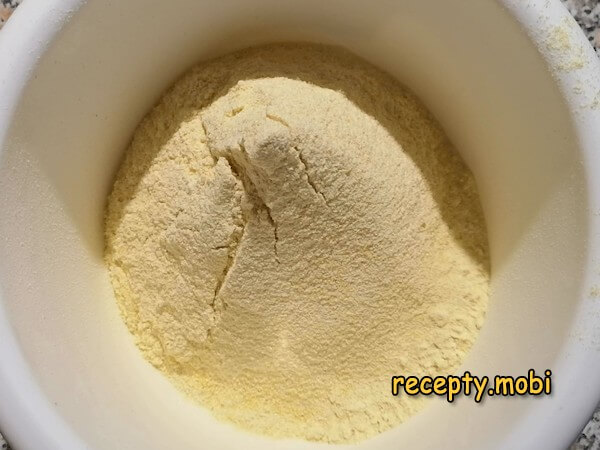
In the classic version mchadi is not salted, but if you like you can add salt to the flour for flavour. Mix the dry ingredients together.
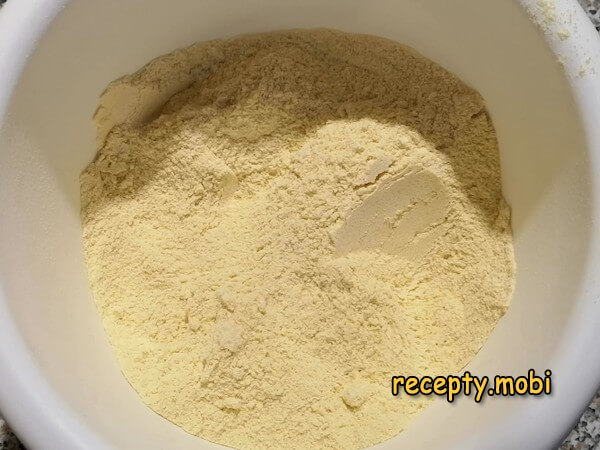
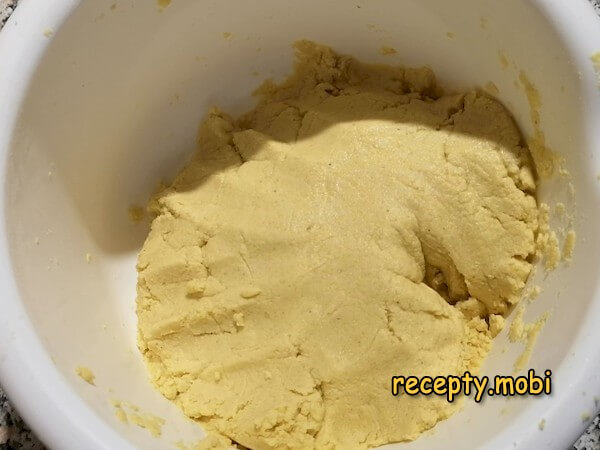
Gradually pour the water into the dry mixture and stir everything together. You can start mixing with a spoon and then switch to your hands, so you can feel the texture better. The dough should not be too liquid, and it should not fall apart when you form the flatbreads.
Heat a non-stick, thick-bottomed frying pan and pour in a little vegetable oil.
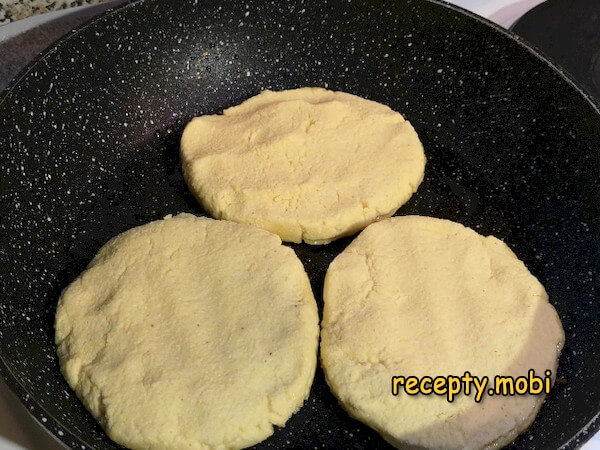
Shape the flatbreads by hand so that they are no more than 1 centimetre thick. Place them in the pan and fry under a lid over medium heat for about 5–7 minutes.
Carefully turn the mchadi over with a spatula and fry the other side under the lid for another 5–7 minutes.
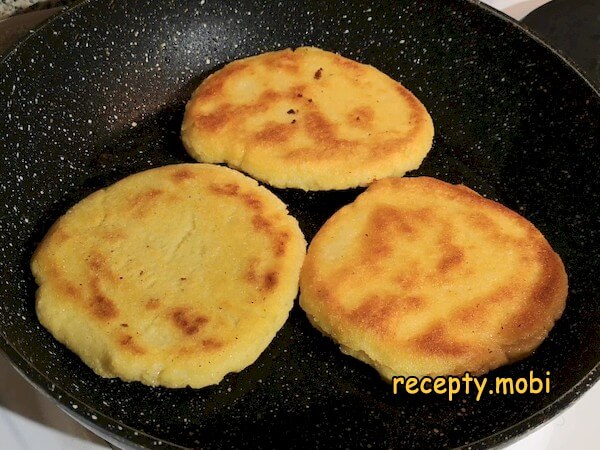
The mchadi Georgian style is ready. These flatbreads are served hot together with suluguni cheese.



Tips
- 1
Room-temperature water is the secret of the dough. With cold water the flour swells poorly. With warm water the dough becomes pliable and is easy to shape by hand.
- 2
A thickness of 1 cm is the secret of even cooking. Any thicker and the centre stays raw; any thinner and the outside burns. About 1 cm is the ideal balance.
- 3
Frying under a lid over medium heat is the secret of cooking them through. Without a lid the centre stays raw. With a lid the steam warms the dough from the inside, and it is ready in 5–7 minutes on each side.
- 4
Leaving out the salt is the Georgian classic. Real mchadi is not salted – it is "neutral", like bread. Served with spicy lobio or with cheese, the flavour balances out.
Video
FAQ
Which corn flour should I choose? +
Ideally a fine grind with no additives gives tender flatbreads. Alternatives include medium-grind flour for a coarser texture, medium-grind Italian polenta, or corn grits ground in a coffee grinder for a more home-style result. A blend of corn and wheat flour (400 g plus 100 g) makes them softer. Fresh farm-milled flour is excellent. Do not use very coarse flour, as it is hard to shape, or cornstarch, which is not suitable. For the Georgian classic, a fine or medium grind is essential.
What can I add to mchadi? +
You can add to the dough: grated suluguni inside (50 g per flatbread, like a khachapuri-style version), grated brynza (50 g, saltier), chopped parsley and coriander (1 tbsp, for a summer version), grated Imeretian cheese (50 g), turmeric (1/4 tsp, for a bright colour), ground paprika (1/2 tsp, for a spicier note), or a little khmeli-suneli blend (1/4 tsp, for a Georgian accent). Do not use sweet spices, as they would break with tradition. For the classic, keep the mchadi plain or with suluguni inside.
How long do mchadi keep? +
In a dry metal tin or container at room temperature they keep for 2 days. In the fridge, covered, up to 4 days (though they become firmer). Before serving, warm them in a dry pan for 1–2 minutes on each side to bring back their softness. You can also heat them in the oven for 5 minutes at 150 °C under foil, or in the microwave for 30 seconds. In the freezer the cooked flatbreads keep for up to 1 month; thaw for 30 minutes at room temperature, then heat in a pan. Fresh mchadi are at their best straight from the pan, hot and fragrant.
What to serve with mchadi? +
The Georgian classic is with suluguni or Imeretian cheese. They go with red bean lobio, with chicken chakhokhbili or satsivi, and with adjika or tkemali. Serve them with Georgian red wine (Saperavi, Khvanchkara) or a glass of chacha, with kharcho, with fresh herbs (parsley, coriander, tarragon), or with a cup of Georgian tea. They also suit spinach or beetroot pkhali, salty suluguni sticks, a garlic and herb sauce, or turkey satsivi. For a Georgian feast they make a versatile bread – traditional flatbreads of the Caucasus.
- Comment
or post as a guest
Be the first to comment.