avg —
Honey-Ginger Cookies

Instructions
I make the base for the dough from honey and sugar. I take a large saucepan, ideally a five-litre one. I add the sugar, honey, and spices. I stir lightly, set it over medium heat, and cook the mixture down, stirring constantly.
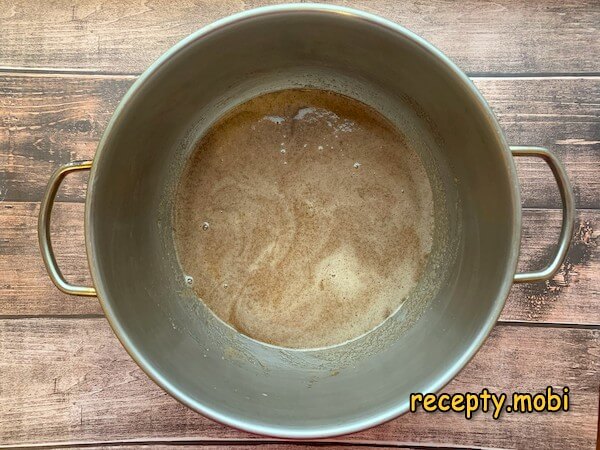
As soon as the sugar has dissolved, I add the baking soda. At this stage a vigorous reaction begins: the mass "rises" in the saucepan. This is exactly why a large pot is needed – there is a risk that the mixture will spill over. I stir intensively, not letting it burn. The sugar-honey mass will start to darken – I keep cooking it down to the shade I want for the cookies.
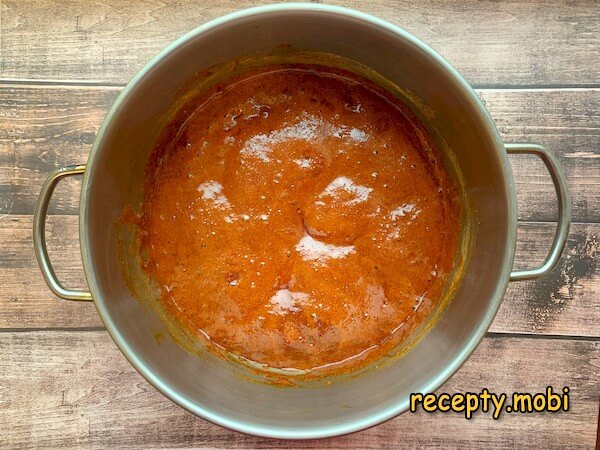
As soon as the mass is ready, I take it off the heat straight away, stir it, and add all the butter. I wait until it has melted completely. Now I need to add the egg – but do not rush to put it into the hot mass, or it will curdle. I wait for the honey mass to cool to 50–55 °C (usually about 5 minutes of stirring after turning off the heat).
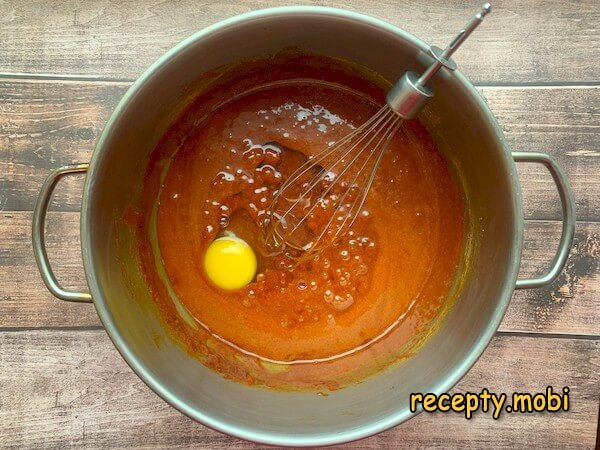
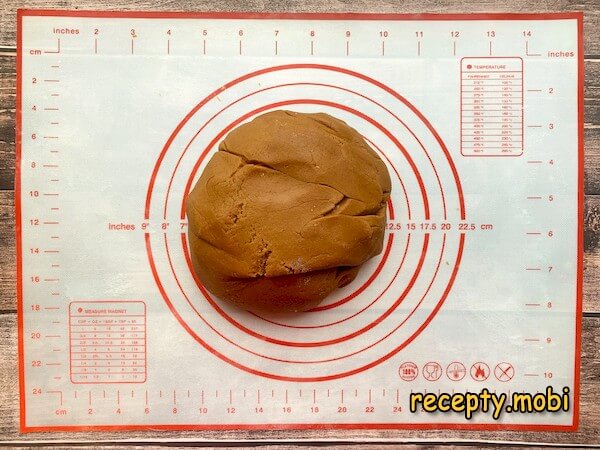
I add the flour to the honey mass in 3 stages. Two parts I add straight into the dough, the third I sprinkle on while kneading on a mat. I knead the dough while it is still warm – I do not wait for it to cool. This is how you get perfect cookies that definitely will not crack. I leave the ginger dough in a bag at room temperature for an hour.
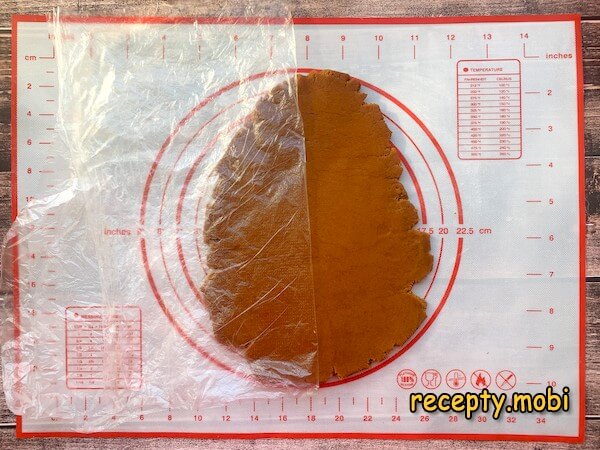
I roll out the dough using a bag or film: I cover a piece of dough with film and roll it out with a rolling pin to 5–7 mm. Try it this way and you will not see a single crack on the dough.
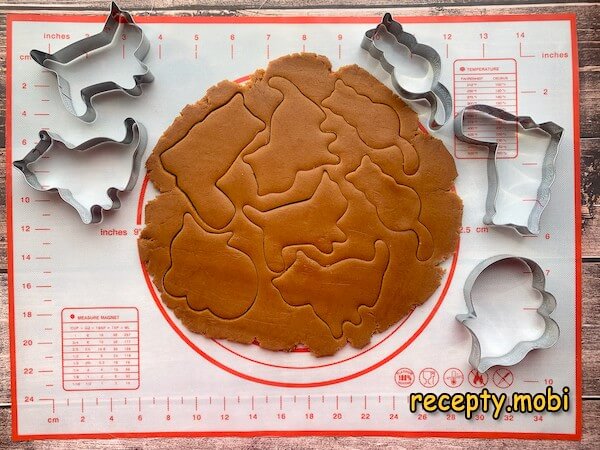
I cut out shapes in the dough with cutters. If you have no cutters, lay a paper silhouette of a shape you like over the dough and cut around the outline with a very sharp knife. I transfer the honey-ginger cookies onto parchment, 1.5–2 cm apart from each other. I put them in the oven at 180 °C for 7–10 minutes on the conventional top-and-bottom setting, without convection.
I prepare the baked cookies for icing: to make it easier, I lightly press the still-warm cookie with a flat board, which evens out its surface. After that I leave the cookies to cool for 1–2 hours. This is important for decorating – on hot cookies the icing will definitely run.
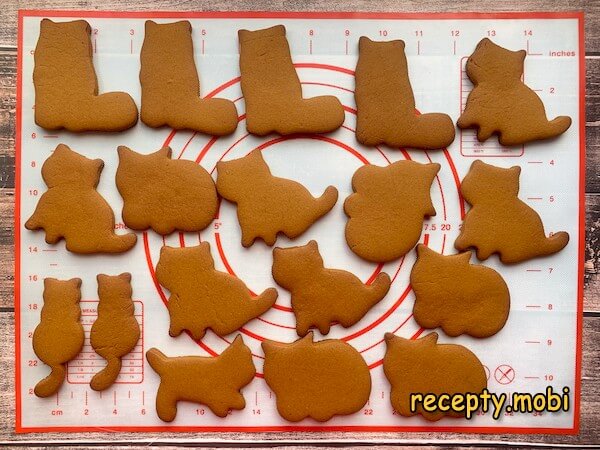
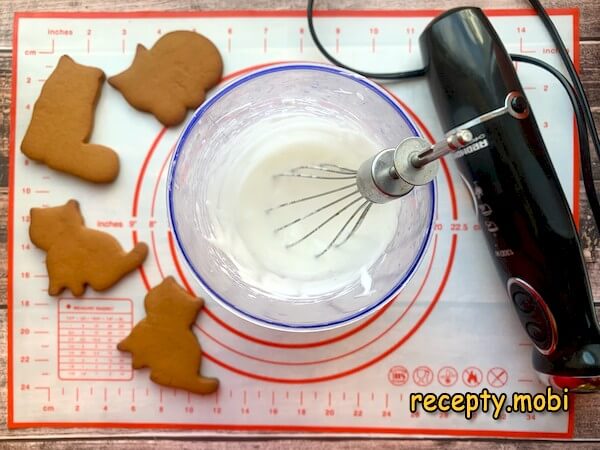
I make the icing for decorating. I whip the egg white with a little lemon juice using a mixer on low power and gradually add the powdered sugar to the bowl. I keep whipping until I get a runny but nicely pliable mass. If you have food colourings, use them freely.
For the next part you need a piping bag – it can be replaced with an ordinary cellophane bag. I fill the bag tightly with icing and cut off the tip. The diameter of the cut should be literally 2–3 mm, so the pattern is thin and neat. I start decorating: the simplest option is to trace the cookie's pattern along the outline. If you have artistic talent, the cookies can be decorated even more beautifully – confectionery welcomes imagination.
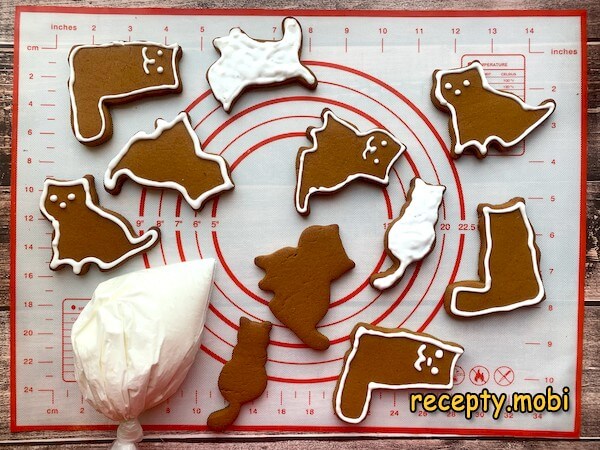
I leave the cookies for another couple of hours so the icing dries and does not smudge. The homemade honey-ginger cookies are ready!Enjoy your meal!



Tips
- 1
A LARGE SAUCEPAN is a must (5 litres). The vigorous reaction of the baking soda with the honey raises the mass 3–4 times, and a small saucepan will "overflow".
- 2
Add the EGG only after the mass has cooled to 50–55 °C – otherwise it will curdle and ruin the dough.
- 3
ROLL the dough UNDER FILM – this way it does not stick and does not crack. This is the "secret" of smooth cookies.
- 4
PRESS THE HOT COOKIES with a flat board – this evens out the surface for easy icing. A similar principle works with other kinds of cookies for decorating.
FAQ
Which cutters should I choose? +
The classics are New Year shapes: a Christmas tree, a snowflake, a snowman, a little house, a deer, a star. For children – animal figures and letters. For a wedding – hearts and flowers. Metal cutters are better than plastic ones, as they give a clean outline. Size: 6–10 cm is convenient for decorating. Very small ones (3–4 cm) are hard to decorate. A set of 10–15 cutters is ideal. If you have no cutters, cut the shapes out following a paper template with a very sharp knife.
Can I replace the honey? +
Honey is the basis of the flavour and texture of ginger cookies, so it is difficult to replace. Alternatives: maple syrup (a different aroma, but it works), invert syrup (neutral), cane syrup or molasses (darker cookies). Each substitute gives its own character. If the honey has crystallised, warm it in a water bath until liquid. The best honey for cookies is floral or buckwheat honey. Linden honey is more "neutral". Do not use artificial honey – you will not get the real taste.
How long do the cookies keep? +
In a tin or a paper bag at room temperature – 1–2 months. The cookies have no perishable ingredients; they "dry out" rather than spoil. After 2–3 weeks they become a little firmer – this is normal (the classic "hard" gingerbread). If you want them to stay soft for a long time, put a slice of apple in the tin (replace it every 3–4 days). For a gift, pack them in plastic bags with a pretty ribbon. They are perfect for handmade New Year presents.
Can I decorate with coloured icing? +
Yes! Divide the icing into several parts and add food colourings (gel ones are better than liquid – they change the consistency less). Red, green, blue, yellow – the classics of New Year decorations. For natural colour: beetroot juice (red), spinach juice (green), turmeric (yellow), blue spirulina (blue). For colourful "sprinkles", add confectionery toppings. Children love "rainbow" cookies with multicoloured decorations. Pipe the outline with white icing and fill it in with the coloured one.
- Comment
or post as a guest
Be the first to comment.