avg —
Easter Bread with Cottage Cheese and Candied Fruits

Instructions
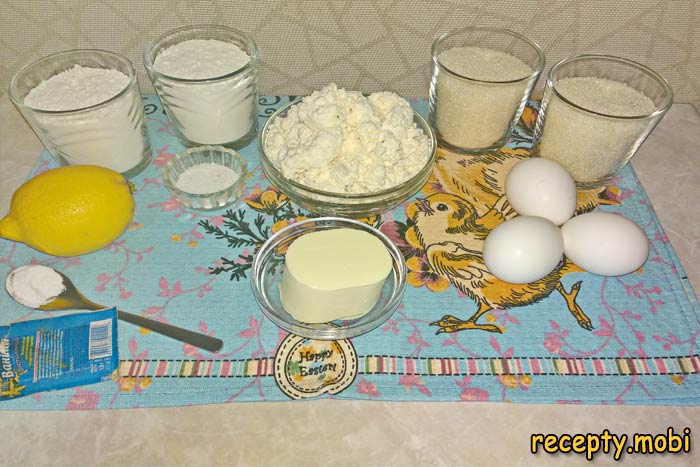
Prepare the ingredients in advance: take the cottage cheese and eggs out an hour before you start – they should be at room temperature. The butter, on the other hand, stays in the fridge until you need it – it has to be cold to form a crumb with the flour. This contrast of temperatures is the secret to airy batter for a yeast-free kulich.
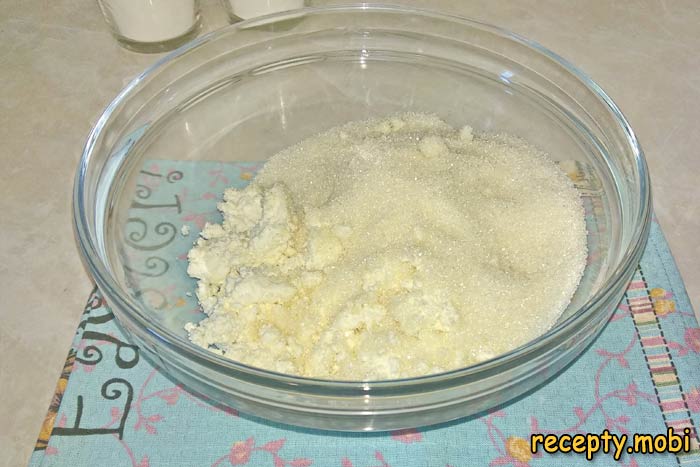
Put all the cottage cheese (300 g, 9% fat) into a large, deep bowl and mash it thoroughly with the sugar (2 cups) using a spoon or fork until smooth and free of lumps. You can use a blender for a perfectly smooth texture. Cottage cheese at 9% is ideal – not too dry (like 5%) and not too rich (like 15%).
Add 3 room-temperature eggs to the cottage cheese mixture, one at a time, stirring after each one – this gives a more uniform batter and prevents the yolk and white from separating. Warm eggs blend better with the cottage cheese, giving the batter a tender, creamy texture.
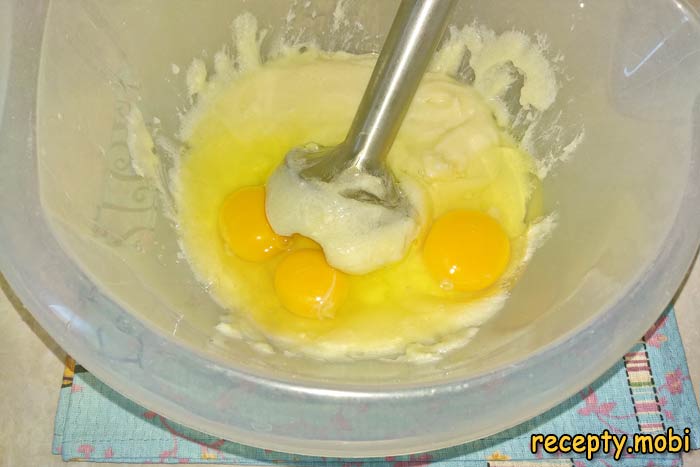
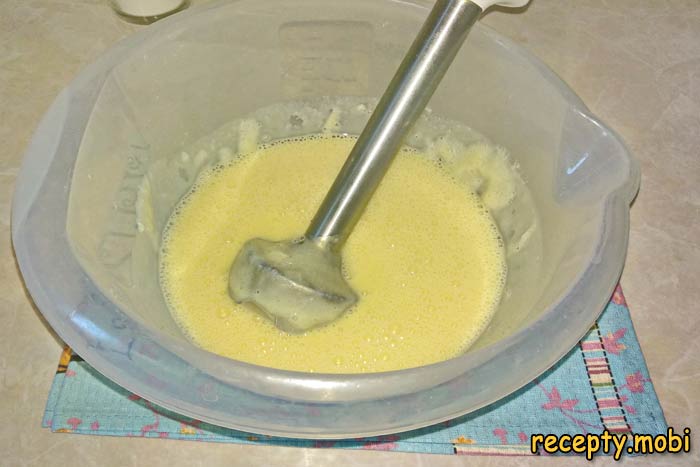
Beat the whole mixture with a mixer for 2–3 minutes until smooth and airy. A well-beaten cottage cheese and egg mixture gives the finished cake its lightness. Without beating, the batter turns out dense and heavy, like a cheesecake, rather than an airy kulich.
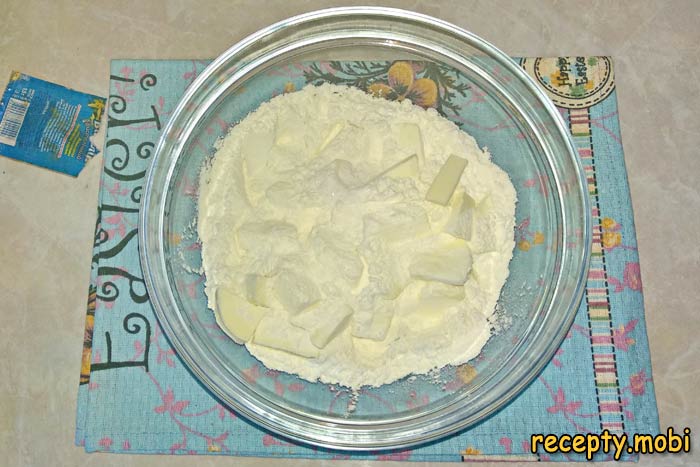
In a separate bowl, sift the flour (2 cups) with a pinch of salt (½ tsp) – the salt enhances the sweetness and balances the flavours. Take the cold butter (100 g) out of the fridge and quickly grate it on a coarse grater straight into the flour.
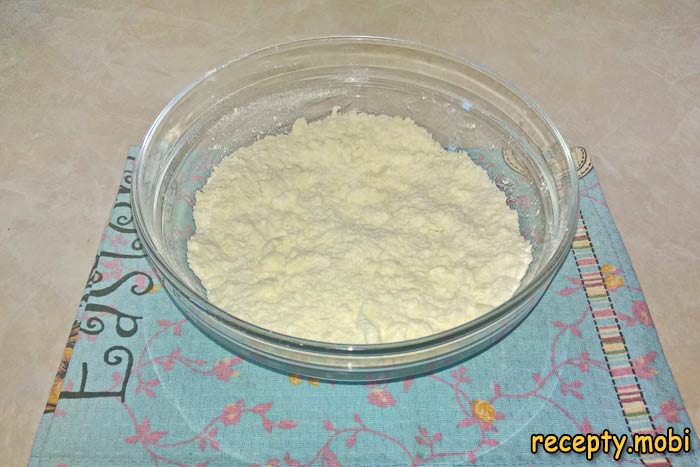
Quickly rub the flour and grated cold butter into a fine crumb with your hands or a fork, before the butter warms up from the heat of your hands. You should end up with a loose, flour crumb, like a streusel. Cold butter in the crumb is the key to the cake’s layered, tender structure. If the butter melts, the batter will turn out rubbery.
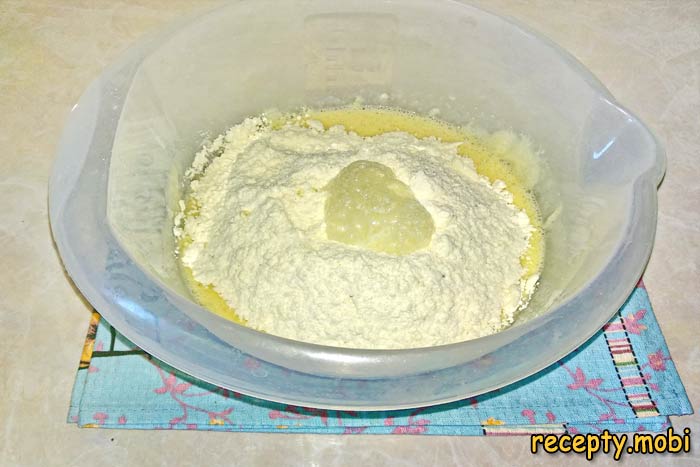
Add the flour crumb to the cottage cheese mixture and gently fold it in with a spatula. Sprinkle the baking soda (½ tsp) over the top straight away and pour over the fresh lemon juice (1 tbsp) to quench it – the soda will fizz and release carbon dioxide. This is the secret to making yeast-free batter rise.
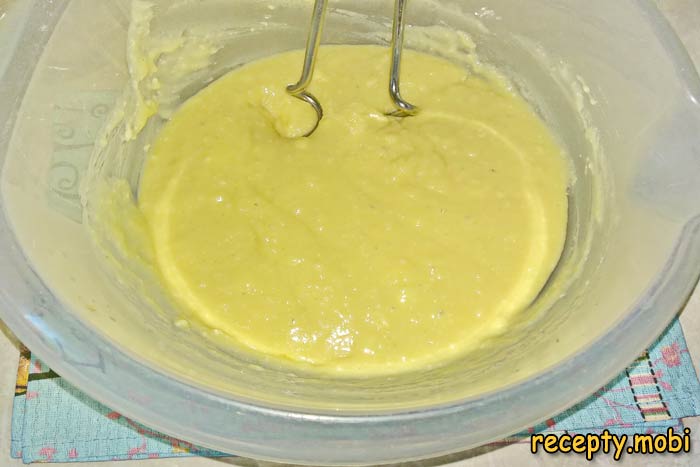
Beat the whole batter with a mixer on medium speed for 1–2 minutes until completely smooth and airy with a creamy consistency. The batter should be thick but not stiff – roughly like thick sour cream. If the batter is too runny, add 1–2 tbsp of flour; if it is too thick, add 1 egg.
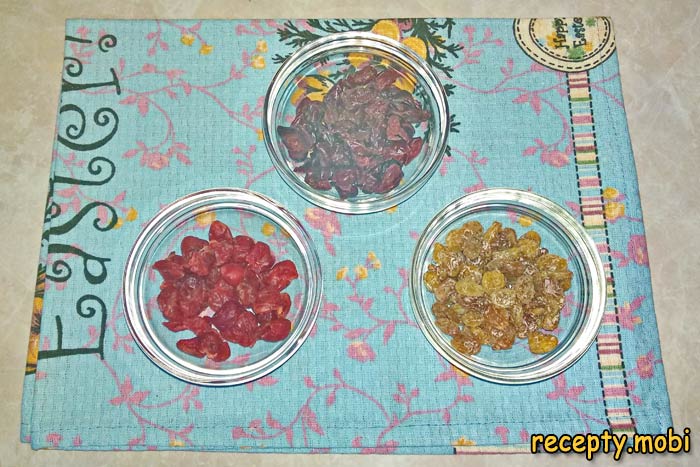
Pour hot boiled water over the raisins (½ cup) and candied fruits (½ cup) and leave for 10 minutes – they will soften and be rinsed of dust. Then drain the water thoroughly and pat the dried fruit dry with a paper towel. Dry fruit clings to the batter better and does not sink to the bottom during baking.
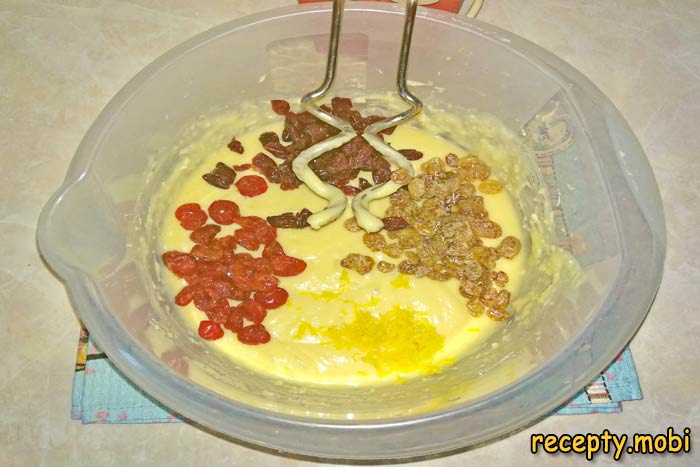
Add the drained raisins and candied fruits to the batter along with the lemon zest (1 tsp) and a sachet of vanillin (2 g). Gently fold everything from the bottom up with a spatula until evenly distributed. The lemon zest gives the cake its characteristic lemon aroma – fresh, not cloying.
Prepare the cake moulds (paper, silicone or ceramic) – the ideal size is 9 cm in diameter by 8 cm tall. Grease paper moulds with vegetable oil on the inside. Grease silicone and ceramic moulds too, and dust them with flour so the baked cakes come out easily.
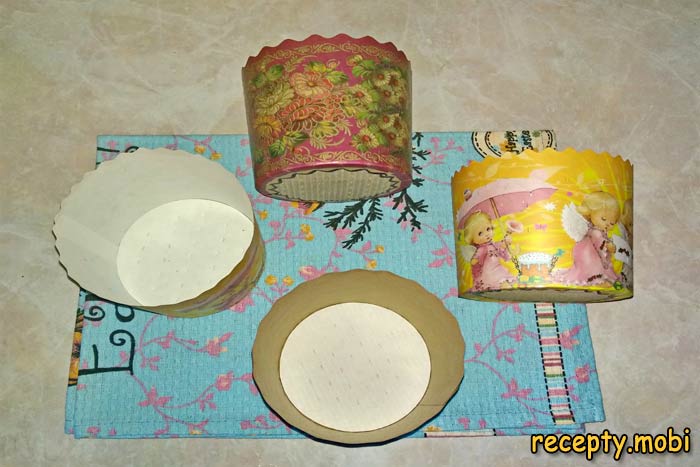
Spoon the batter into the moulds, filling them a little over halfway (60–70% of the height) – the batter rises significantly during baking thanks to the reaction between the soda and the lemon. If you overfill them, the batter will spill over the edges of the mould and spoil the presentation.
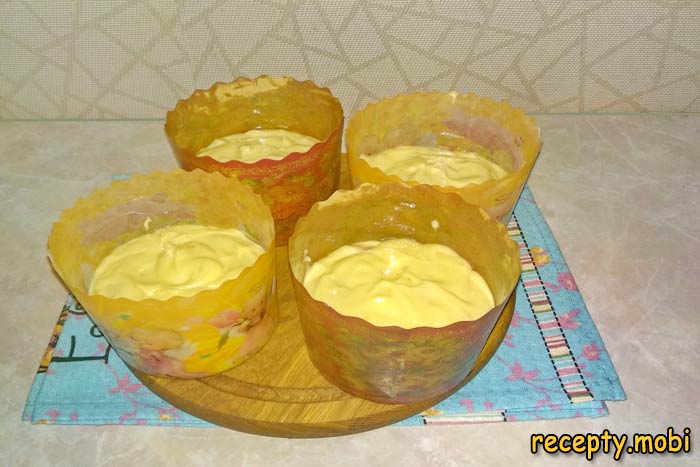
Bake the cakes in an oven preheated to 180°C for 45–50 minutes, until golden and springy to the touch. Check doneness with a skewer – it should come out clean. Do not open the oven door for the first 30 minutes – a sudden change in temperature will make the cakes sink.
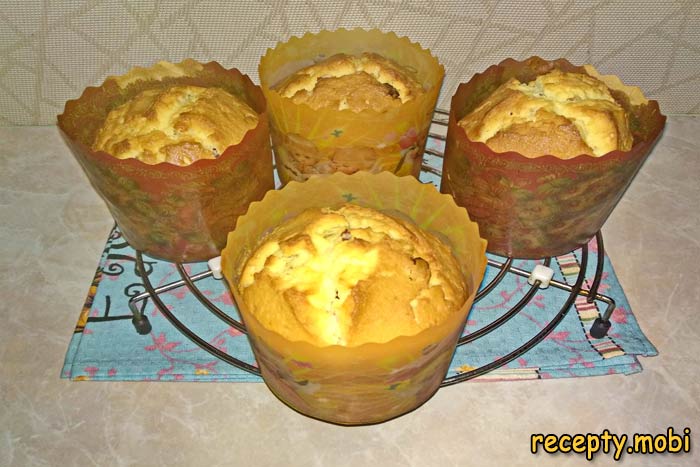
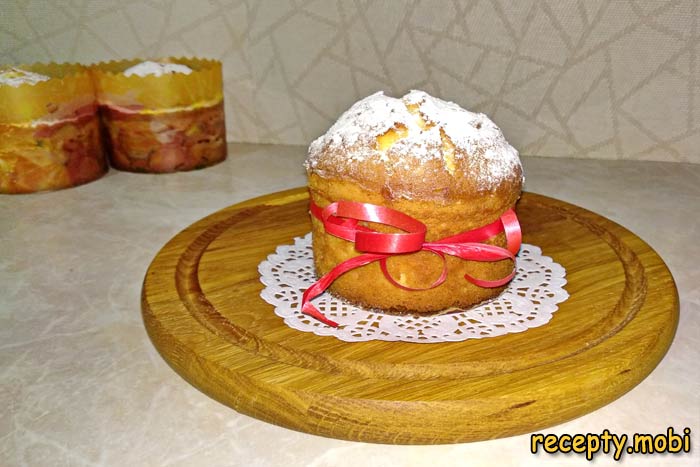
Cool the finished cakes in their moulds for 10–15 minutes, then remove them and cool completely on a wire rack. Decorate the tops with egg-white icing (beat 2 egg whites with ½ cup of icing sugar to stiff peaks) and bright sprinkles. The Easter cake with cottage cheese and candied fruits is ready!


Tips
- 1
It is best to mash the cottage cheese first with a blender or through a sieve – the batter will be free of lumps, perfectly smooth and tender.
- 2
The butter must be cold – a crumb made with the flour gives the batter a tender, layered structure, whereas warm butter clumps the flour together.
- 3
Dust the candied fruits and raisins lightly with flour before adding them to the batter – they will be distributed evenly and will not sink to the bottom. I use a similar approach to bake a classic Easter kulich.
- 4
You can decorate simply with icing sugar (without glaze) – it is easier, quicker and a less sweet finish for those who avoid sugar.
FAQ
Can I make the cake without candied fruits? +
Yes, the candied fruits can be replaced with various dried fruits or left out altogether. Alternatives include just raisins (the classic), finely diced dried apricots, pitted prunes, dried cranberries (for a touch of tartness) or dried cherries. For a more modern version, use chocolate chips or nuts (almonds, walnuts). Without any additions the cake will be purely cottage cheese based – still tasty, but less festive. Candied fruits are the face of festive Easter baking, adding bright colour and sweetness and symbolising the joy and abundance of spring.
Why is the cake made with baking soda rather than yeast? +
A yeast-free kulich made with baking soda is a simplified recipe with guaranteed results for novice cooks. Its advantages: it is three times quicker to make (90 minutes instead of 4 hours with yeast), it needs no proving and no warmth to rise, it always turns out without any fuss, and it has a more tender, cottage cheese texture. Its drawbacks: it is less like a classic yeasted cake and has a denser crumb. For an authentic, old-fashioned kulich, use yeast. For a quick, trouble-free version, use the soda recipe. Both have their place in Easter baking.
How long do the finished cakes keep? +
Cottage cheese cakes made with soda keep in a tightly sealed container at room temperature for up to 5 days. The cottage cheese in them makes them moister than yeasted cakes, so they stay soft for longer. In the fridge they keep for up to 7 days (but go stale faster). For longer storage, freeze them for up to 1 month in airtight bags – thaw at room temperature for 1–2 hours before eating. Do not reheat them in the microwave – they will turn rubbery. Ideally, eat them during Easter week. Add the icing 1–2 hours before serving.
What should I serve the cake with on the Easter table? +
The Easter table with kulich is part of a triad: kulich, cottage cheese paskha and dyed eggs. For drinks, serve tea (black, green or fruit), coffee with milk, cocoa, or homemade compotes made from dried fruits or berries. For adults, Easter Cahors (a sweet red wine) is a classic of the Orthodox tradition, and brut champagne suits the bright Easter mood. You can also serve honey, homemade jam, sour cream and mascarpone cottage cheese. It is perfect for a family Easter breakfast after the night service and the blessing of the cakes at church.
- Comment
or post as a guest
Be the first to comment.