avg —
Delicious Easter Kulich (Doesn't Stale Quickly)

Instructions
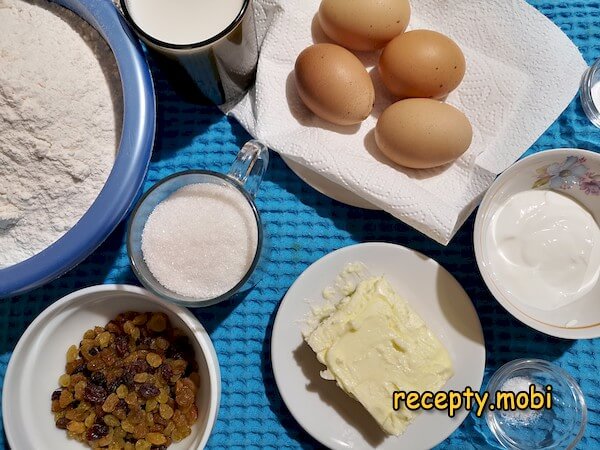
I prepare the ingredients I need. Rinse the raisins and the eggs beforehand under running water. The butter and eggs must be at room temperature. If you prefer a sweeter kulich, use more sugar.
I make a starter. For this, mix 40 ml of warm milk with 10 g of dry yeast and 1 tsp of sugar. Set it in a warm spot.
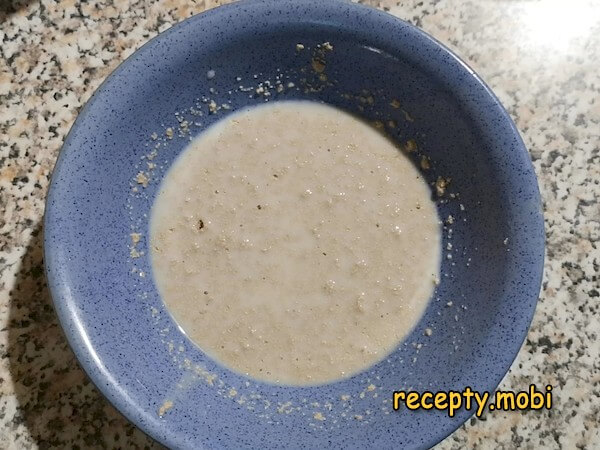
Pour boiling water over the raisins and leave them until completely cool.
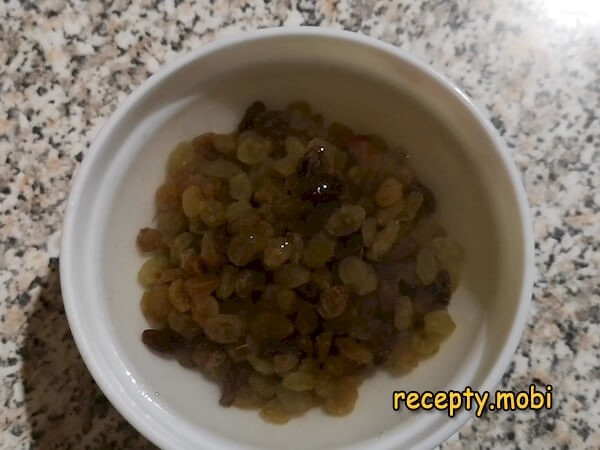
While the raisins cool, pour the remaining milk into a saucepan and add 50 g of butter. Place over medium heat. Stirring occasionally, bring the mixture to a boil and remove it from the heat.
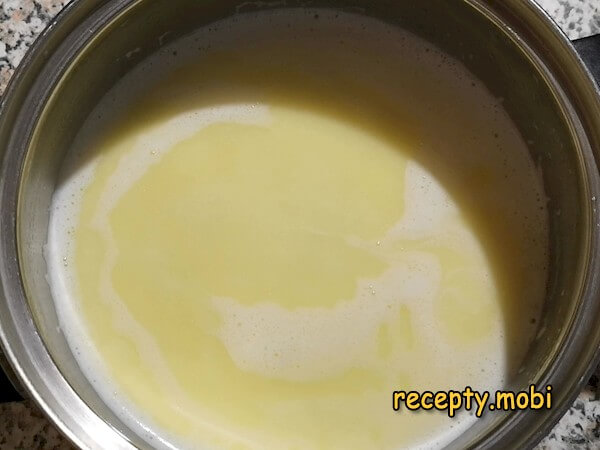
Add 2 heaping tablespoons of flour to this mixture and stir everything together. Leave this custard mixture until completely cool.
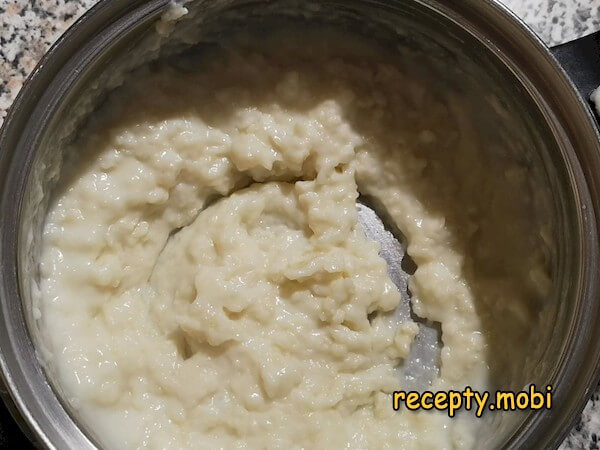
Meanwhile, separate the yolks from the whites.
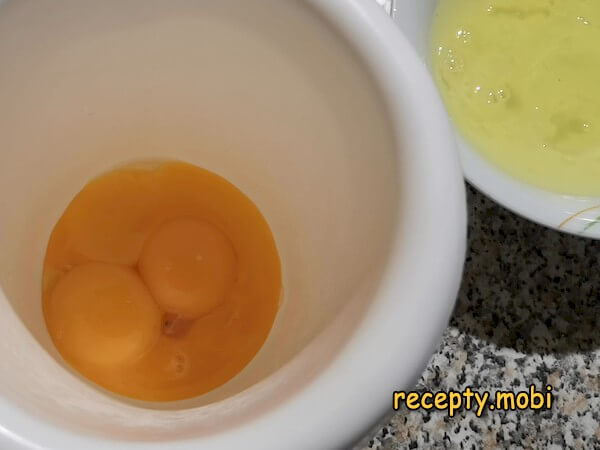
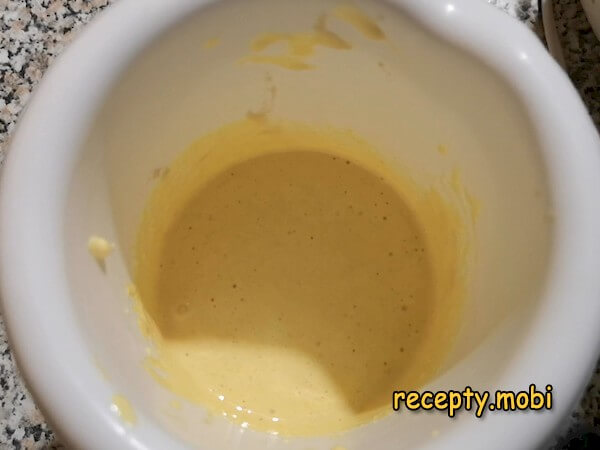
To the yolks, add 1 g of vanillin, 1/3 tsp of salt, 1/3 tsp of turmeric and about 70 g of sugar. Whip everything with a mixer for about 30 seconds.
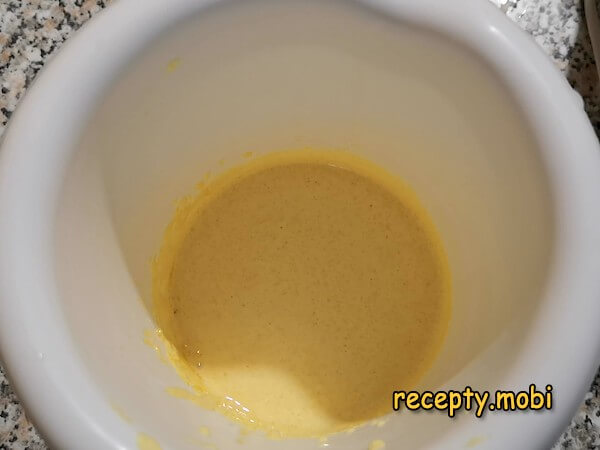
Next, add the prepared starter to the yolk mixture and mix everything together.
To the whites, add the remaining sugar and beat everything with a mixer until frothy – about 1 to 2 minutes.
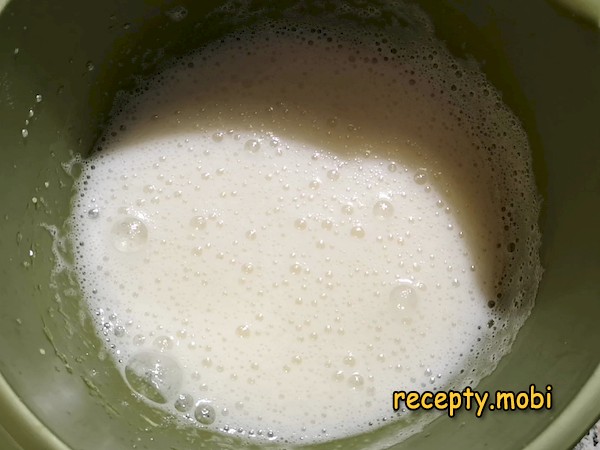
To the whipped whites, add 4 tablespoons of sour cream and the remaining butter, then mix well.
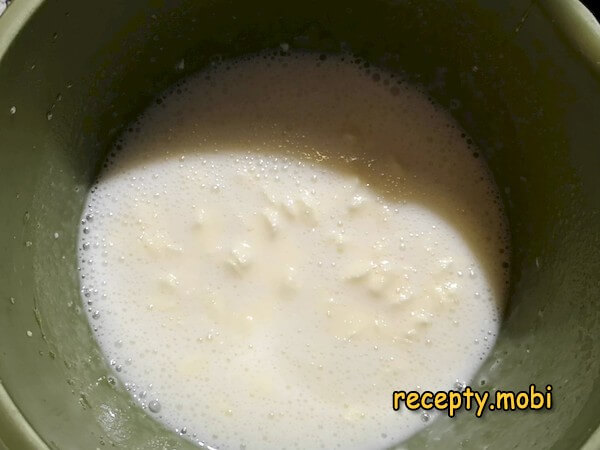
Pour the yolk mixture and the white mixture into a deep container. Add the cooled custard mixture and stir together.
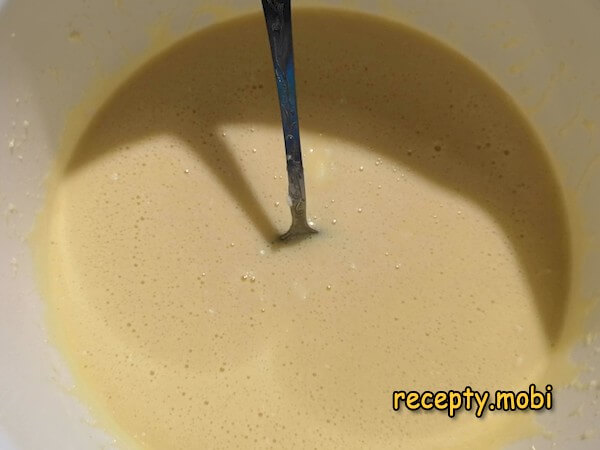
Gradually sift all the flour into the mixture and stir everything together.
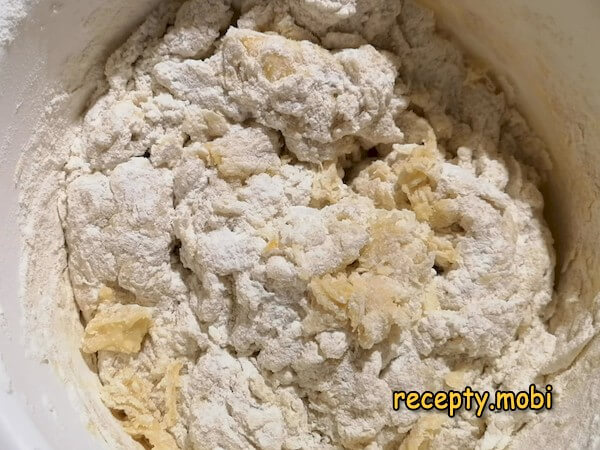
When the dough becomes hard to stir, turn it out onto a floured work surface and start kneading by hand. The finished kulich dough should be slightly sticky to the hands.
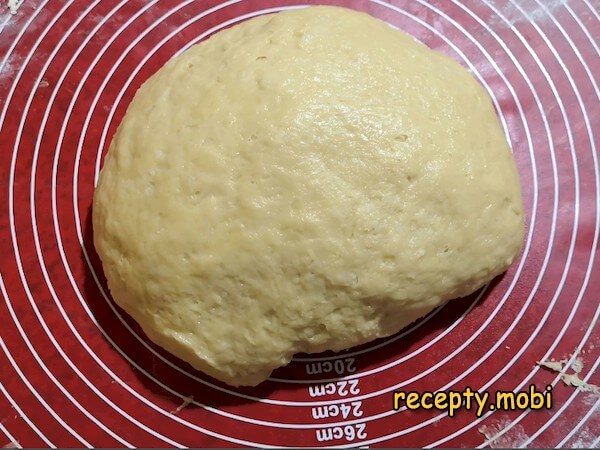
Transfer the ball of dough to a deep container and cover it with cling film. Set it in a warm spot for about 1.5 hours.
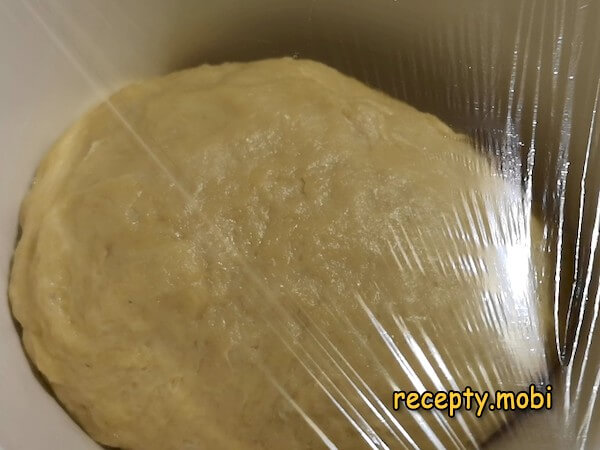
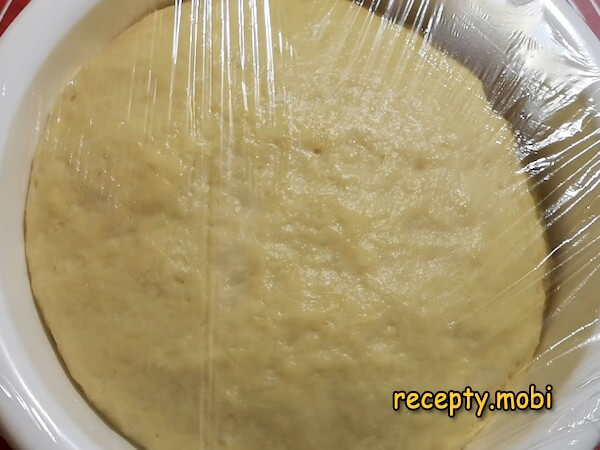
In that time, the dough will increase considerably in volume.
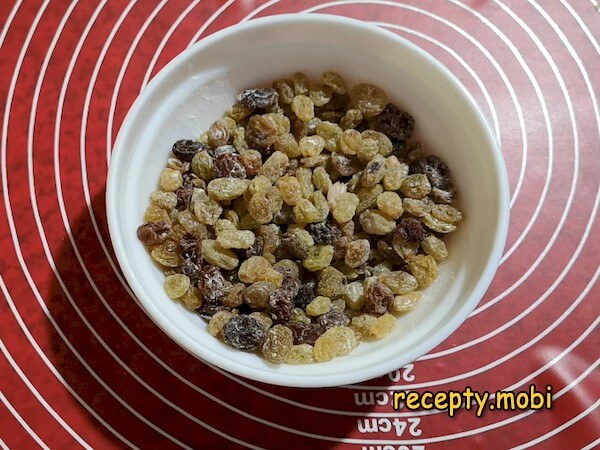
Toss the dried raisins with a small amount of flour.
Carefully turn the dough out onto the work surface. There is no need to add any more flour. Place the raisins on top of the dough.
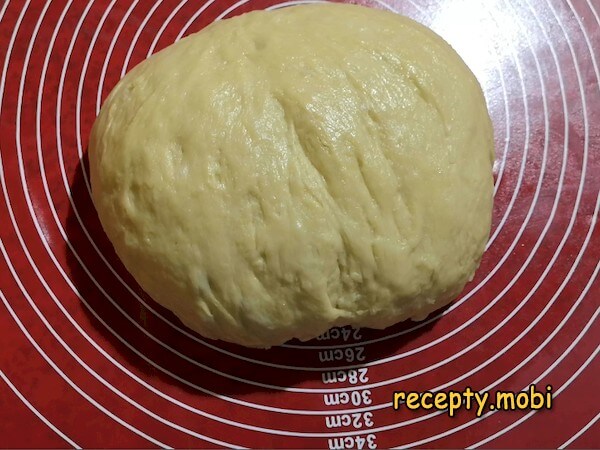
Lightly grease your hands with vegetable oil and start kneading the raisins into the dough.
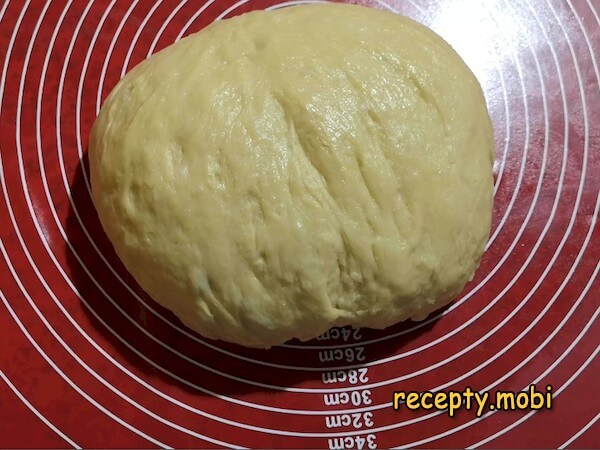
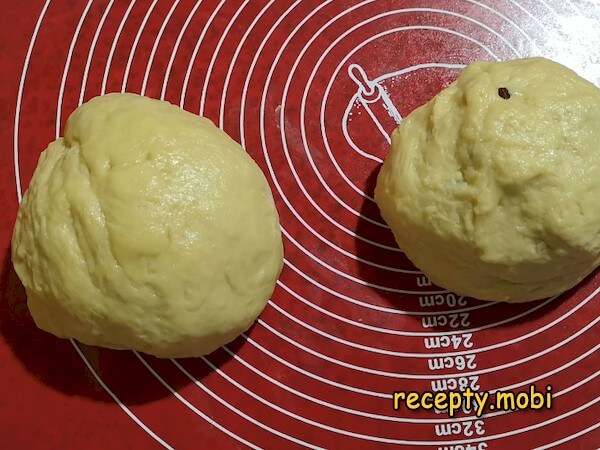
The kulich moulds should be filled to 1/3 of the mould's height. If their diameter is 11 cm like ours, the dough should be divided into 4 portions. Shape each portion into a ball.
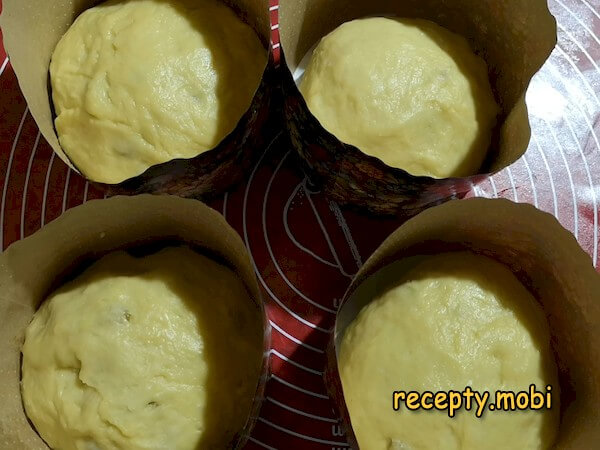
Place the balls in the moulds, set them in a warm spot and cover them with a towel. Wait until the dough rises to the top.
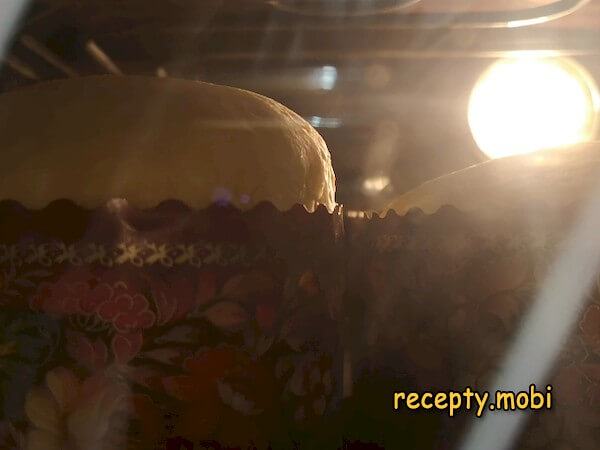
This is how our kulich have risen.
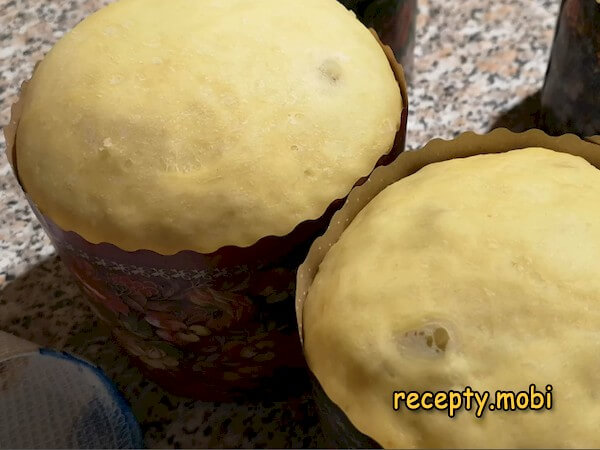
Place the kulich in an oven preheated to 170 °C and bake them for 30 minutes. Check for doneness with a wooden skewer – it should come out dry after you pierce the bake. Take them out of the oven and leave them until completely cool.
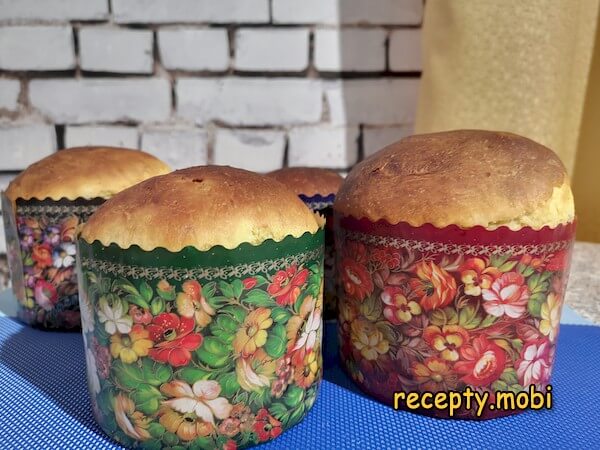
The delicious Easter kulich is basically ready. All that's left is to decorate it.
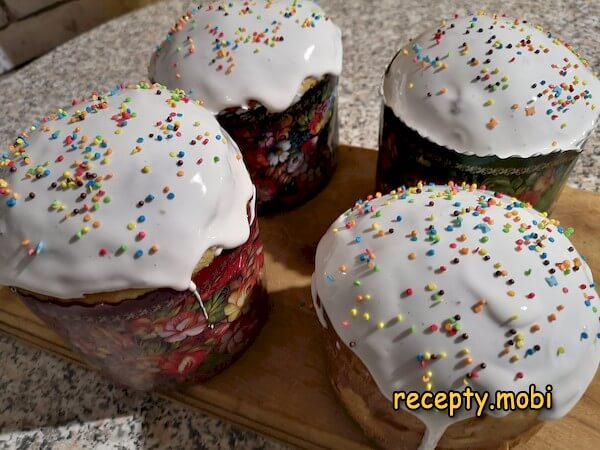
I coat the kulich with prepared gelatin icing. This icing doesn't crumble and is made without eggs. While it hasn't set yet, I sprinkle confectionery decorations on top.Bright Easter!


Tips
- 1
THE CUSTARD BASE is the "secret" of lasting freshness. Brewing the flour with hot milk gelatinises the starch, so this kulich doesn't go stale for 5 to 7 days.
- 2
RAISINS IN FLOUR are the "secret" of even distribution. Without being tossed in flour, the raisins sink to the bottom. Coated in flour, they spread through the dough, into every slice.
- 3
FILLING 1/3 OF THE MOULD is the "secret" against overflow. The kulich grows three times in size. If you pour in more, the dough will overflow the edge and burn. Exactly 1/3 is ideal.
- 4
TURMERIC FOR COLOUR is the "secret" of a yellow crumb. Without it, the crumb is white. 1/3 tsp of turmeric gives a warm, "sunny" shade without saffron. The same principle works in other types of Easter kulich.
Video
FAQ
Which yeast should you choose? +
Ideally, fast-acting dry yeast (10 g – easy to measure out). Alternatives: fresh compressed yeast (25 g – the "classic", needs to be dissolved), active dry yeast (10 g – needs to be proofed in a starter), osmotolerant yeast (10 g – "premium for sweet dough"), hop sourdough (3 tbsp – the "homemade" option), dry yeast in a sachet (10 g – convenient). The brands "Saf-Moment", "Pakmaya" and "Dr. Oetker" are reliable. Fresh yeast, with a shelf life of 2 to 3 weeks, is the "premium" option. Do not use: expired yeast (the dough won't rise) or brewer's yeast. For the "classic kulich", baker's yeast with strong leavening power is a must.
What can replace the raisins in kulich? +
Alternatives: assorted candied fruit (50 g – brighter in colour), finely chopped dried apricots (50 g – "premium"), dried cranberries (50 g – slightly tart), dried cherries (50 g – "premium"), pitted dried sweet cherries (50 g – more delicate), a 50/50 mix of raisins and dried apricots (25 g each – "premium"), pieces of dried mango (50 g – "exotic"), chopped nuts (50 g – "instead of dried fruit"). The brands "San Sanych", "Semushka" and "Bona Vita" are reliable. Fresh, soft raisins are the "premium" option. Do not use: hard old raisins (they won't soften) or candied fruit in a sugar glaze (too sickly sweet). For the "classic Easter", raisins or candied fruit are a must.
How long does kulich keep? +
In an airtight bag or box at room temperature – 5 to 7 days (thanks to the custard base, it doesn't go stale for a long time). In the fridge in cling film – up to 10 days (but it will become less aromatic). Before serving, let it stand for 30 minutes at room temperature. In the freezer (without icing) – up to 2 months; thaw for 8 hours in the fridge, then apply the icing. Fresh kulich is at its "star" best 1 day after baking (once it has "settled"). On day 2 to 3, the aroma opens up. Don't leave it out in the open without packaging – it will dry out.
What to serve with Easter kulich? +
The Easter classics: with dyed eggs and curd paskha. With a cup of black tea and lemon. With a cup of coffee and milk. With a glass of Cahors (church wine). With a glass of fresh juice (grape, apple). With a cup of cocoa and marshmallows. With Baileys cream liqueur. With a cup of herbal tea and mint. With berry jam. With 25% sour cream. With condensed milk. With fresh fruit. For an "Easter breakfast" – with eggs, tea and paskha. A versatile festive bake for Bright Easter.
- Comment
or post as a guest
Be the first to comment.