avg —
Christmas Curd Stollen (Yeast-Free)

Instructions
I put the ingredients on the table in advance so they warm up to room temperature. The cottage cheese should be smooth, not grainy.
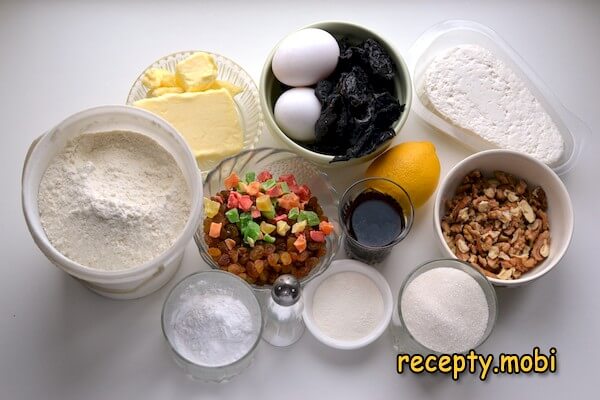
The stollen needs 300 g of any dried fruits. Mine are 100 g prunes, 100 g raisins and 100 g candied fruit peel.
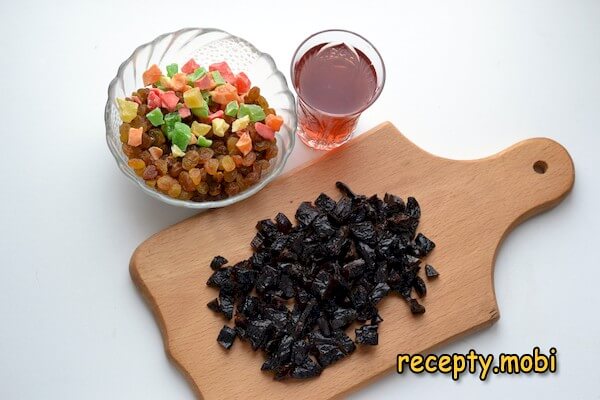
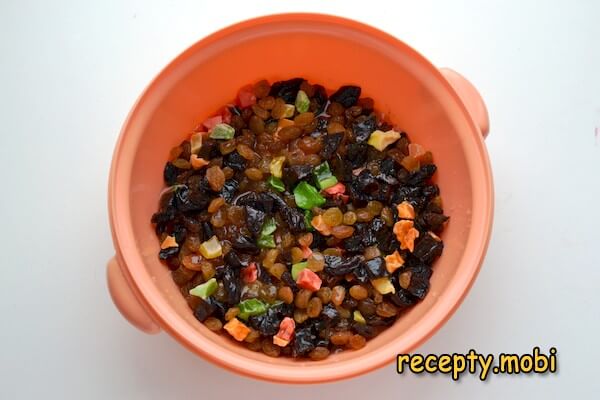
I put the dried fruits in a bowl and pour 100 g of alcohol over them. I microwave them for 2–3 minutes, bringing them to the boil. I take them out and let the mixture cool, stirring it a couple of times.
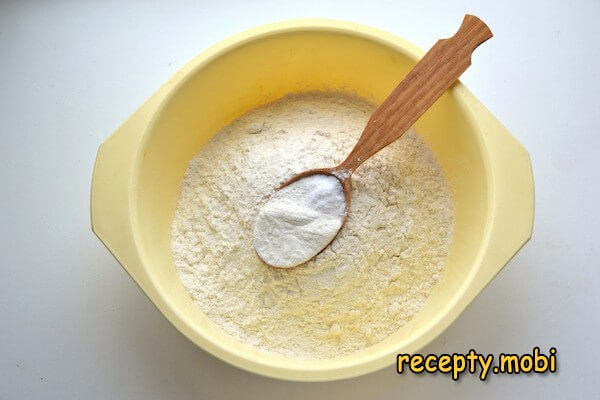
I mix the flour with the salt and baking powder and sift it all together.
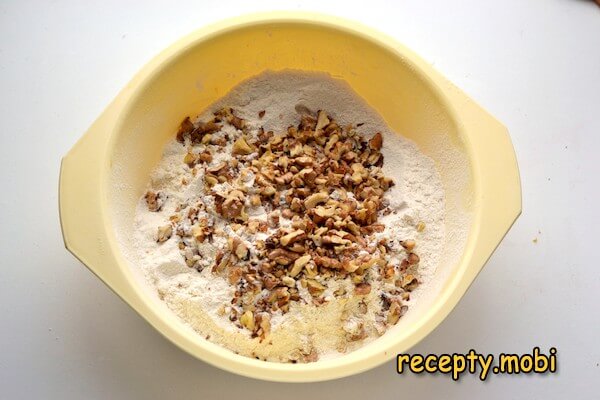
I lightly toast the nut kernels and chop them with a knife, but not too finely, so that visible pieces remain. I add the nuts to the flour and mix.
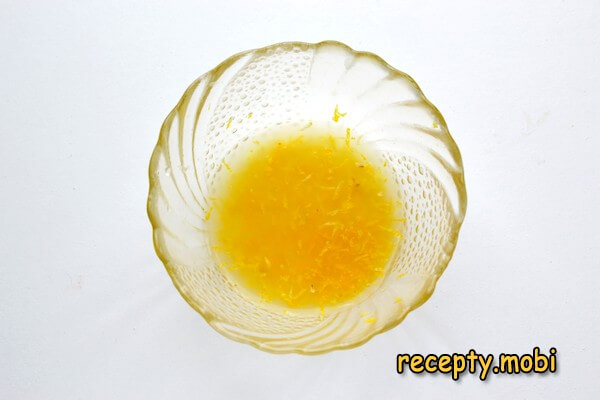
I grate the lemon zest on a fine grater. I squeeze out the juice and mix it with the zest.
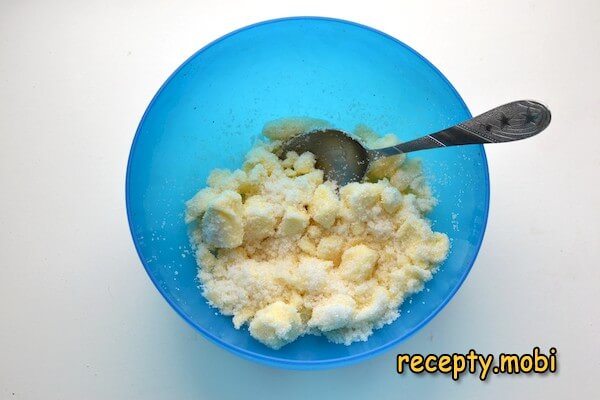
I mix the softened butter with the sugar and beat it with a mixer into a soft, fluffy cream.
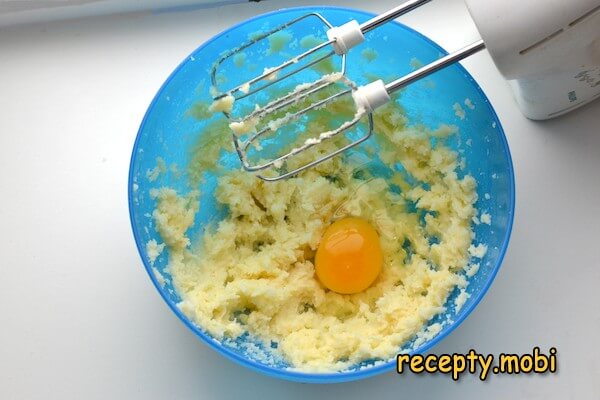
I beat in the eggs (not cold!) and whisk.
I add the cottage cheese and keep beating so that it is distributed throughout the mixture.
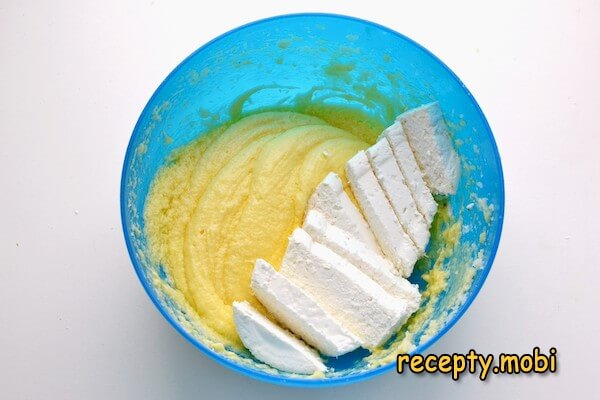
I add the lemon mixture and beat the curd mixture until uniform.
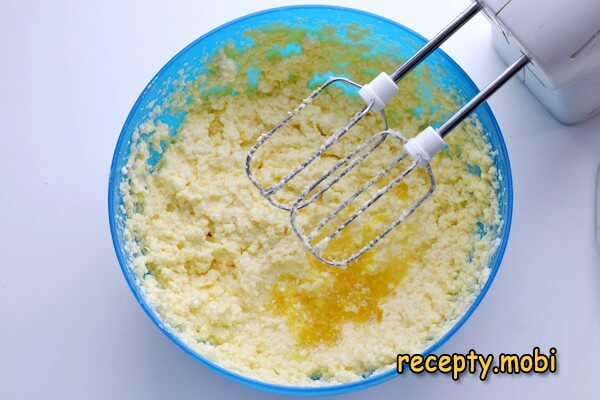
I add the flour mixture to the curd mixture and mix.
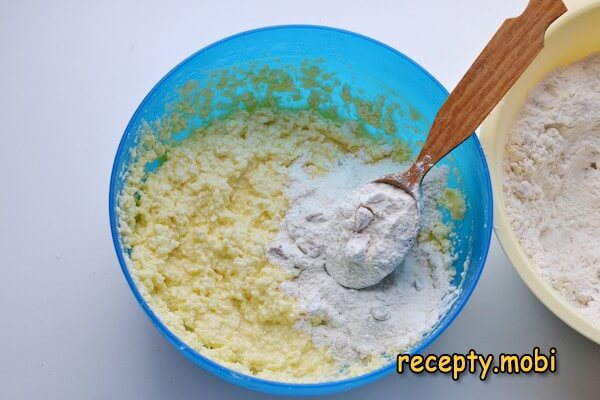
You should not mix by hand, so that the butter does not melt in the mixture. I do it with a spoon.
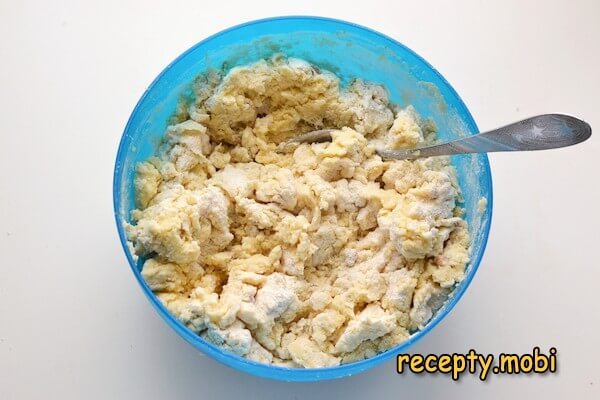
I turn the dough out of the bowl onto a flour-dusted table. I flatten the dough and place the soaked dried fruits, together with their liquid, in the middle of the sheet.
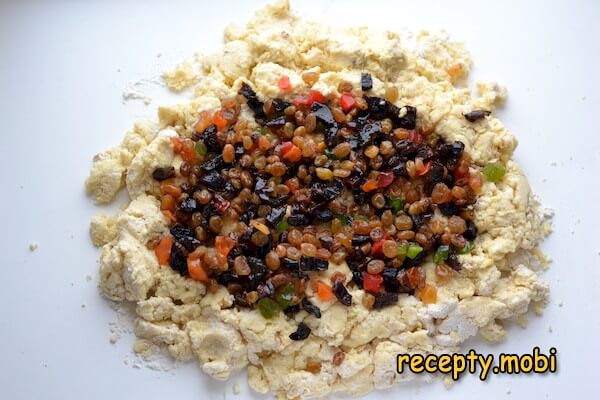
I quickly mix and pull all the dough into a ball. The dough turns out slightly sticky – I dust it with flour on all sides so it is easy to work with. I divide the dough into 2 equal parts.
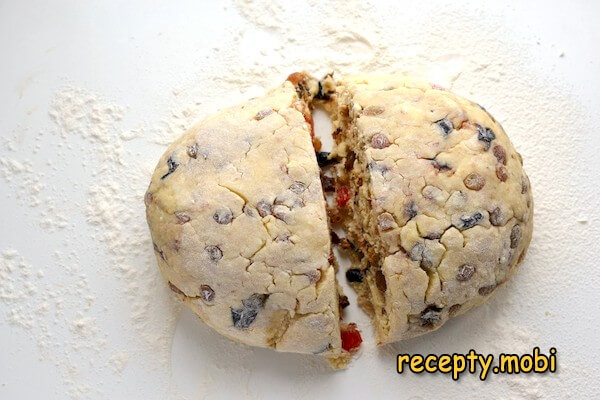
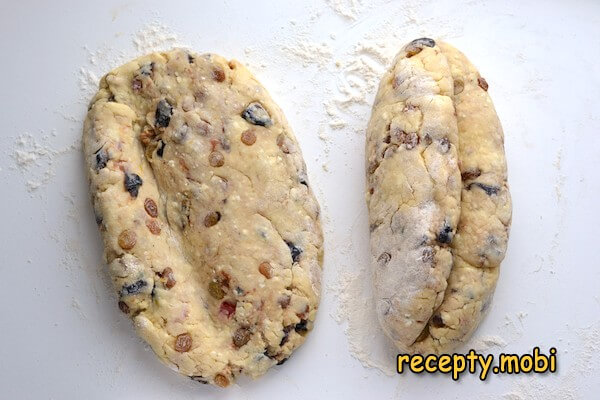
I flatten the pieces into elongated sheets about 3 cm thick. On each sheet, I come in about ⅓ of the way along the dough and press a groove with the edge of my palm. I shape the stollens: I fold the smaller part over the larger one. I round the pieces off and lift them up slightly. Since the stollens spread sideways during baking, I shape them tall.
I line a baking sheet with parchment paper and carefully transfer the shaped pieces, keeping some distance between them.
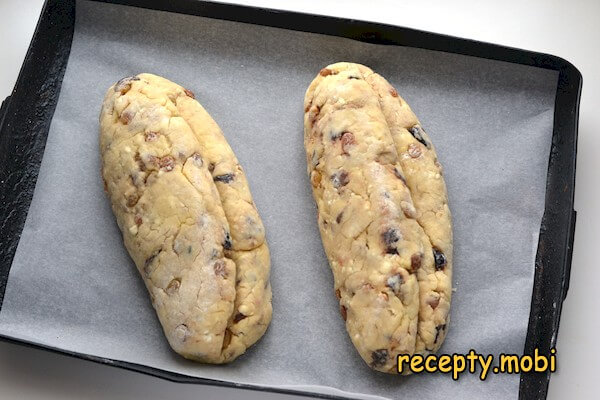
I put the baking sheet into an oven preheated to +160–170 °C for 60–70 minutes. If the top browns too quickly, I cover it with parchment. I check that it is done with a wooden skewer.
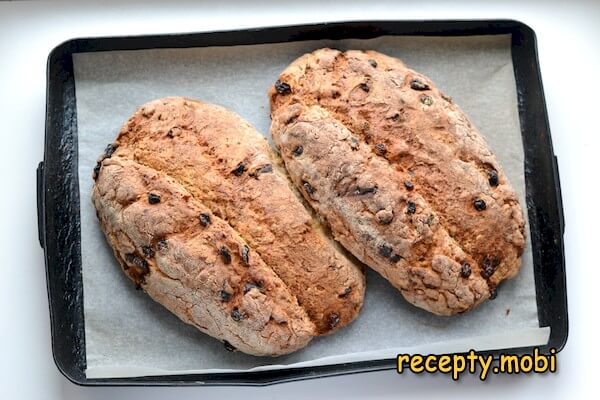
When they are done, I take them out of the oven and immediately brush each one all over with melted butter.
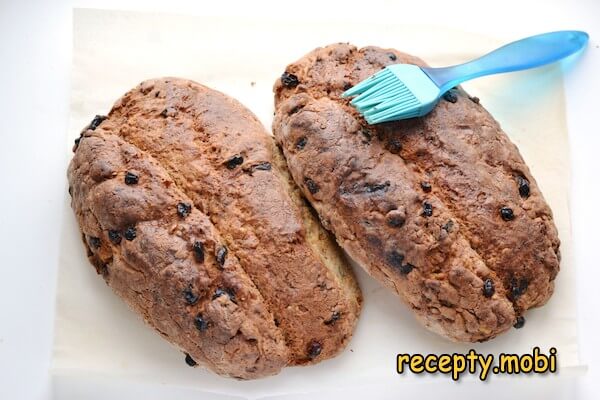
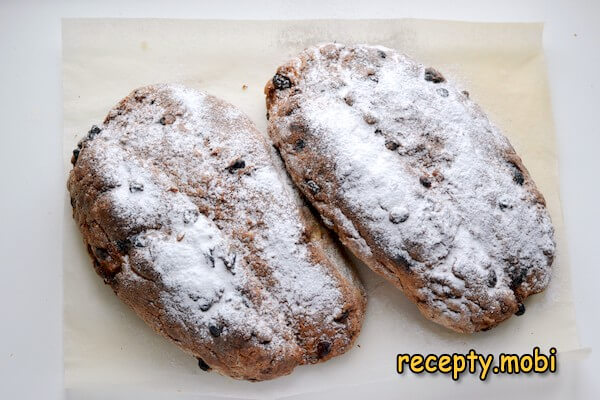
On top, I dust generously with powdered sugar – until the butter stops showing through the layer of sugar. The bake should be well "sealed" with powdered sugar. If you plan to store it for a long time, dust not only the top but the sides and bottom too. I leave it to cool.
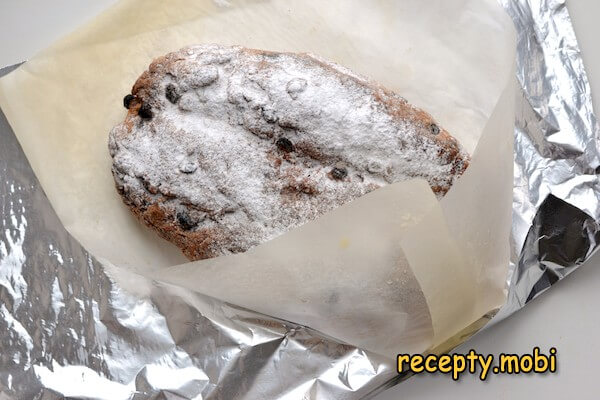
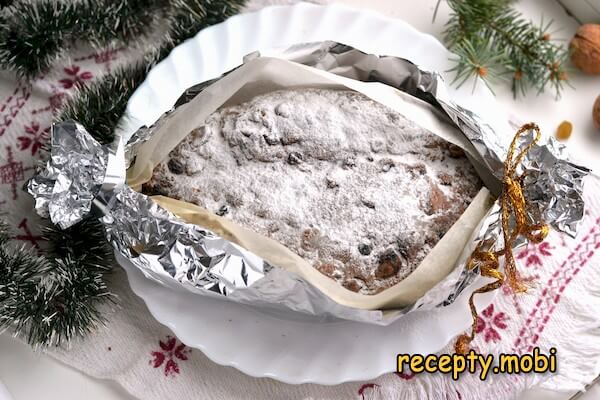
I wrap it in parchment, then in foil and a bag. In this form, I keep it for 3–4 weeks in a cool place.
Having stood for a while, the stollen will become more compact and only tastier. But you can taste the bake straight away – it is amazingly delicious!If you love giving sweet gifts, a curd Christmas stollen is a great present for the holiday!Bon appétit!


Tips
- 1
THE DRIED FRUIT IN ALCOHOL IS A MUST – it softens them and infuses them with aroma. If you avoid alcohol, replace it with apple juice (a version for children).
- 2
SEAL IT WITH POWDERED SUGAR – with butter plus powdered sugar, the stollen is "preserved". This is the secret to its long 3–4 week storage.
- 3
ALL INGREDIENTS AT ROOM TEMPERATURE – take them out of the fridge in advance. Cold ones will "curdle" the butter and cream.
- 4
AGEING FOR 3–4 WEEKS – the flavour "matures". The same principle works with other kinds of Christmas baking.
Video
FAQ
Which dried fruits are suitable? +
The classic German stollen uses raisins (dark and light) plus candied peel plus sultanas plus dried cranberries. Alternatives: prunes, dried apricots, figs, dates and dried berries. For nuts – almonds (the classic choice), hazelnuts, walnuts, pecans. Poppy seeds are an unusual "sunflower-style" option. Candied peel can be citrus (lemon, orange), cherry or pineapple. A 50/50 ratio (raisins/candied peel) is the classic. All the dried fruit should be of good quality, free of mould and not over-dried. Soak it in alcohol for 1–2 hours (or use the microwave as in the recipe). This step is a must – it gives juiciness and aroma.
What can replace the alcohol? +
The alcohol is the basis of the aroma (cognac, brandy, rum, whisky). Alternatives: apple juice (for children), concentrated fruit tea (a winter option), almond syrup (an amaretto aroma), orange juice plus 1 tablespoon of vanilla extract. Without alcohol, you can soak the dried fruit in hot water with cinnamon and cloves. For rum, dark rum is best. The alcohol does not "burn off" during baking – the aroma remains. For the authentic German version, use rum; for the French one, cognac.
How long does the stollen keep? +
In a cool place (5–15 °C) in tight packaging (parchment plus foil plus a bag) – 3–4 weeks. The ideal age is 2–3 weeks after baking, when the flavours have "settled". In the fridge it keeps longer, up to 2 months, but the texture changes. In the freezer it keeps up to 6 months in film; thaw it at room temperature. Before serving, dust it with fresh powdered sugar (the old layer will have "soaked in"). Signs of spoilage: mould, a sour smell, a change in colour. The main condition is airtight packaging to preserve the aroma and prevent it from drying out.
What do you serve the stollen with? +
It is a German Christmas classic: with mulled wine (Glühwein) and spices, tea with cinnamon and cloves, or Viennese coffee. With a glass of milk – the version for children. With a glass of semi-sweet dessert wine (Sauternes, Riesling ice wine) – a restaurant-style serving. With 33% whipped cream and cocoa – a double dessert. For the festive table, slice it thinly (5–7 mm). As a gift, pack it in a pretty tin with a ribbon – a symbol of European Christmas. To serve, dust it generously with fresh powdered sugar and decorate it with a sprig of rosemary or a fir twig.
- Comment
or post as a guest
Be the first to comment.