avg —
Chebureks with Cream Pastry

Instructions
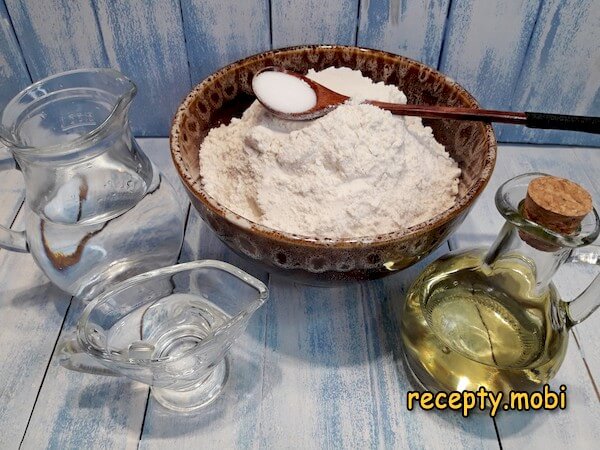
I prepare the ingredients for the choux pastry: I boil the water right before using it (water that has cooled down will not scald the flour), and I sift the 400 g of highest-grade flour beforehand through a fine sieve – aerating it gives a more tender texture.
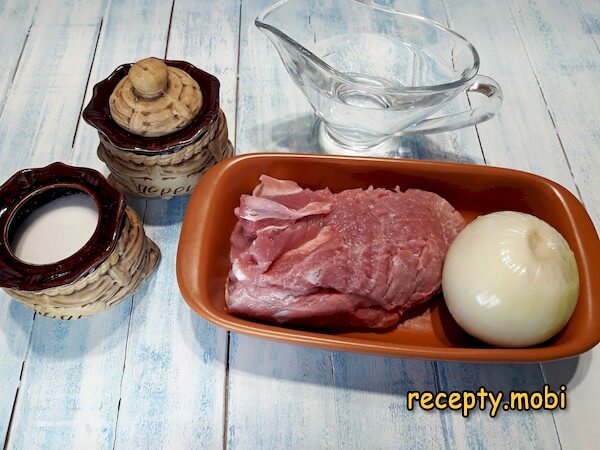
I gather the products for the filling. The pork meat (450–500 g) can be replaced with a combination of ⅔ beef and ⅓ pork fat for a more budget-friendly version. If you like, I add any fresh herbs to the minced meat – parsley, dill or coriander. Choose a firm, young white onion – it will give a sweet, juicy filling.
In a roomy bowl I combine the 400 g of sifted flour, 1 teaspoon of "Extra" salt, 40 ml of refined odourless vegetable oil and 200 ml of rapidly boiling water – right after it comes to the boil. This use of boiling water creates the characteristic choux pastry with its high elasticity.
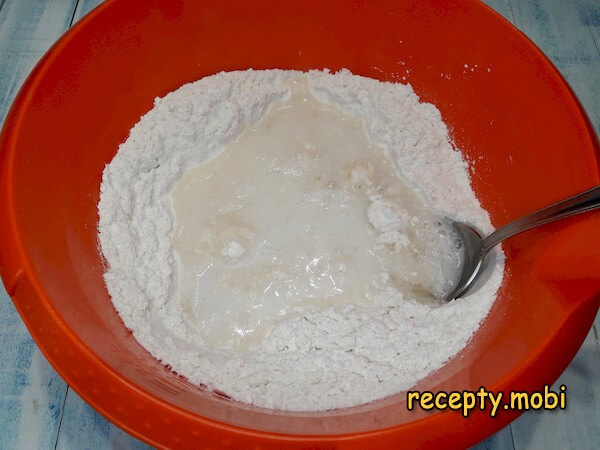
I stir the mixture vigorously with a wooden spoon for 1–2 minutes so that as much of the flour as possible is scalded by the boiling water – small lumps are normal at this stage. I wait 5 minutes until the mass cools down a little to a warm temperature, then pour in 20 ml of vodka. The alcohol evaporates completely during frying, but it creates the characteristic bubbles in the crust.
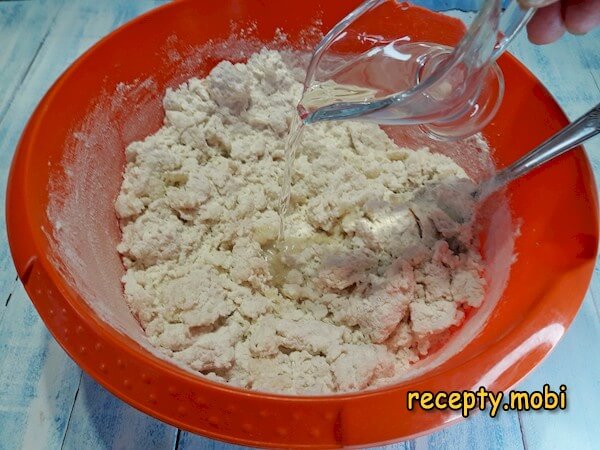
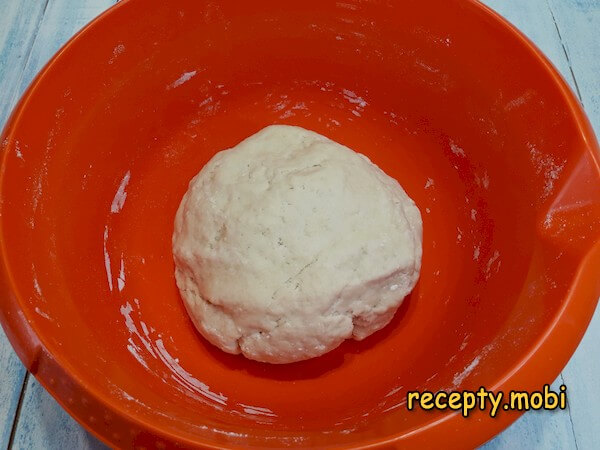
I finish kneading the dough by hand right in the bowl for 3–5 minutes, until no dry crumbs of flour remain. I gather the dough into a ball, cover the bowl with a damp towel and leave it to rest for 15–20 minutes at room temperature. The gluten relaxes and the dough becomes even more pliable.
I cut the meat and onion into medium pieces of 2–3 cm for grinding in a meat grinder. Homemade mince from fresh meat is noticeably juicier and more aromatic than ready-made from the shop.
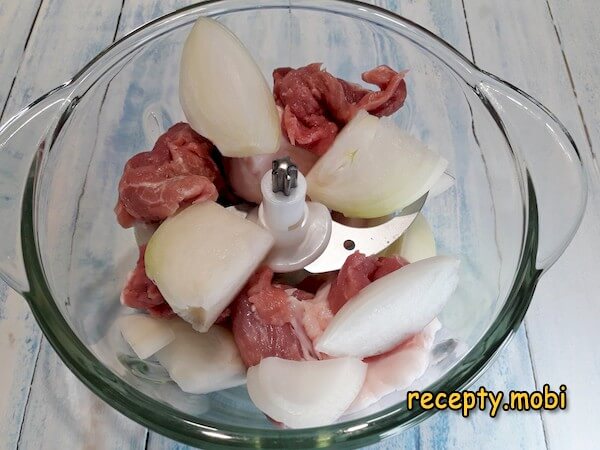
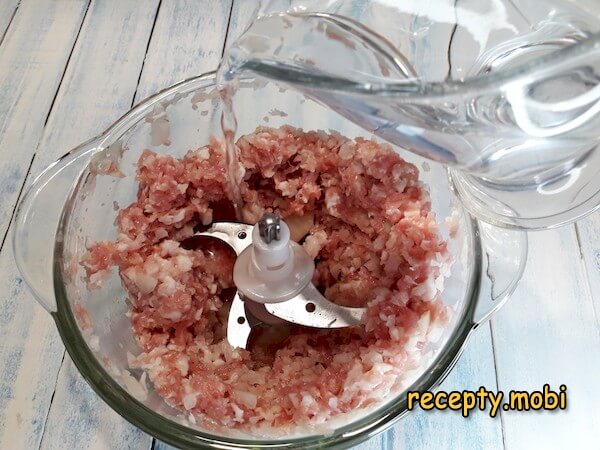
I put the meat and onion through the meat grinder with a coarse plate and immediately add 100 ml of cool drinking water – this is the critical secret to juicy chebureks. During frying the water turns to steam inside the filling and creates that very "broth" that cheburek lovers chase after.
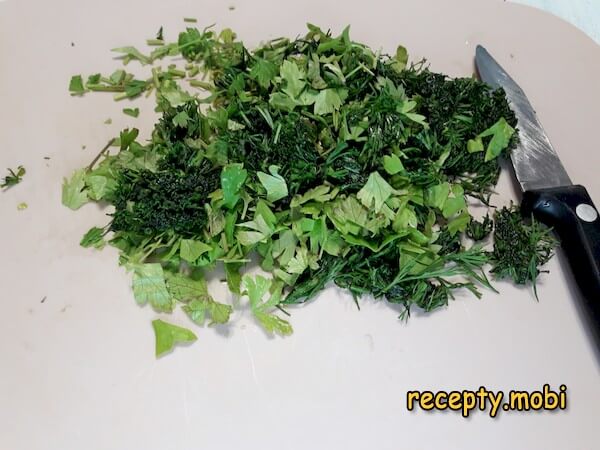
I finely chop the fresh herbs (parsley, dill or coriander, as you like) with a sharp knife – a fine chop spreads evenly through the filling and releases the most aroma.
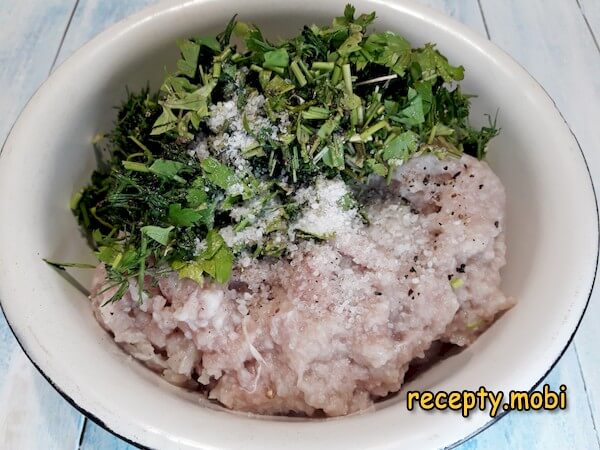
I add the herbs to the mince together with salt and freshly ground black pepper to taste. I knead the mixture thoroughly by hand for 2 minutes – the filling becomes more pliable and more uniform.
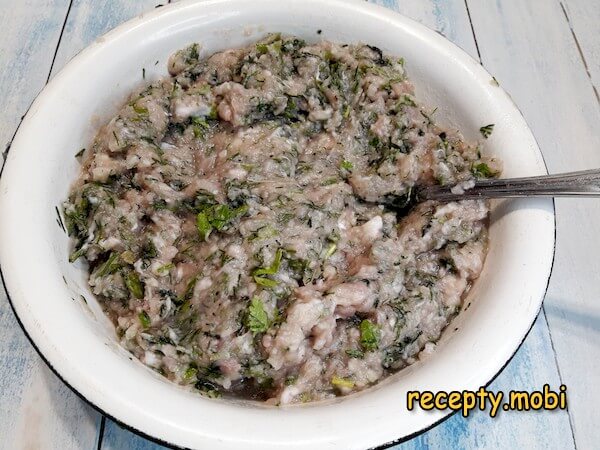
I mix the whole filling thoroughly for 2–3 minutes until it becomes a uniform, pliable mass. The test: the filling should not fall apart when rolled into a ball. The finished filling is incredibly juicy thanks to the water and the right consistency.
I take the rested dough out of the bowl and knead it for barely a minute – it becomes smooth and obedient under your hands. I divide the piece in half and stretch each into a sausage 4–5 cm in diameter, then cut each sausage into 6 equal parts – 12 balls in total.
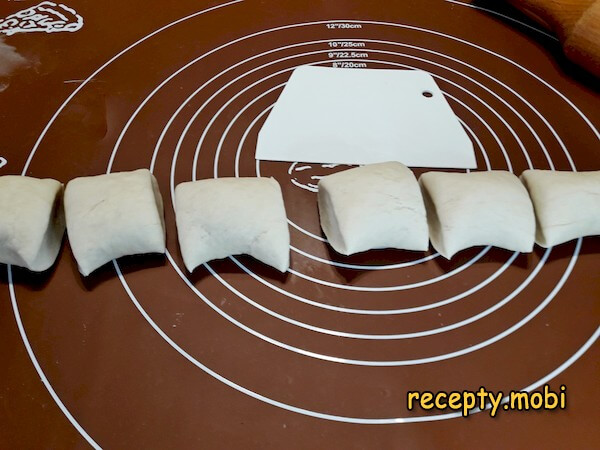
I roll the pieces of dough into neat balls with my palm on the table and let them rest under cling film for 5 minutes – the gluten relaxes fully and the dough rolls out perfectly.
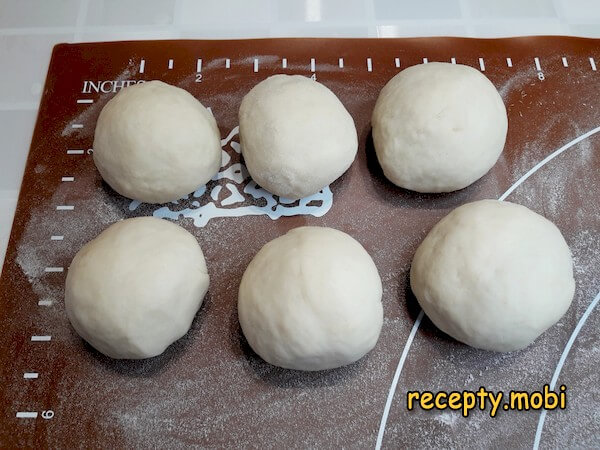
I roll the pieces out very thinly, almost to the point of being translucent – with choux pastry this is easy, as it does not tear. The diameter of the finished round is 20–22 cm. I lightly dust the table surface with flour, but not too much – excess flour can burn during frying.
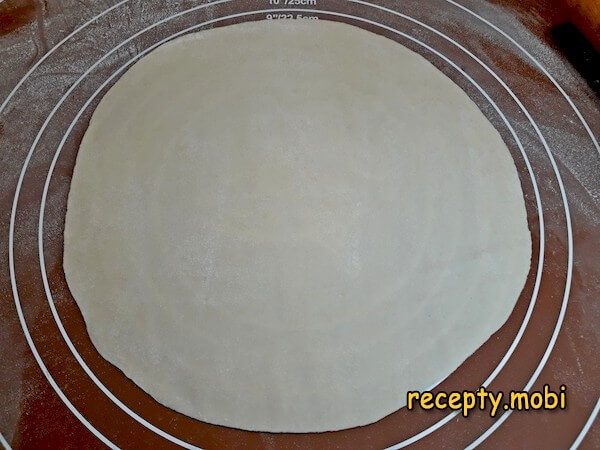
On one half of the rolled-out round I place 1.5 tablespoons of filling and carefully spread it in a thin layer, stopping 2 cm short of the edge – this way the seam comes out tight when sealed and will not come apart during frying.
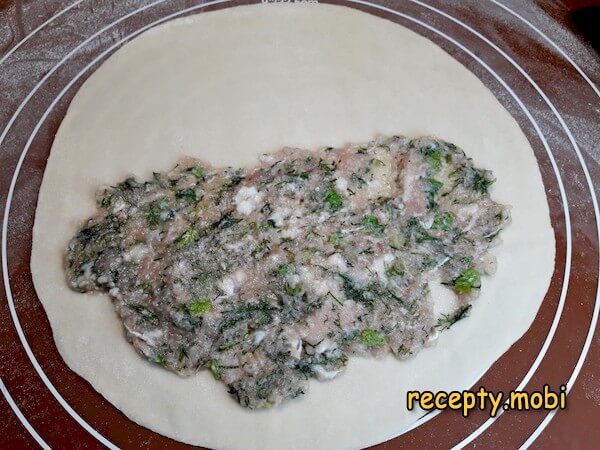
I cover the filling with the free half of the dough and carefully push out the air – pressing the dough from the fold towards the edges with the side of my hand. I press the open edges together firmly with my fingers – the seam must be completely airtight.
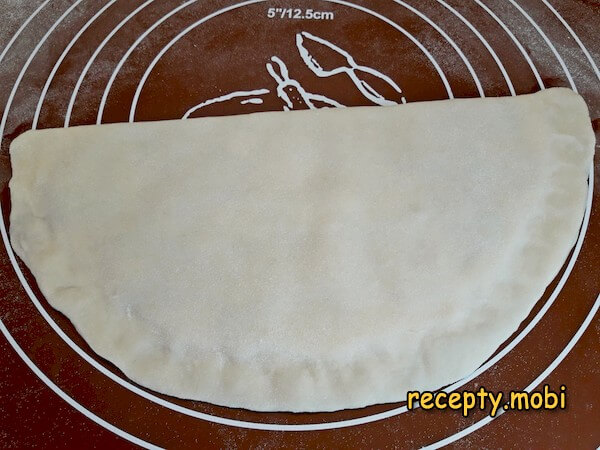
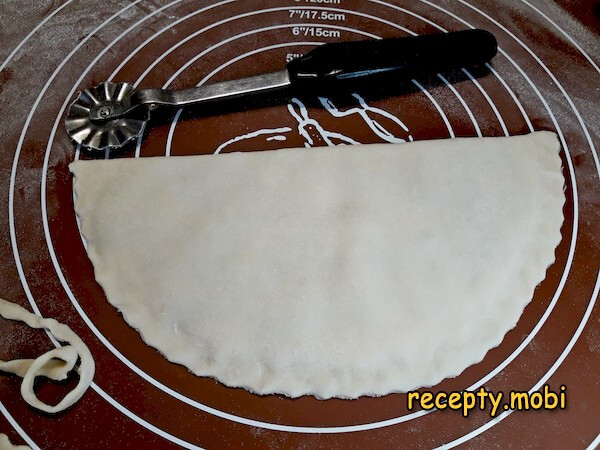
I trim the semicircular edge with a fluted cutter or an ordinary saucer to get an even edge – a classic cheburek has its characteristic wavy border. A fluted cutter gives a more authentic look.
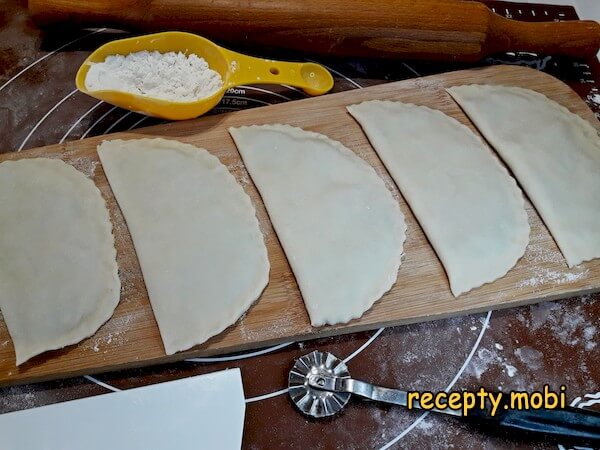
I place the finished chebureks on a chopping board lightly dusted with flour – this way they will not stick. I do not stack them on top of one another before frying, so as not to spoil their shape.
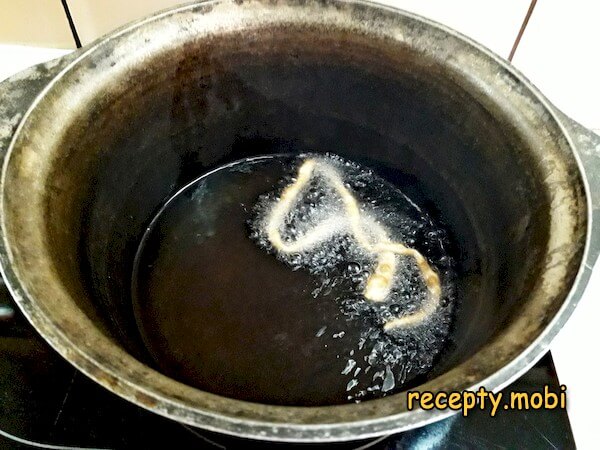
I fry them in a large amount of oil – the chebureks should literally float in the oil as in deep-frying. I heat 500 ml of refined oil in a cauldron to 170–180 °C. I check the heat with a scrap of dough – if it immediately starts to sizzle and bubble actively, the oil is ready.
I carefully lower the piece into the cauldron, trying to lay it down away from me – this way the splashes will not burn me. I fry one side for about 2 minutes until a golden crust with the characteristic bubbles forms.
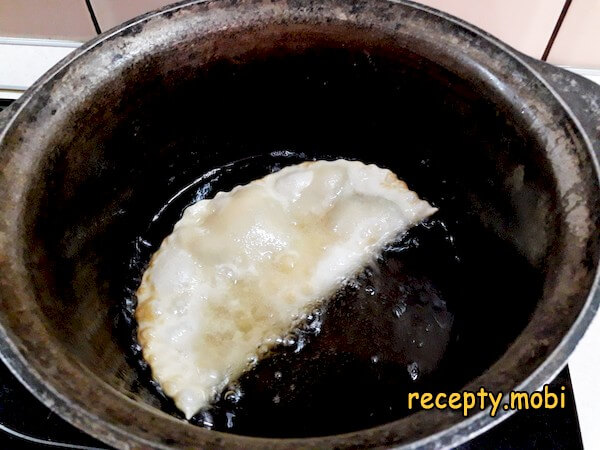
I turn the piece over onto the other side with a special spoon or a slotted spoon and fry it for another 2 minutes until a lovely, even golden colour is achieved. I turn it over only once – frequent handling spoils the structure of the crust.
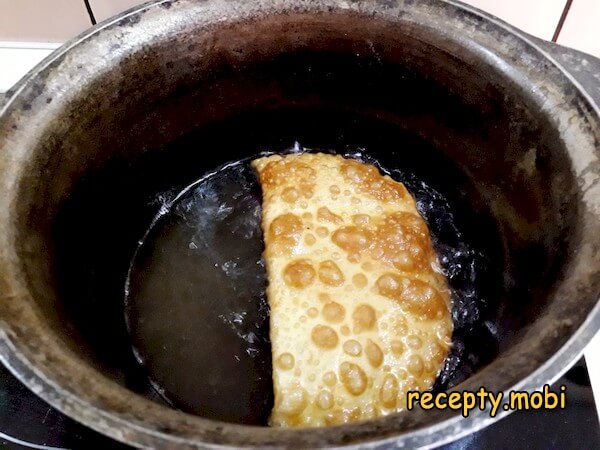
I place the finished homemade chebureks on a paper towel to soak up the excess fat – this way they will not be greasy. I serve the chebureks with choux pastry piping hot, straight away. A cold accompaniment goes well with such a hearty dish – sour cream, kefir, ayran or other fermented milk drinks.



Tips
- 1
The vodka in the dough creates the characteristic crisp crust with airy bubbles – the alcohol evaporates completely during frying, leaving only the textural effect. This is a home cook's professional trick.
- 2
The water in the filling (100 ml per 500 g of meat) makes the filling as juicy as possible – it is precisely this that forms that very broth inside the cheburek. Do not skip this critical step.
- 3
The dough should rest for at least 15 minutes under cling film or a towel – this lets the gluten relax so the dough becomes pliable and rolls out as thin as parchment without tearing.
- 4
Ready, raw chebureks can be frozen for up to 2 months. Fry them without defrosting – lower them straight into the hot oil, increasing the frying time by 1 minute on each side.
FAQ
Can I make homemade chebureks without vodka? +
Yes, but the dough will be less bubbly and crisp. Replace the 20 ml of vodka with the same amount of plain water – the elasticity will be preserved, but there will be no characteristic airy bubbles on the crust. To partly recreate the effect, try sparkling mineral water – it gives a little bubbliness thanks to the carbon dioxide. The vodka can also be replaced with light beer (20 ml) – you will get an even lighter, flakier crust. In the classic recipe it is the vodka that gives that signature cheburek-shop effect, but its absence will not ruin the homemade result.
Why do chebureks burst when frying in oil? +
There are two main reasons: the air was not pushed out of the cheburek well during shaping (an air bubble inside expands when heated and tears the dough), or the edges were not sealed well (the seam comes apart under the pressure of the steam). The solution: press the dough carefully from the centre to the edges, pushing out all the air. Seal the edges first with your fingers, then go over the seam with a fork for reliability. Trim off the excess dough with a fluted cutter – an even edge holds the seam better. Also, do not overfill – 1.5 tablespoons per cheburek is enough; more will lead to tearing.
How long do ready homemade chebureks keep? +
In the fridge, under cling film or in a container, for up to 2 days without losing their taste. Reheat them in the oven at 180 °C for 10 minutes to restore the crisp crust – a microwave makes the dough soft, which is not suitable for chebureks. In a dry frying pan under a lid for 3 minutes on each side is also a good option. Raw pieces can be frozen for up to 2 months – fry them without defrosting, straight in the hot oil. Cooked, fried chebureks do not freeze well – after defrosting the dough loses its crispness.
Which flour is best for choux pastry? +
Highest-grade wheat flour with a gluten content of 10–12% is ideal – it is exactly this that gives an elastic dough that rolls out as thin as parchment. First-grade flour also works, but the dough will be a little less tender. Flour with a low gluten content (wholemeal, pancake flour) is not suitable – it gives a brittle dough that will tear when rolled out. You can mix 350 g of highest-grade flour with 50 g of semolina – you will get an unusual texture with a slight graininess. The homemade recipe allows such experiments, but the classic is highest-grade flour only.
- Comment
or post as a guest
Be the first to comment.