avg —
Alexandrian Easter Bread with Baked Milk

Instructions
I prepare the ingredients for the sponge. It is best to make it in the evening, so that overnight the sponge ferments well and the next day you can continue making the kuliches. The eggs and butter must be at room temperature.
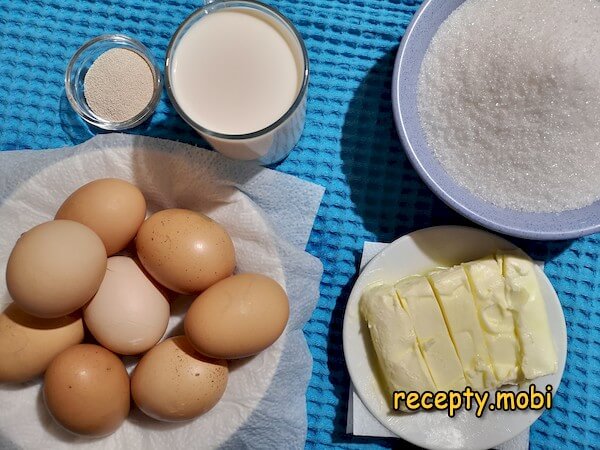
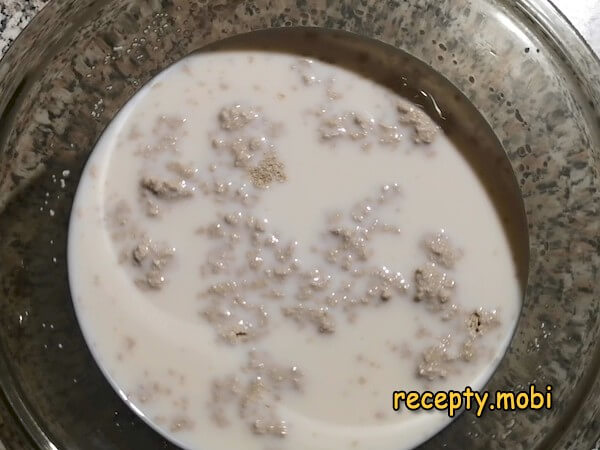
To 500 g of baked milk I add 17 g of dry yeast and mix everything thoroughly.
Into a deep container I crack 6 eggs and 2 more yolks; the leftover whites can be used to make French meringue or another dish.

To combine the whites and yolks, I lightly beat the eggs. A whisk is the most convenient tool for this.

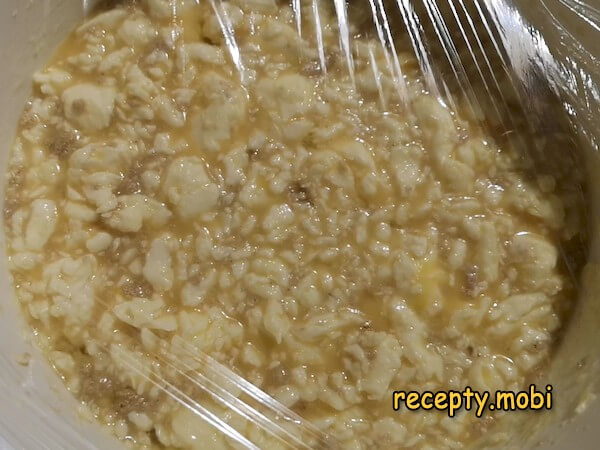
To the egg mixture I add the baked milk with yeast, the room-temperature butter, and 500 g of sugar. I mix all the ingredients thoroughly. I cover the sponge with cling film and leave it at room temperature for 10–12 hours.
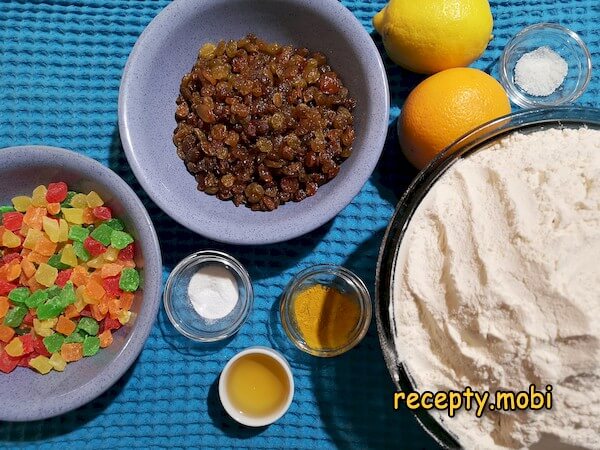
Once the sponge has fermented, I prepare the ingredients for the Alexandrian dough. I rinse the fruit and the raisins well under running water.
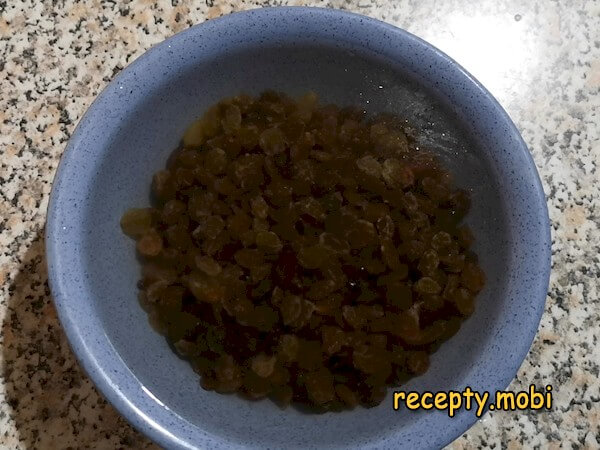
I pour boiling water over the raisins and leave them until they cool.
Into a convenient dish I grate the zest of the lemon and the orange.

This is how our sponge has fermented.
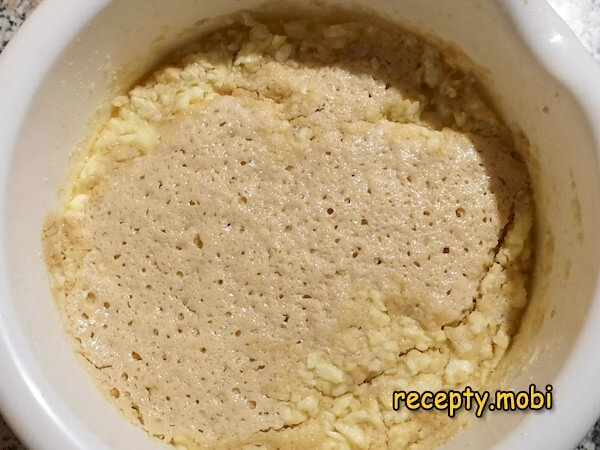
I stir it.
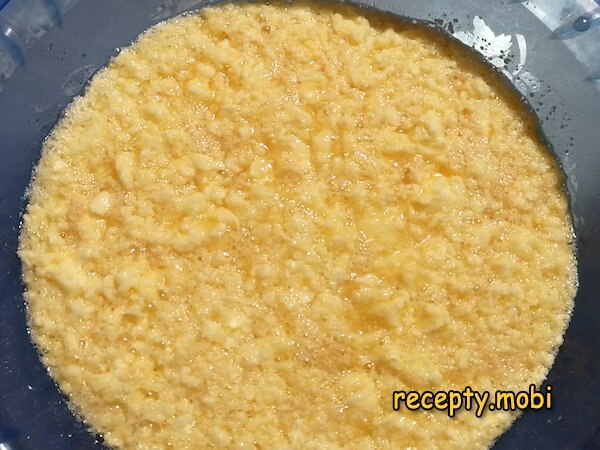
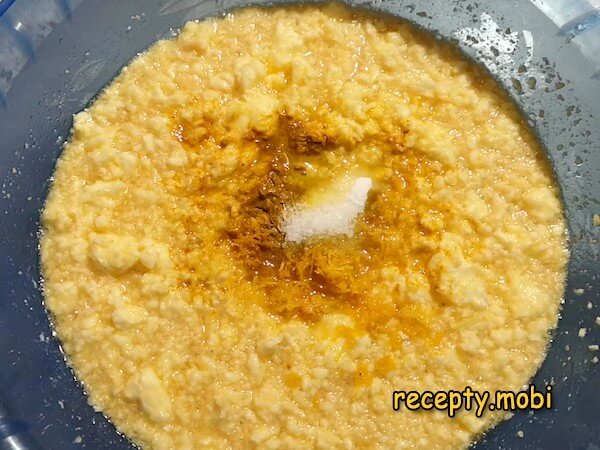
I begin making the Alexandrian dough. To the sponge I add the orange and lemon zest, half a teaspoon of turmeric (optional), 2 tablespoons of cognac, 2 g of vanillin, and half a teaspoon of salt. I mix everything.
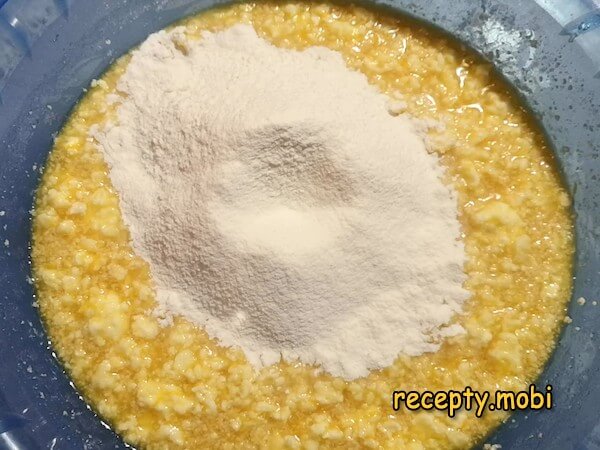
I sift roughly half of the total flour into the sponge little by little, in small portions. I mix each portion in well.
Once I have sifted in half of the total flour, I drain the cooled water from the raisins and pat them dry. I add a tablespoon of flour to them and mix.
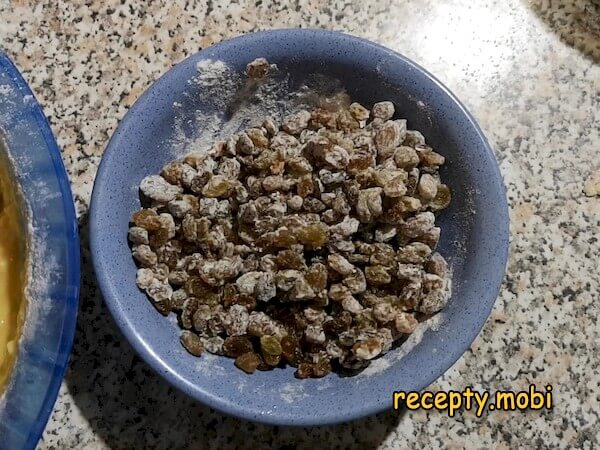
I add the raisins and candied fruits to the dough. I mix everything.

In small portions I sift the remaining flour into the dough and keep mixing. As soon as it becomes hard to mix the dough with a spoon, I start kneading it by hand for about another 10 minutes. The dough turns out quite sticky and clings strongly to the hands.

Since the dough will roughly double in size, it is best to transfer it to a container of a suitable size. I cover the dough with cling film and put it in a warm place. I leave it there until it has increased roughly twofold. For me this took about 1.5–2 hours.
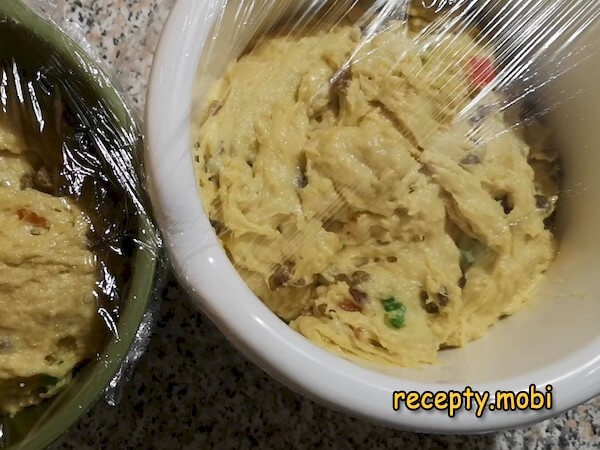
After a while the dough will rise considerably.
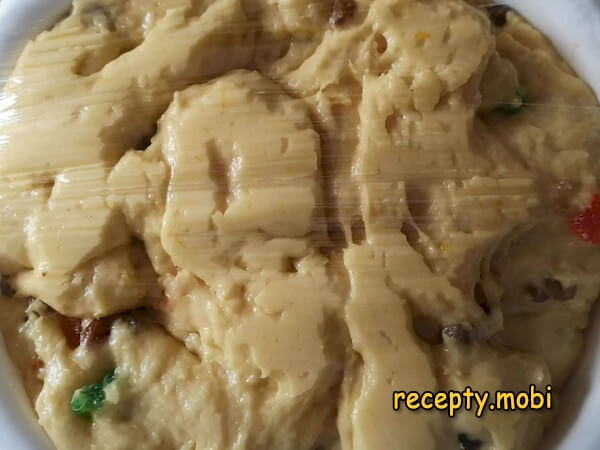
I remove the cling film. I grease my hands with vegetable oil and knock the dough back for a few minutes.
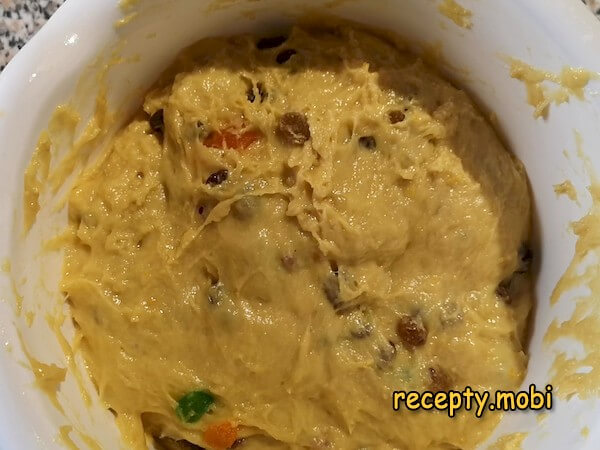
I grease my hands with vegetable oil again and divide the Alexandrian dough among the kulich moulds, which need to be filled to 1/3 of their size. In our case this made 4 moulds 13 centimetres in diameter and 1 mould 11 centimetres in diameter. I put the moulds in a warm place and cover them with a towel. I leave them for about 1.5 hours.
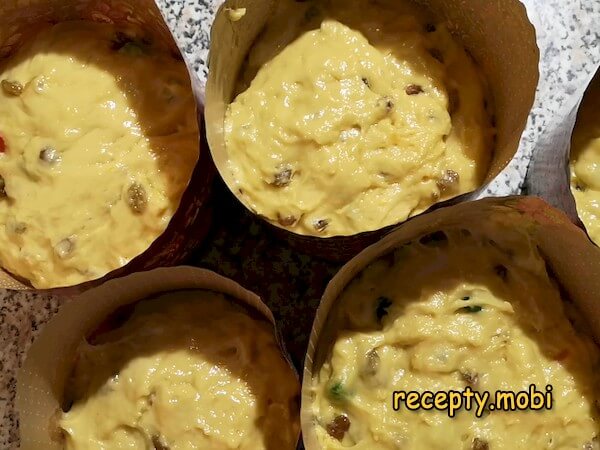
This is how our dough has proofed.
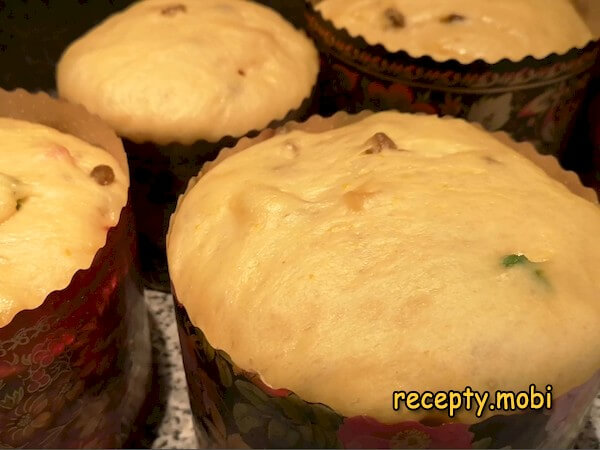
I move the moulds onto a baking sheet and put it into an oven preheated to 170–180 degrees for 30 minutes. I check for doneness with a wooden skewer. After piercing the kulich, it should come out dry.

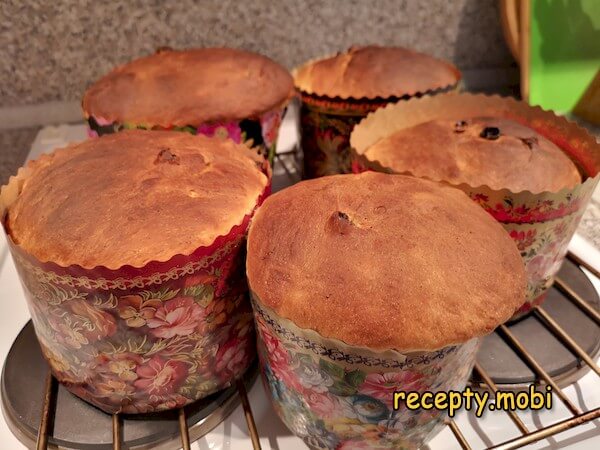
I take the Alexandrian kuliches out of the oven and leave them until they cool completely.
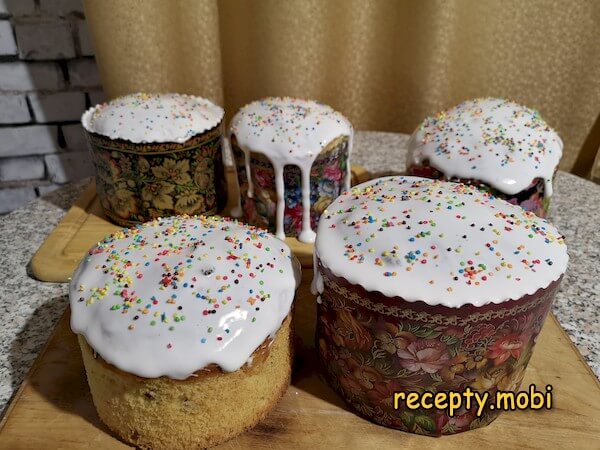
Once the kuliches have cooled, I cover them with prepared gelatin glaze. Since the glaze sets quickly, you should sprinkle them with confectionery decorations straight away.

The Alexandrian kuliches with baked milk are ready. This is an incredibly fragrant pastry that will be a wonderful decoration for the Easter table.Happy Easter!


Tips
- 1
The overnight sponge is the "secret" to the aroma. The 11 hours of slow fermentation give a deep flavour and a porous crumb that you cannot achieve with a quick 30-minute sponge.
- 2
Baked milk is the "secret" of the Alexandrian kulich. Ordinary milk gives a standard flavour. Baked milk gives caramel notes and a creamy aroma, just as in old-time recipes.
- 3
Zest and cognac are the "secret" to complexity. Without them you get an ordinary kulich. With citrus zest and cognac you get a "premium" aroma that opens up over the second and third day.
- 4
Raisins coated in flour are the "secret" to even distribution. Without coating, the raisins settle to the bottom. Coated in flour, they spread through the whole dough, into every slice. The same principle works in other kinds of Easter kuliches.
Video
FAQ
Which baked milk should you choose? +
Ideally, fresh baked milk with 4% fat (500 ml – thick and aromatic). Alternatives: homemade baked milk made in the oven (500 ml – a "premium" option), a 50/50 mix of regular and baked milk (250 ml of each – a "budget" option), regular 3.2% milk plus 1 tbsp of butter (500 ml – a substitute), varenets (500 ml – a "premium" cultured option), ryazhenka (500 ml – a "budget" option, slightly more sour), or carton-pasteurised baked milk (500 ml – convenient). Trusted brands include Prostokvashino, Domik v Derevne and Avida. Fresh homemade baked milk is the "premium" choice. Do not use soured milk (the sponge over-ferments) or flavoured, sweetened milk. For a "classic Alexandrian kulich", baked milk is a must.
What can replace the cognac? +
Alternatives: rum (2 tbsp – a "premium classic"), brandy (2 tbsp – a substitute), whisky (2 tbsp – "premium", brighter), white vermouth (2 tbsp – an "experiment"), vanilla extract plus water 50/50 (1 tbsp of each – an alcohol-free option), Baileys liqueur (2 tbsp – "premium" and creamy), or raspberry or cherry cordial (2 tbsp – a berry accent). Trusted brands include Hennessy, Martell and Ararat. Fresh cognac aged 5 or more years is the "premium" choice. Do not use plain vodka (too sharp) or savoury infusions. For the "classic Alexandrian", a sweet, aged spirit is a must.
How long does Alexandrian kulich keep? +
In an airtight container or bag at room temperature – 7–10 days (thanks to the baked milk and the long sponge). In the refrigerator, wrapped in film – up to 14 days. Before serving, let it stand for 30 minutes at room temperature. In the freezer (without glaze) – up to 2 months; defrost for 8 hours in the refrigerator, then apply the glaze. A fresh kulich is at its "best" 1–2 days after baking (once it has "rested" and the aromas come together). By day 3–5 the flavour is deeper and richer. Do not leave it out unwrapped – it will dry out within a day.
What to serve with Alexandrian kulich? +
The Easter classic: with dyed eggs and a cottage-cheese paskha. With a cup of black Earl Grey tea with lemon. With a cup of latte or cappuccino. With a glass of Cahors (church wine). With a glass of freshly squeezed grape juice. With a cup of cocoa with marshmallows for children. With Baileys cream liqueur. With a cup of herbal tea with mint. With berry preserves or jam. With 25% sour cream. With condensed milk. With fresh fruit (mandarins, apples). With a cup of thyme tea and honey. For an "Easter breakfast" it is a versatile serving. It is the main festive pastry for Easter.
- Comment
or post as a guest
Be the first to comment.