avg —
Cookie with Currant Marshmallow

Instructions
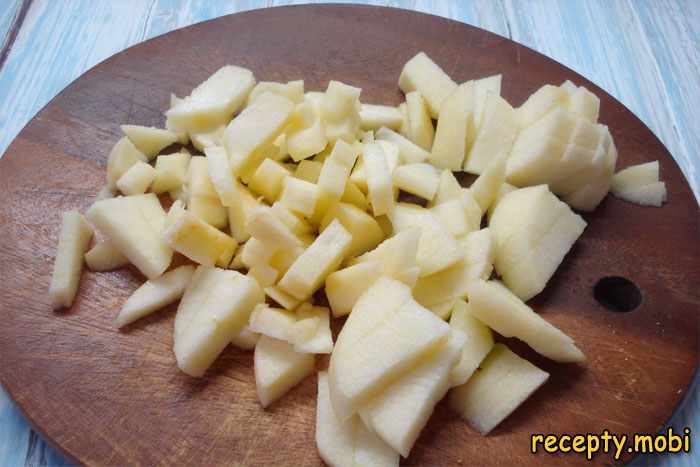
Prepare the base for the puree: peel a medium apple, remove the core with the seeds and cut it into small 1–1.5 cm cubes – pieces this size soften quickly when stewed.
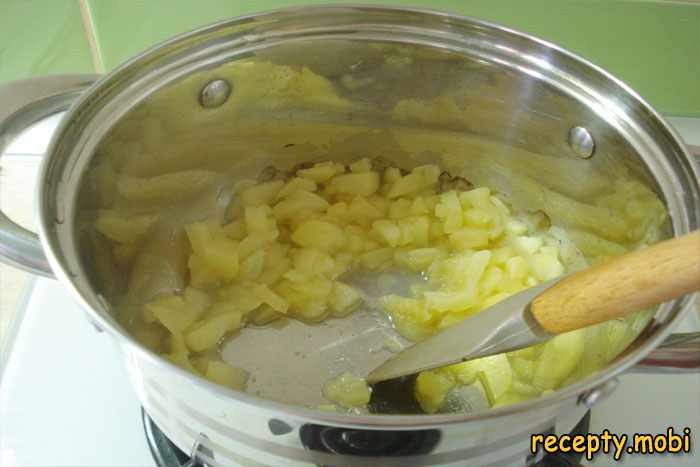
In a small saucepan, stew the apple with 20 g of water under a lid over low heat for about 10 minutes – it should soften completely and start to fall apart into fibres. Stir occasionally so it doesn't catch. The apple pectin will set the future marshmallow.
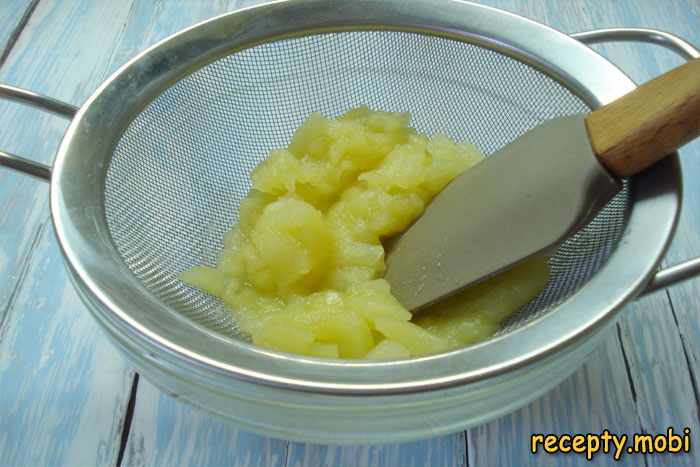
Rub the stewed apple mass through a fine sieve – you will get a smooth apple puree with no lumps or skin. This technique is crucial: a blender will not give the same smoothness as a sieve, and any grains will be noticeable in the marshmallow.
Wash 150 g of black currants thoroughly, pat them dry and blitz with an immersion blender to a smooth puree. In winter you can use frozen currants – thaw them in a sieve first so the excess water drains off.
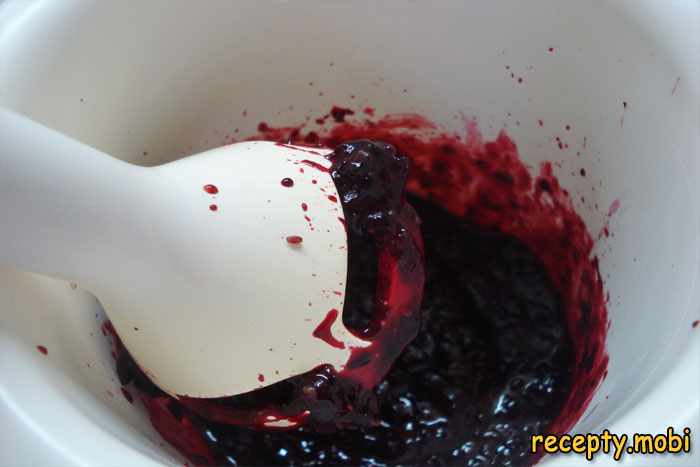
Combine the sieved apple puree and the blended currants in one saucepan. The currants give a bright ruby colour and a characteristic tartness, while the apple provides the pectin needed for setting. A ratio of 150 g of currants to 1 apple is ideal.
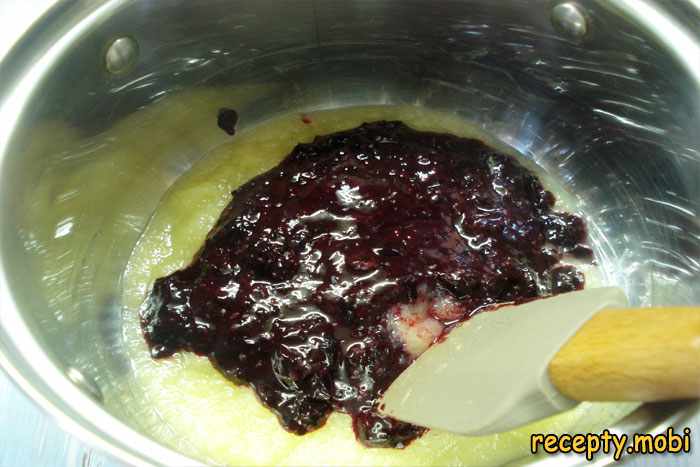
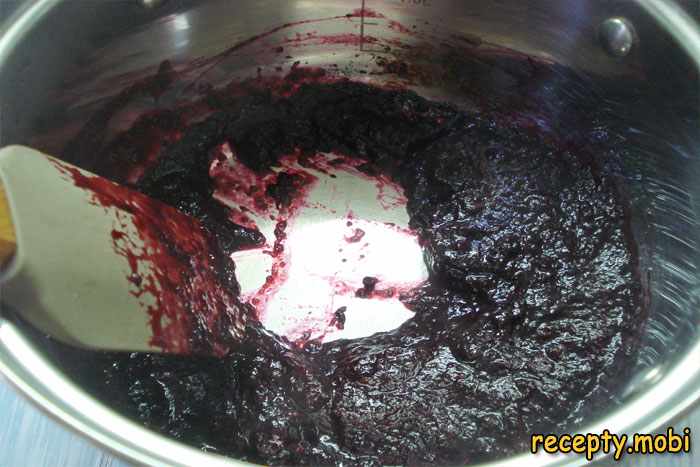
Cook the mixture over medium heat to a thick consistency – until no more liquid pools at the bottom and the mass holds the trail of a spoon. This takes 15–20 minutes. As it reduces, the mass becomes dense and darkens in colour – a sign of concentrated flavour.
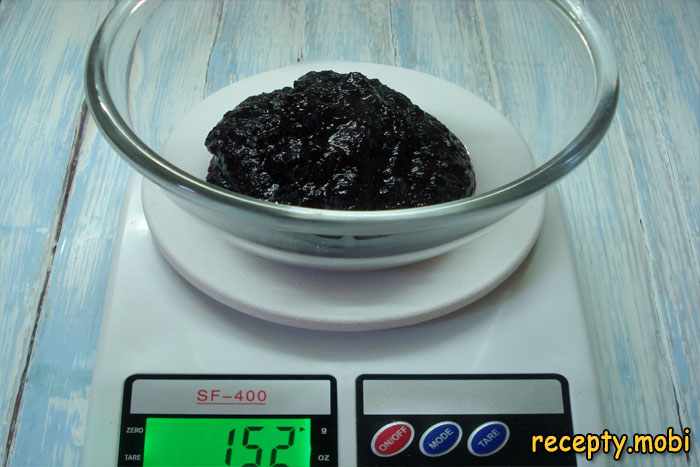
Set aside 150 g of the cooked puree – that is exactly how much goes into the marshmallow. The rest (if any) can be used as jam for other desserts or simply with tea. Weighing it accurately on kitchen scales is essential here.
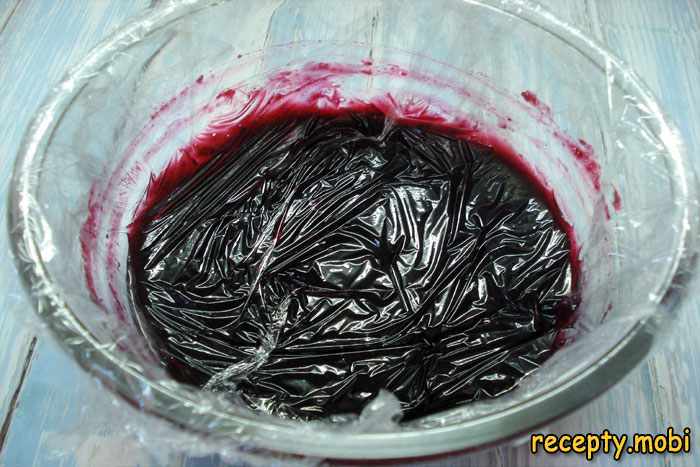
Dissolve 130 g of sugar in the hot puree, stirring briskly with a whisk – the sugar will dissolve completely in the warm mass. Cover with cling film in contact with the surface and refrigerate for at least 8 hours – during this time the pectin forms a stable gel, which is critical for a fluffy marshmallow.
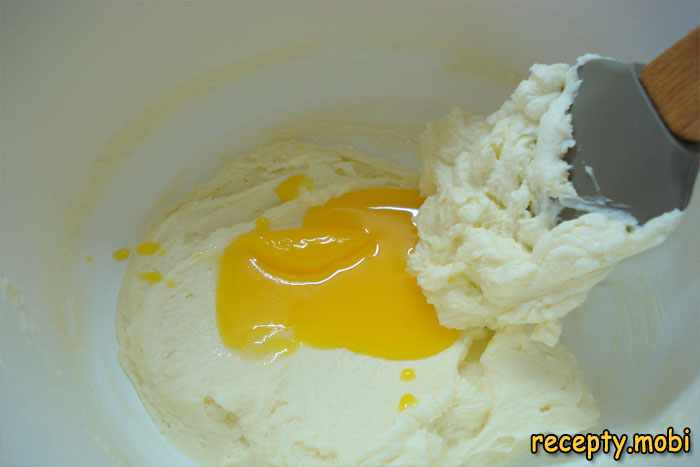
Make the shortbread dough: cream 100 g of soft butter at room temperature with 40 g of powdered sugar until pale and airy – the mixer works for 3–4 minutes. Add 1 yolk and beat again until smooth.
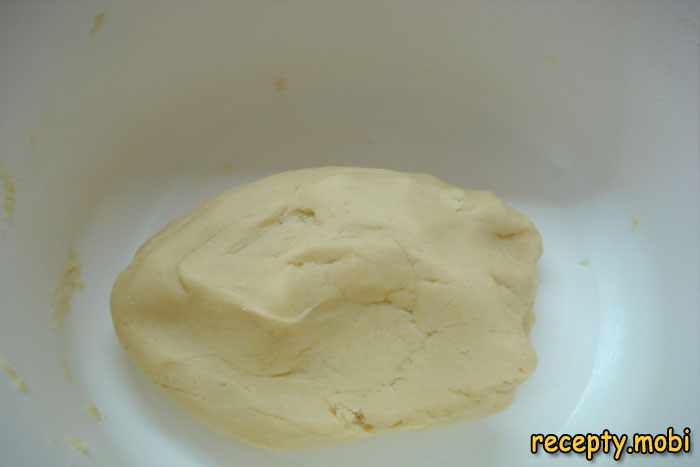
Sift in 160 g of flour with ¼ tsp of baking powder and gently bring the dough together into a ball – don't knead it for long, or the butter will warm up and the dough will turn dense. Wrap it in cling film and put it in the fridge for 2 hours to firm up.
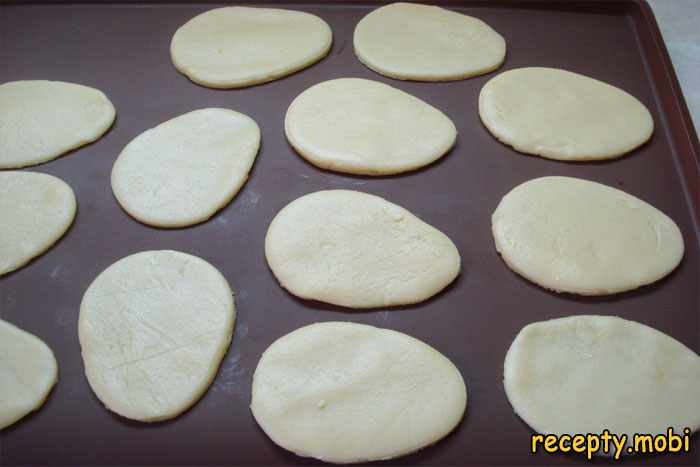
Roll out the chilled dough between sheets of parchment to a thickness of 3 mm – this thickness gives the ideal balance of crunch and tenderness. Cut out cookies with a round or shaped cutter 5–6 cm in diameter and carefully arrange them on a parchment-lined baking sheet. This dough makes 12–14 cookies (6 sandwiches).
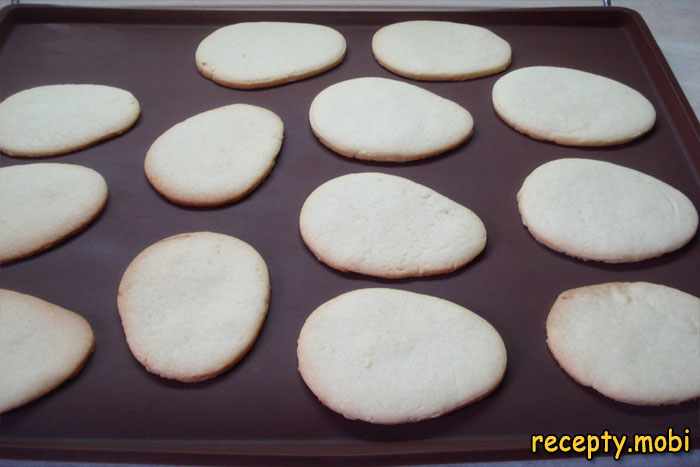
Bake in an oven preheated to 180 °C for 10–15 minutes – the cookies should brown slightly at the edges but stay light in the centre. Shortbread dries out quickly, so keep an eye on the time. Cool completely on a wire rack before assembling the sandwiches.
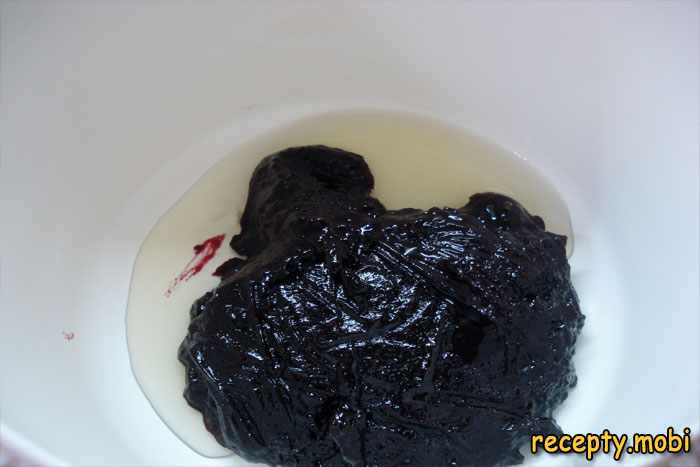
Take the set fruit puree out of the fridge – it should be firm and springy. Add 1 room-temperature egg white straight into the bowl with the puree. The white must be fresh, with no bits of shell or traces of yolk – otherwise the marshmallow won't whip up.
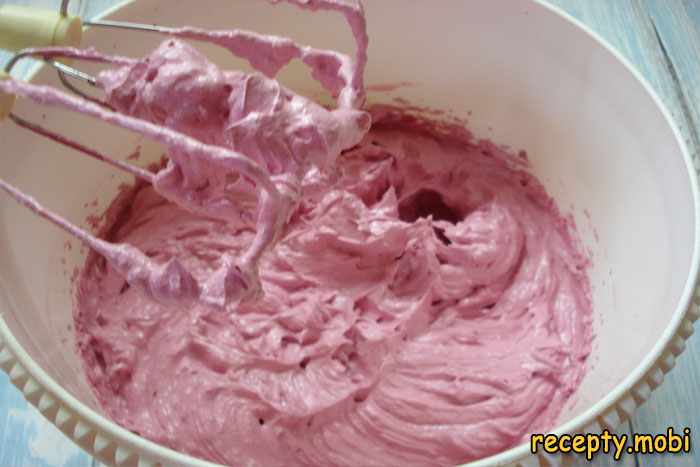
Whip the puree-and-white mixture with a mixer on high speed for 3–5 minutes until stable and fluffy – the mass should increase significantly in volume and turn pale. Fluffiness and volume are critical here for the texture of the finished marshmallow.
Combine all the syrup ingredients (200 g sugar, 50 g invert syrup, 7 g agar-agar, 100 ml water) in a small heavy-bottomed saucepan. Over medium heat, bring it to 110 °C – be sure to use a cooking thermometer. It is exactly this temperature that makes the agar-agar work properly and the marshmallow set.

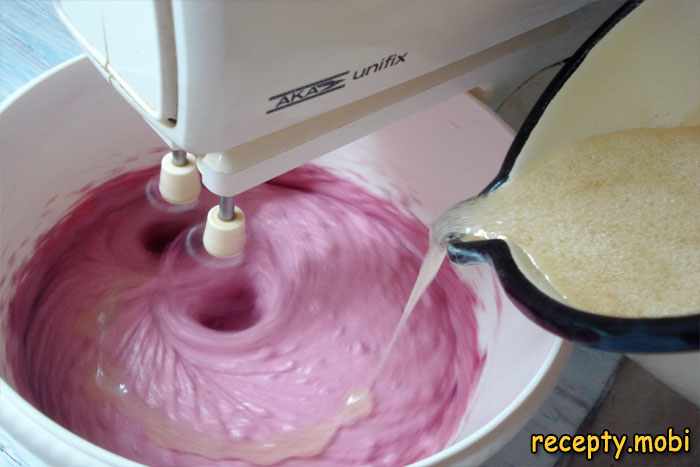
Without stopping the mixer on medium speed, pour the hot syrup in a thin stream down the side of the bowl into the fluffy mass – it is important to pour slowly, or the white will curdle from the heat. Continue beating for another 7 minutes on high speed until stiff peaks – the mass should become very thick and matte.
Transfer the marshmallow mass into a piping bag fitted with a 1 cm star nozzle. Pipe an airy rosette of marshmallow onto half of the cooled cookies, leaving room in the very centre for a teaspoon of jam – it adds an extra fruity accent in the heart of the sandwich.
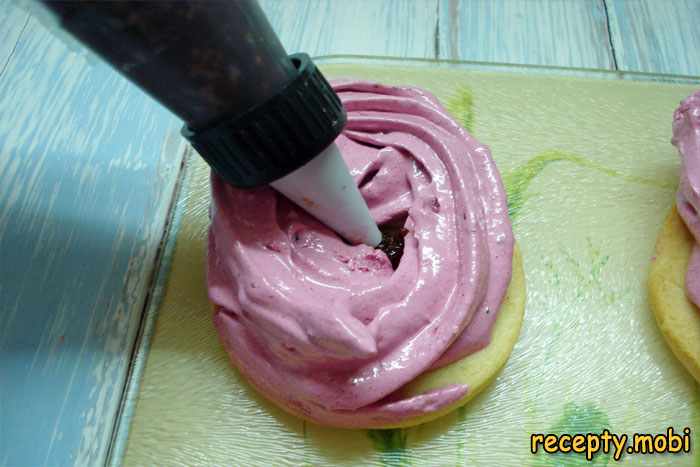
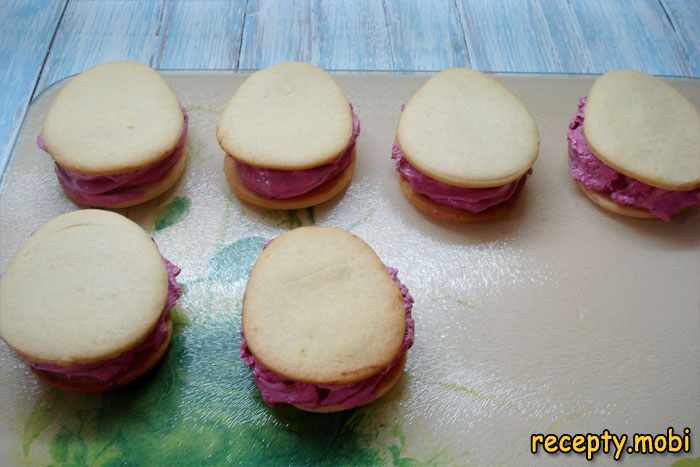
Place ½ teaspoon of thick jam in the centre of each rosette, then gently top with a second cookie, pressing lightly – you get a classic marshmallow sandwich. Let them stand for 30 minutes so the marshmallow sets and the sandwiches stabilise.
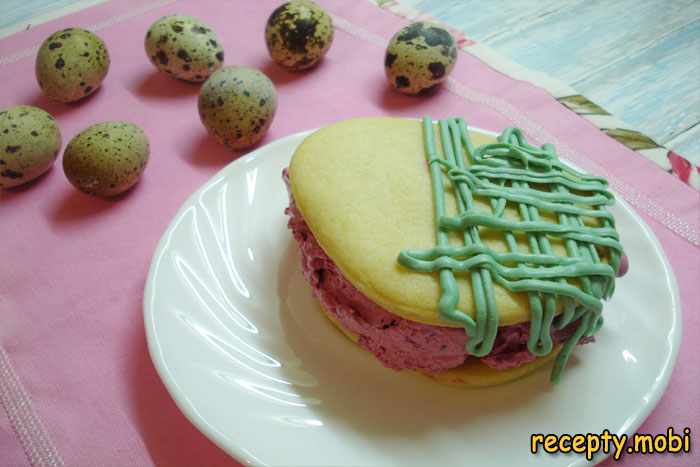
Melt 80 g of white chocolate over a water bath and tint it with food colouring of the desired shade (pink, lilac or yellow). Transfer it into a parchment cornet and pipe a delicate pattern over the surface of the marshmallow – dots, lines or floral motifs. This homemade decoration turns the marshmallow sandwiches into a work of art.


Tips
- 1
The fruit puree must set completely – at least 8 hours in the fridge, ideally overnight. If the mass is runny, the marshmallow won't whip up and won't hold its shape, even if you work the mixer for an hour.
- 2
Pour the hot syrup in a thin stream while continuing to whip on medium speed – this is the key to a fluffy, stable marshmallow. If you pour it all in at once, the white will curdle and the mass will split.
- 3
Invert syrup can be replaced with liquid honey (acacia, clear) or corn syrup in the same proportion – 50 g. These substitutes prevent the sugar from crystallising and keep the marshmallow soft.
- 4
Instead of currants you can use raspberries, strawberries, blueberries or any tart berry – it's important to keep the proportion of 150 g of finished puree. A homemade version with a mix of berries gives a complex, layered flavour.
FAQ
Why doesn't the currant marshmallow hold its shape? +
There are three main reasons: too little agar-agar (it should be exactly 7 g per 100 ml of water – less won't set), the syrup wasn't brought to the correct temperature of 110 °C (use a cooking thermometer rather than guessing), or the fruit puree wasn't reduced enough (it should be as firm as marmalade before being mixed with the white). One more reason is old agar-agar past its use-by date, which loses its gelling power. Always use fresh agar-agar.
What can replace agar-agar in the currant marshmallow recipe? +
You can use gelatine, but the proportions and method differ: for 150 g of puree take 10 g of gelatine, soak it in 50 ml of cold water for 15 minutes, then dissolve it over a water bath (do not boil). Syrup for a gelatine version is cooked only to 100 °C, not 110 °C. Gelatine gives a less stable, softer marshmallow that starts to "flow" in a warm room. Agar-agar is still preferable for marshmallow – it holds its shape even at room temperature and gives the classic fluffy texture.
How long do the currant marshmallow cookies keep at home? +
In an airtight container in the fridge, the marshmallow sandwiches keep for up to 5 days without losing flavour. The marshmallow may dry out slightly on top – to keep it moist, cover the container with cling film in contact with the sandwiches. The shortbread softens from the moisture of the marshmallow – this is normal and does not spoil the taste. At room temperature, store for up to 2 days, no longer. I don't recommend freezing them – the marshmallow loses its structure when thawed.
Can I manage without white chocolate for the decoration? +
Yes, there are plenty of alternatives. The simplest is to dust the finished sandwiches with powdered sugar through a sieve or to decorate them with fresh currants. You can use ordinary dark chocolate for a contrasting decoration – it is also melted and applied with a cornet. Ready-made coloured confectioner's icing is sold prepared and needs no preparation. For a natural finish, petals of edible flowers (violets, rose, cornflower), dried berries or desiccated coconut work well. A homemade version with a sprinkling of chopped pistachios looks very striking and adds a nutty flavour.
- Comment
or post as a guest
Be the first to comment.