avg —
Coconut Flake Cookies

Instructions
Prepare the ingredients from the list. For the coconut flakes (130 g) choose a good-quality product labelled 60–65% fat (not "low-fat" or "dietary"). Cheap "dietary" flakes at 30–40% fat will not do – they give hard, crumbly cookies. Sift the flour (40 g, about 4 tbsp) through a sieve to enrich it with air for a tender crumb. Take the eggs (2) out of the fridge 1–2 hours ahead so they are at room temperature, as warm whites whip better than cold ones.
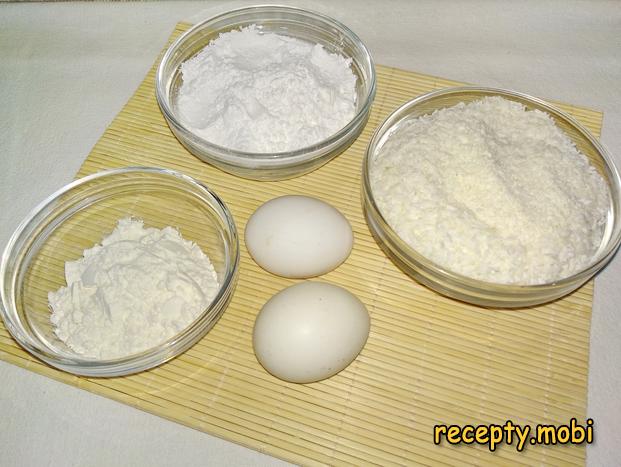
Carefully separate the whites from the yolks – it is critically important that not a single drop of yolk gets into the whites. Yolk is fat, which will instantly collapse the whipped foam. The yolks are not needed for this recipe – use them for an omelette or other baking.
Put the egg whites (2) into a blender cup or mixing bowl. The bowl must be dry and clean with no trace of grease – wipe it with lemon if needed. Add a pinch of salt; it stabilises the whites and helps them whip faster into a firm foam. With the "whisk" attachment, beat the whites on medium speed for 2–3 minutes to a fluffy, stable foam – soft peaks. The foam should hold its shape, with the tips curling over when you lift the whisk.
Without stopping, beating at maximum speed, gradually add the powdered sugar (130 g) in a thin stream or in small portions, about 1 tablespoon at a time. Do not tip it all in at once – that will deflate the whites and the volume will be lost. Adding it gradually over 2–3 minutes gives a glossy, firm foam. If you like, add 2–3 drops of vanilla extract for a gentle aroma.
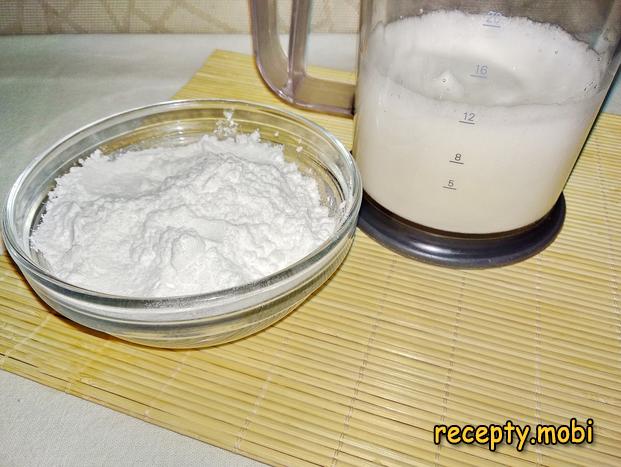
Once the whites are beaten with the sugar into a firm, fluffy mass with stable peaks, add the sifted flour (40 g). Do not beat the flour with the mixer – fold it in gently by hand with a silicone spatula or whisk, using bottom-to-top movements, until smooth. Folding the flour in at mixer speed would deflate the foam.
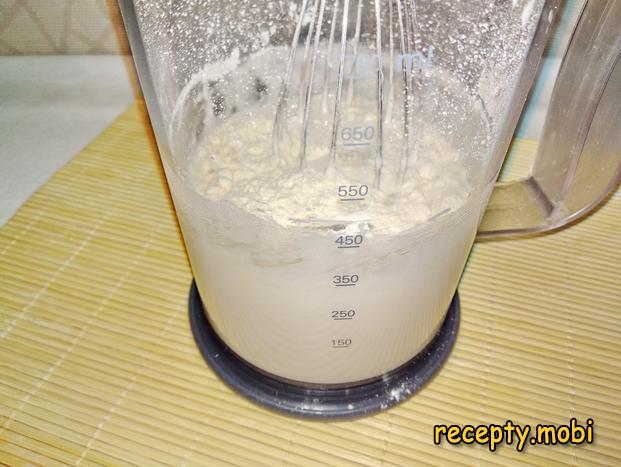
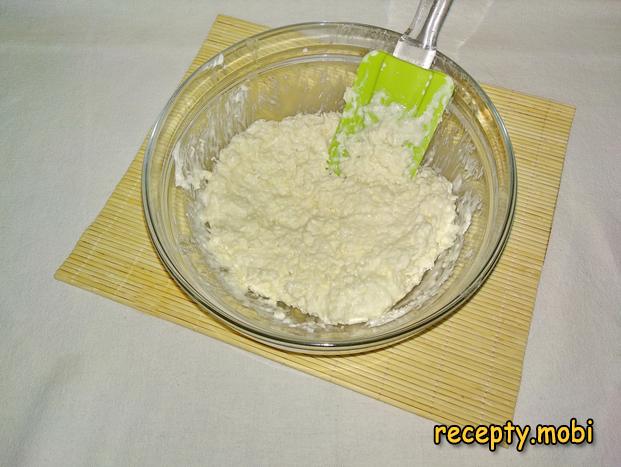
Transfer the white-and-flour mixture to a large bowl. Add the coconut flakes (130 g) in three to four stages, each time gently folding them in with a silicone spatula using bottom-to-top movements. The flakes should be spread evenly through the mass with no lumps. The finished dough is thick and loose, with visible coconut flakes.
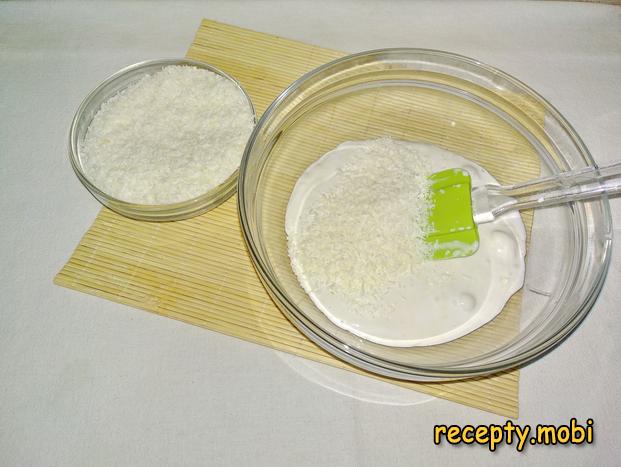
Let the finished dough rest at room temperature for 5–10 minutes – in that time the flakes will swell slightly from the moisture of the whites and the flour will settle. The dough becomes more cohesive and easier to shape into balls.
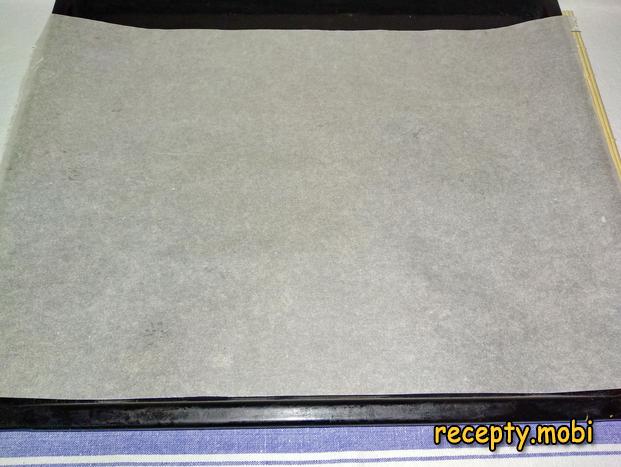
Line a baking sheet with parchment paper – no need to grease it, the cookies will not stick thanks to the coconut. Preheat the oven to 100°C (a low temperature for drying out rather than baking through), top-bottom mode.
Shape the coconut balls. Scoop a portion of dough with a teaspoon (about 15–18 g) and roll it in your hands into a ball about 3 cm across, the size of a walnut. To keep them uniform, first moisten the teaspoon with water – the dough will slide out without sticking and the balls will come out the same size. Place the balls on the parchment 2–3 cm apart, as they spread a little while baking; one sheet holds about 23 balls. The oven should already be preheated to 100°C at this point.
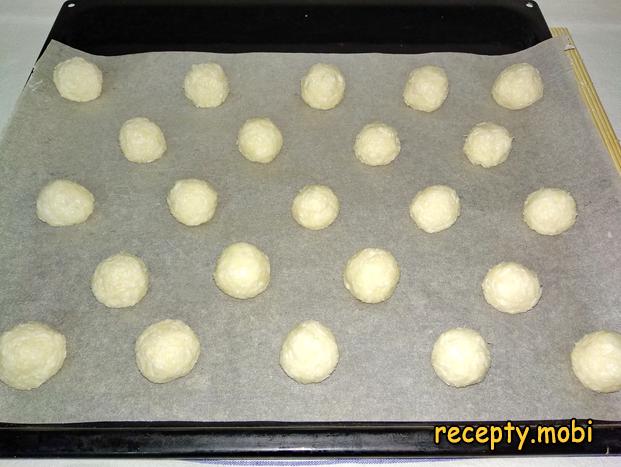
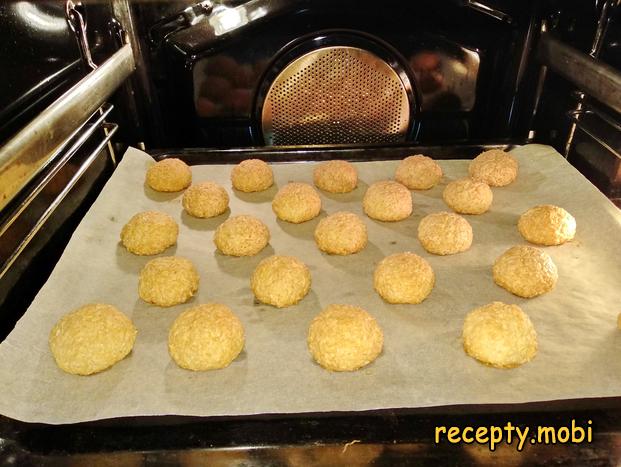
Bake the cookies at 100°C for 30–35 minutes, until the tops are lightly golden. The low temperature is for drying them out rather than baking them hard, so they come out with a crisp crust and a soft, tender centre. A high temperature (above 150°C) would give dry rusks without that macaroon texture. Then leave the cookies in the switched-off oven with the door ajar for 10 minutes to dry the crust further, and transfer them to a rack to cool completely (about 30 minutes).
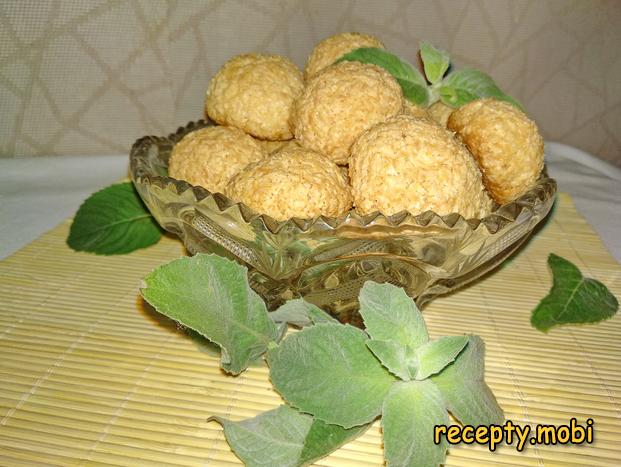
The coconut flake cookies are ready! Transfer them to a pretty dish or a gift box. If you like, you can dip the base of each cookie in melted white or dark chocolate. Serve with coffee, tea, cocoa or alongside ice cream. They keep in an airtight container at room temperature for up to 5 days.Store the homemade coconut flake cookies in an airtight container or a sealed bag.


Tips
- 1
Use coconut flakes with a fat content of 60–65% – low-fat dietary flakes give hard, crumbly cookies with no aroma.
- 2
Add the powdered sugar gradually while beating the whites – adding it all at once will deflate the foam.
- 3
Fold the flour in by hand with a silicone spatula, not with a mixer, or it will deflate the whipped foam. I make coconut Raffaello sweets on a similar principle.
- 4
Bake at a low 100°C – this is drying out, not baking through. A high temperature (180–200°C) will give dry rusks.
FAQ
Can the coconut flakes be replaced with another ingredient? +
Coconut flakes are the base of these cookies, and the recipe does not work without them. But you can make variations with other nuts and flakes: almond flour, 130 g + 30 g of coconut for aroma (French macaroons); ground hazelnuts, 130 g (hazelnut cookies); ground walnuts, 130 g + 30 g of coconut. You can also make a "two-tone" version – half plain coconut, half with cocoa (add 10 g of cocoa to the dough). For an original twist, add 50 g of soaked raisins or candied fruit to the finished dough. Each substitution gives its own character. Coconut is the classic choice for its tender texture and tropical aroma.
Can it be made without eggs, for vegans? +
Yes, there are vegan alternatives to egg whites: aquafaba (the liquid from canned chickpeas, 6 tbsp for 2 whites – it whips up in the same way); a flax "egg" (1 tbsp of ground flax + 3 tbsp of water, left for 5 minutes until gel-like); banana purée (½ a ripe banana = 1 egg); or apple purée (60 g = 1 egg). Aquafaba is the best vegan substitute, as it whips into a fluffy foam like real whites. The texture of the vegan cookies will differ slightly from the classic version, but the coconut flavour remains. Ideal for a strict fast and for vegans.
How long do the finished coconut cookies keep? +
Fresh cookies keep in an airtight container (a glass jar or plastic box) at room temperature for up to 5–7 days. On the second day the flavour is even richer, as the coconut and vanilla aromas come together. The main thing is to protect them from air moisture, or the crisp crust will soften. Do not store them in the fridge – condensation will spoil the texture. You can freeze them for 1 month in airtight bags; before serving, thaw at room temperature for 30 minutes and warm them slightly in the oven (3 minutes at 100°C) to bring back the crispness.
What to serve coconut cookies with? +
They are ideal with tea and with coffee with milk. For tea – black with lemon, green with jasmine, fruit tea with berries, or masala tea with milk. For coffee – latte, cappuccino, cocoa with milk (a version for children), hot chocolate, or espresso (for contrast with the sweetness). For a children's birthday – with a milkshake or milk. For an adult dessert table – with a white semi-sweet wine (Moscato, Prosecco), with sweet liqueurs (Baileys, coconut-scented Malibu) or with tropical cocktails (Piña Colada). The cookies also work well as a decoration for cakes with coconut cream or for an eye-catching ice-cream presentation.
- Comment
or post as a guest
Be the first to comment.