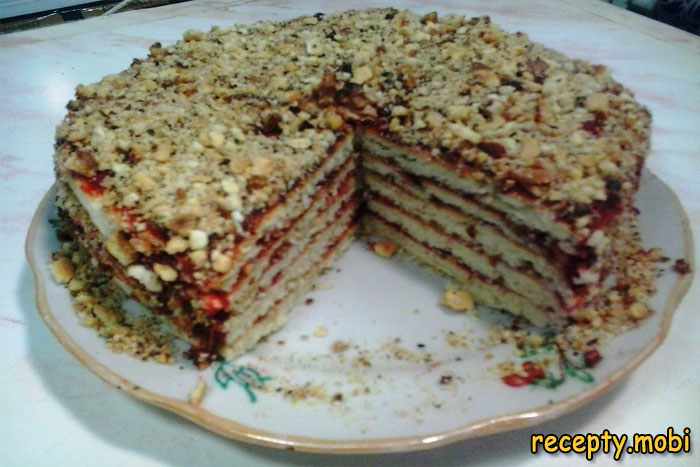
avg —
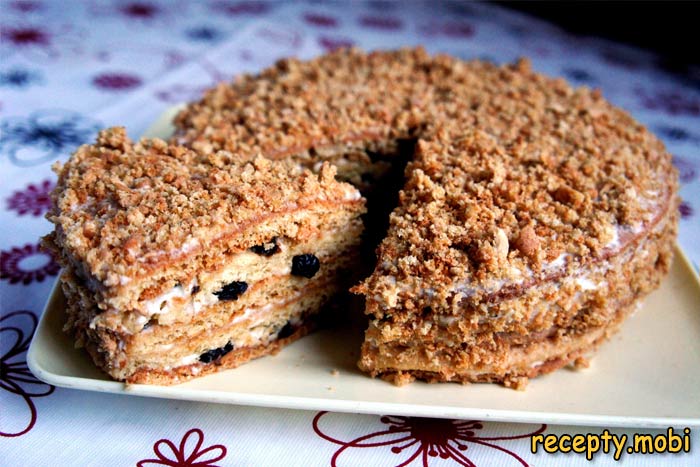
Honey Cake with Prunes

Instructions
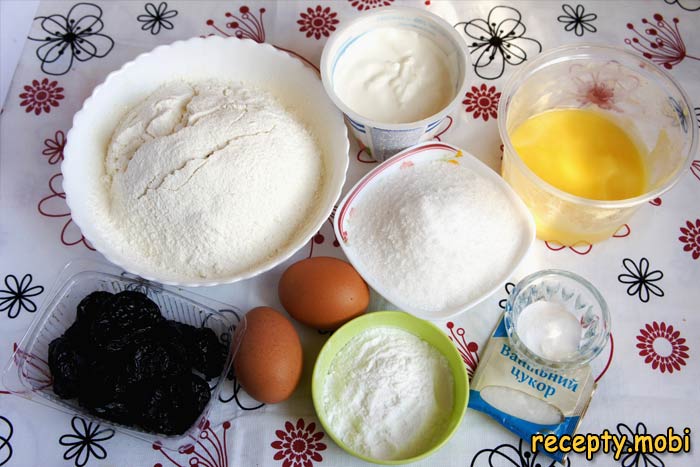
I lay out all the ingredients on the work surface: honey (200 g, preferably runny flower or linden honey), sugar, room-temperature eggs, flour, baking soda, 25% sour cream. All products should be fresh and of good quality – the quality of the honey directly affects the taste of the finished cake.
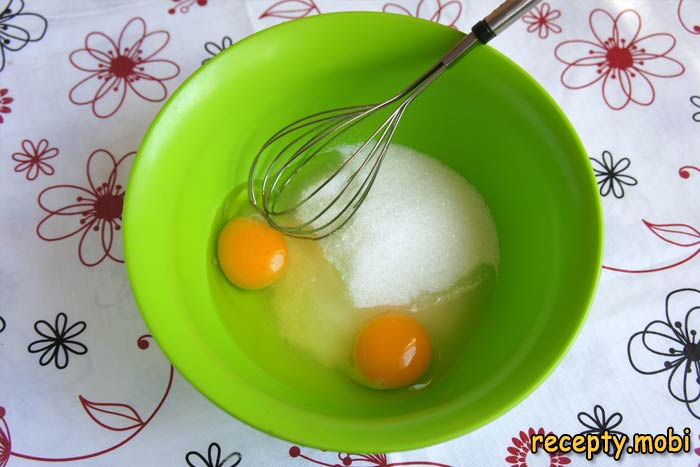
I break 2 room-temperature eggs into a large heatproof bowl. Warm eggs whip better and give a more airy batter. Cold eggs will "curdle" when hot honey is added and spoil the structure.
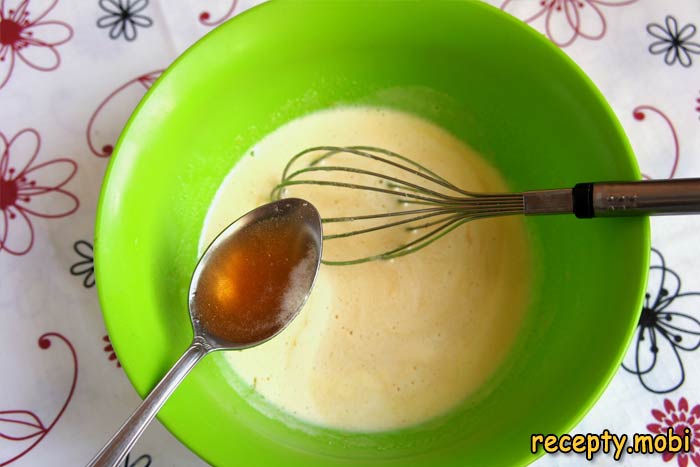
I add sugar (125 g) to the eggs and beat thoroughly with a mixer for 2–3 minutes until a light foam forms – the egg mass should turn pale and increase in volume. I add 1 tablespoon of honey. Then I move the bowl onto a "water bath" (a large pot of boiling water) – we are going to heat the mass.
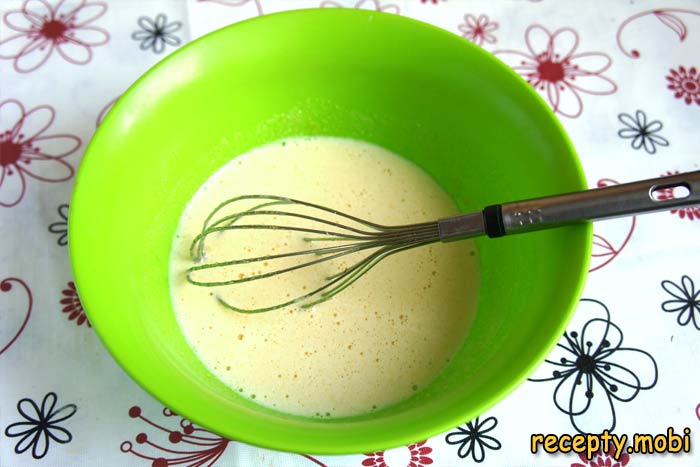
On the water bath I add all the remaining honey (200 g) and stir continuously with a whisk for 5–7 minutes. The mass should heat to 60–65 °C, the honey should dissolve completely, and the mixture should increase in volume by 1.5–2 times. This is the "secret" of the classic honey cake – the honey is activated by the heat.
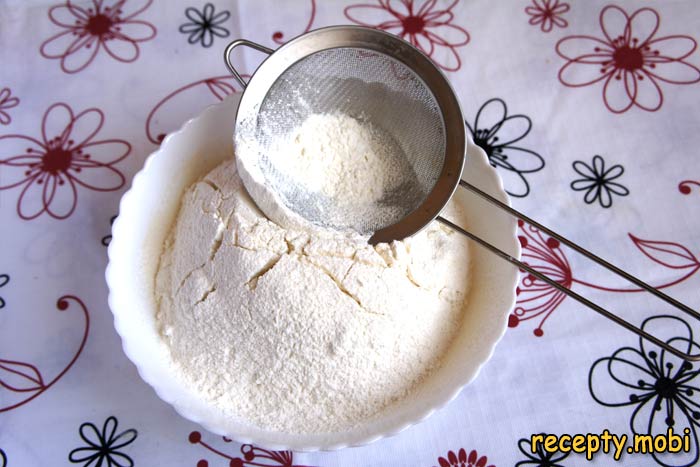
I sift the flour (350 g) through a sieve 1–2 times into a separate bowl – sifting saturates it with air, making the layers lighter. Sifted flour distributes better in the dough without lumps, especially with hot honey.
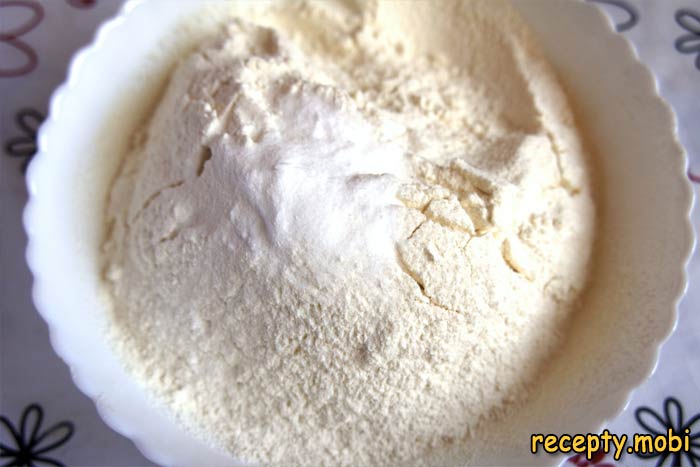
I add baking soda (9 g, or 1.5 tsp) to the sifted flour and mix thoroughly – the soda should be distributed evenly. In the hot honey mass the soda will be "slaked" – it will give the layers fluffiness and the characteristic "honey" colour.
I take the bowl off the water bath and add the flour with soda into the hot honey-egg mass in portions, kneading the dough with a whisk. The soda will start to "react" actively – the mass will increase in volume and become lighter. This is normal – keep stirring.
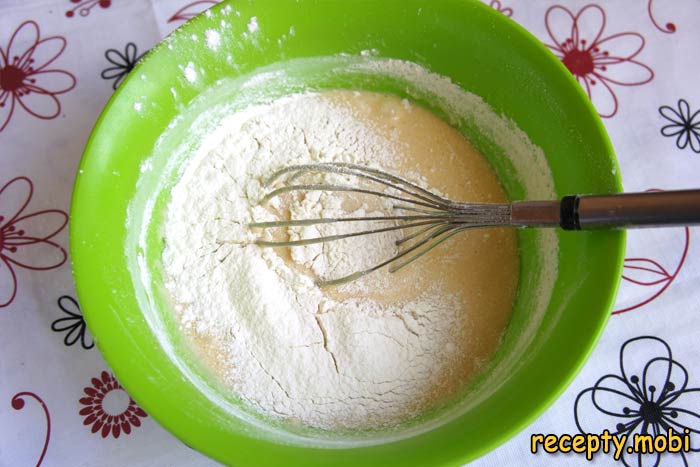
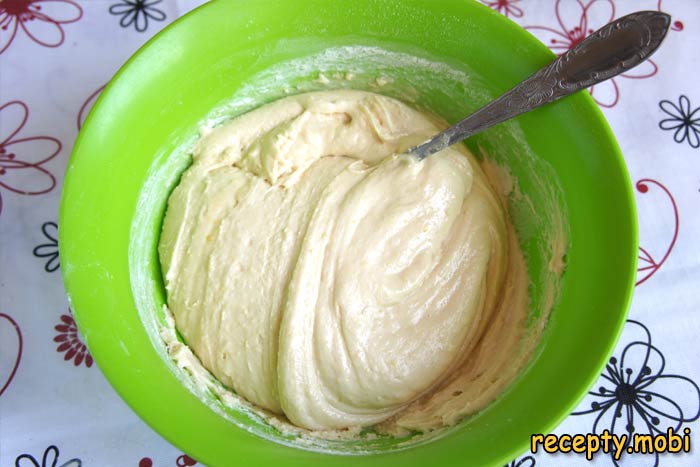
I knead a smooth, thick, stretchy dough – it should be soft, elastic and not stick too much to the hands. I wrap it in cling film and put it in the refrigerator for 1–2 hours to chill. Cold dough is easier to roll out into thin sheets without tearing.
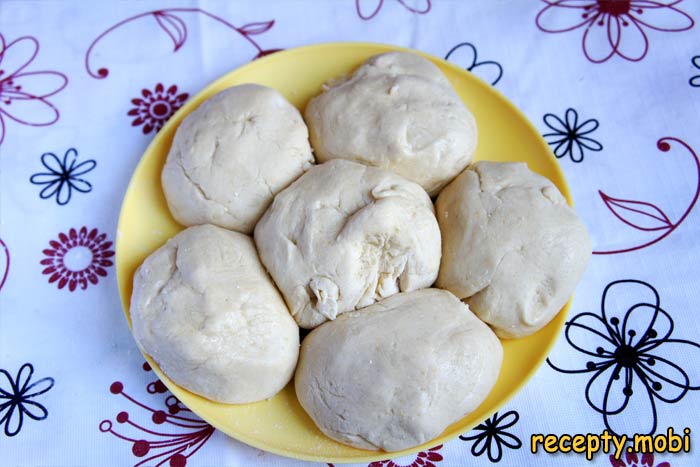
After 1–2 hours I take out the chilled dough and divide it into 6 equal parts with a sharp knife. I shape each part into a ball and place it on a floured surface ready for rolling out.
I roll out each part of the dough into a thin sheet 22–24 cm in diameter and 2–3 mm thick. I place it on parchment, trimming it slightly to the shape of a circle or plate. I prick the whole surface with a fork – so the layers do not "puff up" while baking. I bake in an oven preheated to 180 °C for 5–7 minutes until golden.
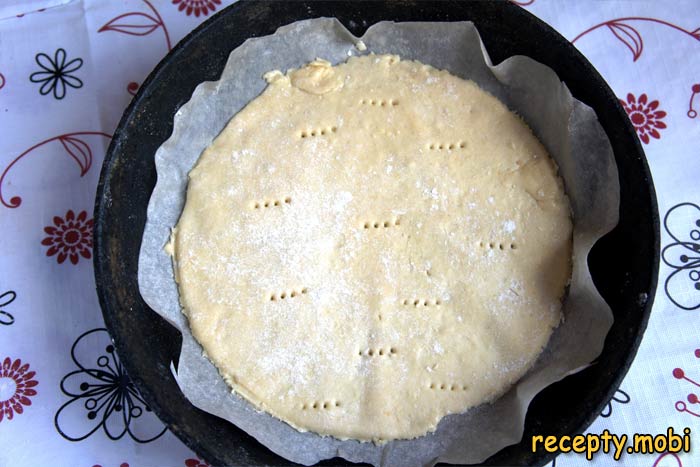
I bake all 6 layers one after another (or 2–3 at a time if the oven allows). The finished layers should be golden, dry on top and springy when pressed. Do not over-bake them – over-dried layers become "stony".
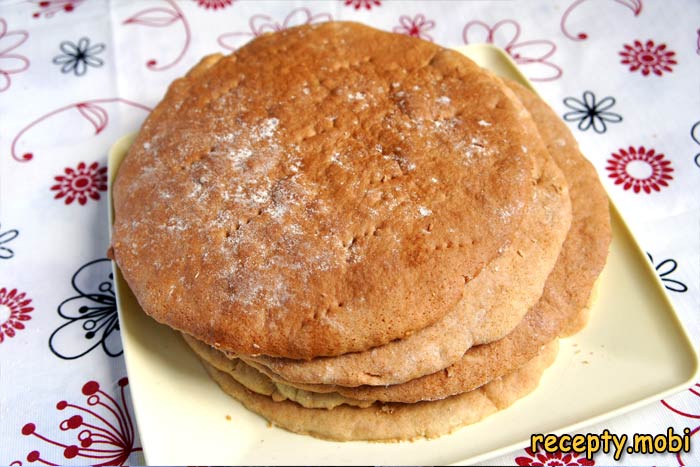
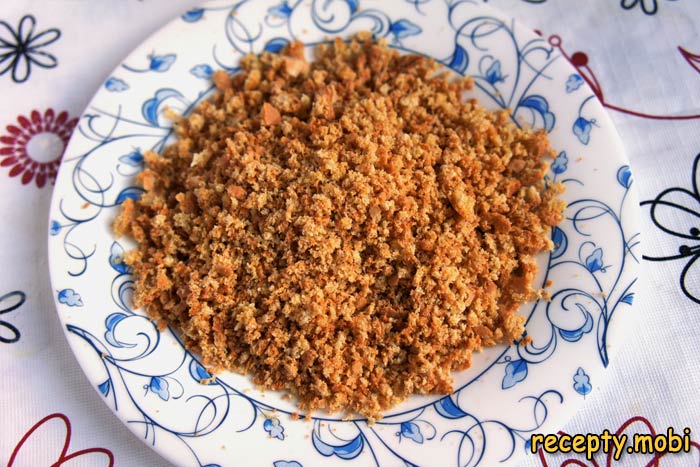
I set aside one of the finished layers for crumbs – I crush it into coarse crumbs by hand or in a blender. These crumbs will be used to decorate the sides and top of the cake. I cool the remaining 5 layers completely on a wire rack.
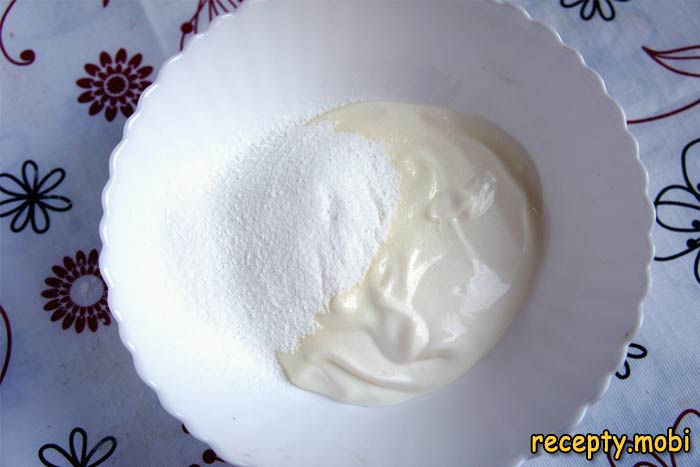
I make the sour cream: in a large bowl I beat chilled 25% sour cream (500 g) with powdered sugar (80 g) and vanillin using a mixer for 3–5 minutes until a fluffy, creamy consistency, like whipped cream. 25% sour cream gives a stable cream that will not "run" in the cake.
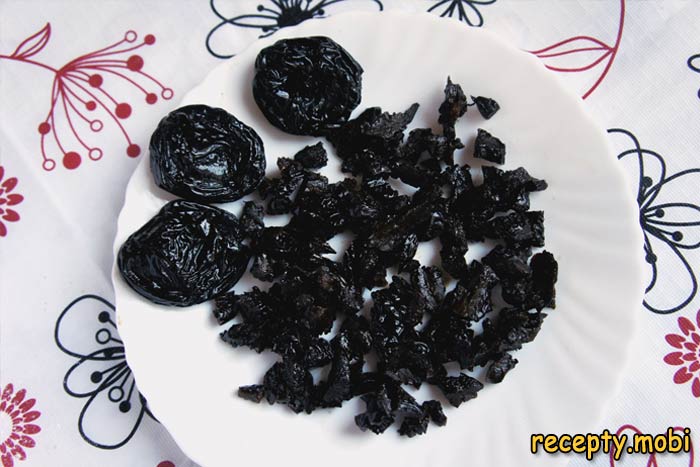
I wash the prunes (200 g) thoroughly, pat them dry with a paper towel and cut them into small 0.5 cm cubes. Use soft pitted prunes – hard ones should first be soaked in hot water for 10 minutes. Good-quality prunes give a characteristic "smoky" sweetness.
On a serving dish or in a springform tin I place the first layer and generously cover it with sour cream (about 4–5 tablespoons per layer). I spread the cream evenly with a spatula over the whole surface right to the edges.
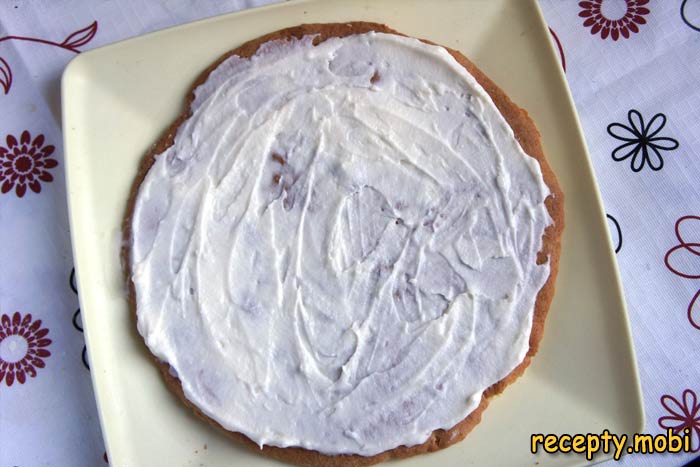
On the cream I spread part of the chopped prunes evenly – they will add a sweet-and-sour note of contrast to the delicate sour cream. I cover with the next layer, repeat the layer of cream and prunes. I do this with all the remaining 5 layers.
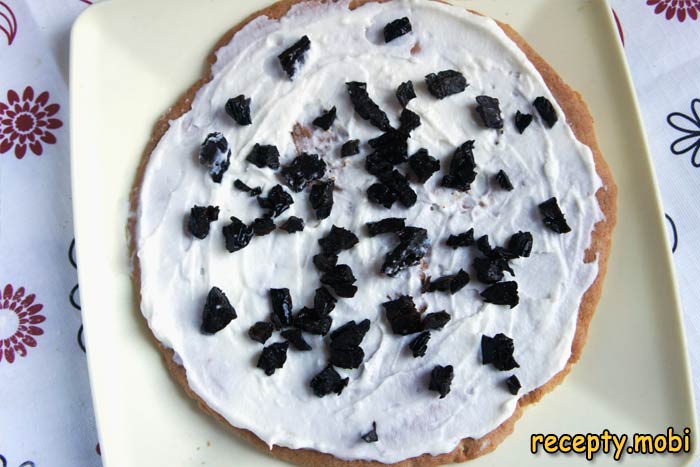
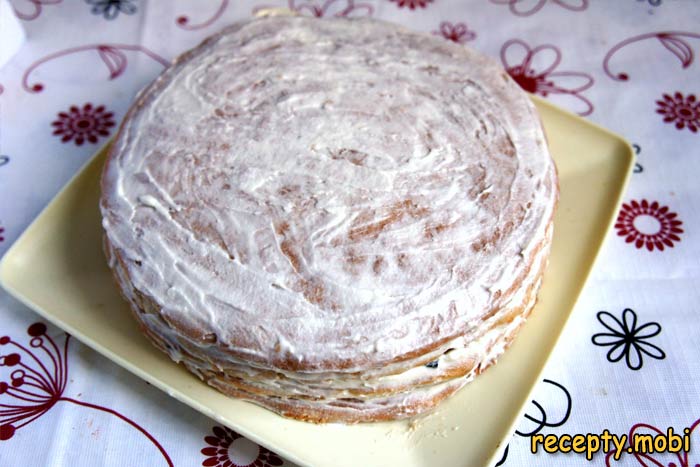
I assemble all 5 layers with the filling of cream and prunes. I carefully coat the top and sides of the cake with the remaining sour cream, smoothing it with a spatula – the cake should be "closed" with cream on all sides so it soaks through.
I generously sprinkle the top and sides of the cake with honey crumbs (from that one reserved layer). The crumbs not only decorate the cake but also absorb excess cream. I put the cake in the refrigerator for 5–6 hours or overnight to soak through completely.
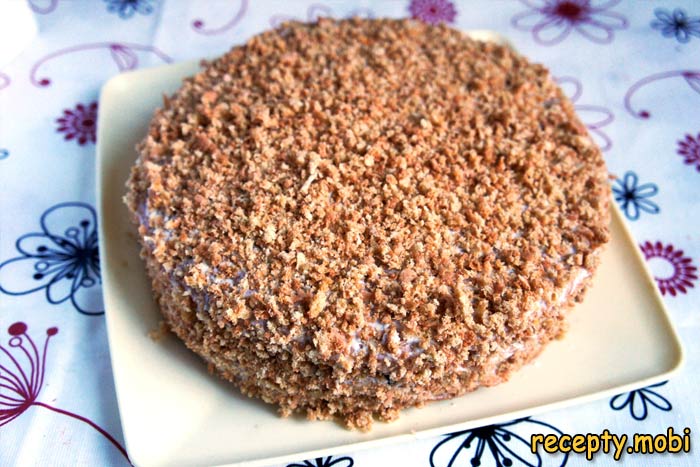
I take the cake out of the refrigerator 30 minutes before serving – this way the cream "comes alive" a little. I cut it with a sharp knife, wiping it with warm water between slices – this gives neat, beautiful pieces. The honey cake with prunes and sour cream is ready!


Tips
- 1
Always chill the dough for 1–2 hours in the refrigerator – this makes it easier to roll out thin sheets without tearing and stickiness.
- 2
Prick the layers all over with a fork before baking – they will not "puff up" into humps in the oven and will stay flat.
- 3
Use soft pitted prunes – soak hard ones in hot water for 10 minutes before chopping. I bake the classic honey cake on a similar principle.
- 4
Let the cake soak for at least 5–6 hours in the refrigerator – without soaking the layers will be "a bit dry" and "tough".
FAQ
Can I make the honey cake without prunes? +
Yes, replace the prunes with walnuts (200 g, chopped) – a classic honey cake with nuts, or dried apricots (200 g, in small cubes) – for a summer version with a light tang. Raisins (150 g), dried cranberries or pieces of chocolate also work. For a "fruity" version – fresh or frozen berries (raspberries, strawberries – 200 g). Without any additions you get a classic "grandma's" honey cake – also tasty, but less "interesting". Prunes give a unique "smoky" note that goes great with the honey layers.
How long does the finished honey cake keep? +
The finished cake keeps in the refrigerator for up to 5 days in a tightly closed container or under cling film. On the second day the cake is even tastier – the layers soak through completely with the cream and the prunes release their juice. Do not leave it at room temperature for more than 2 hours – sour cream spoils quickly in the warmth. You can freeze it in portions for 1 month – before eating, thaw it completely in the refrigerator for 4–6 hours. Ideally, eat it within 2–3 days for the best taste. On the third day the flavours finally come together into a harmonious whole.
Why did the layers turn out tough? +
The main reasons: the cake has not "soaked through" (it needs at least 5–6 hours in the refrigerator with plenty of cream), the layers were over-dried during baking (5–7 minutes maximum until golden), too little cream between the layers (there should be 4–5 tablespoons per layer). Solutions: let the cake soak twice as long (12–24 hours), use more cream, add a little warm water or sweet syrup between the layers for extra soaking. The finished honey cake should be soft – the layers should "melt" in the mouth together with the cream.
What to serve the honey cake with? +
It is perfect with hot black or green tea, coffee with milk, cocoa with marshmallows, fragrant mulled wine (for winter). Fresh berries (strawberries, raspberries, currants, blueberries) go well with the cake for a contrast of sweetness and tang. For an adult dessert table – with dessert wine (Riesling Eiswein, Muscat, port), brandy, Baileys liqueur. For a children's birthday – with fresh milk, berry fruit drink, homemade lemonade. It is ideal as the "queen" of the dessert table for family celebrations, anniversaries and birthdays.
- Comment
or post as a guest
Be the first to comment.