avg —
Sweet Soft Buns (Yeast-Free)

Instructions
Melt the butter (100 g) in a water bath or in the microwave (in short 15-second bursts) until fully melted. Let it cool to warm (no hotter than 40°C) – hot butter will "cook" the egg and spoil the dough structure. Butter (rather than margarine or vegetable oil) gives a rich, "creamy" flavour and a tender texture.
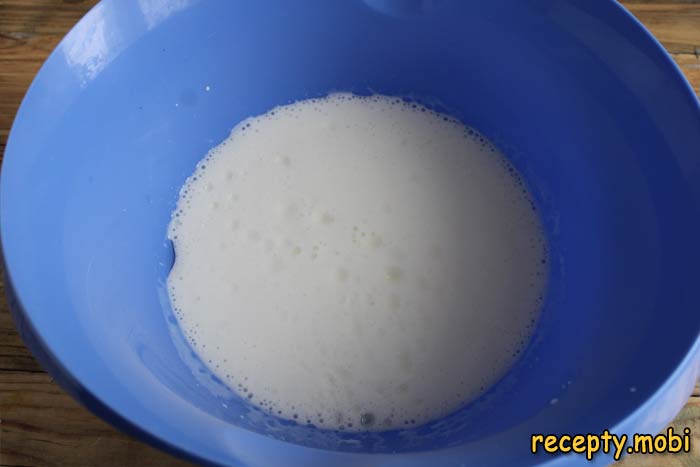
In a large bowl, whisk 1 room-temperature egg with the sugar (120 g), salt, and vanillin until light and fluffy, about 2–3 minutes. A warm egg whips better and adds more air to the dough. Add the room-temperature kefir (300 ml) and the cooled melted butter, and mix thoroughly until smooth.
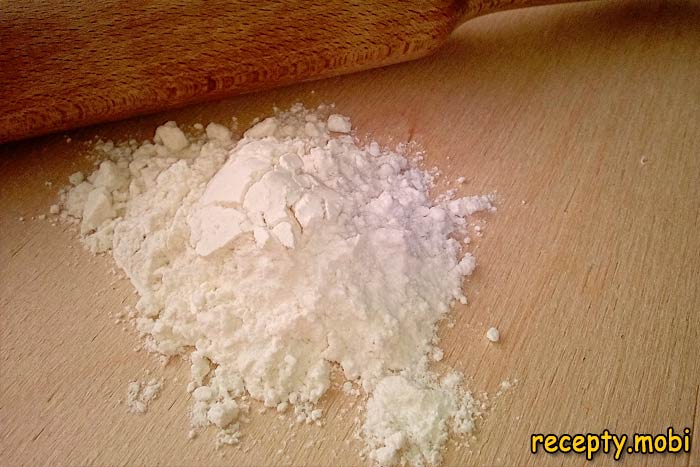
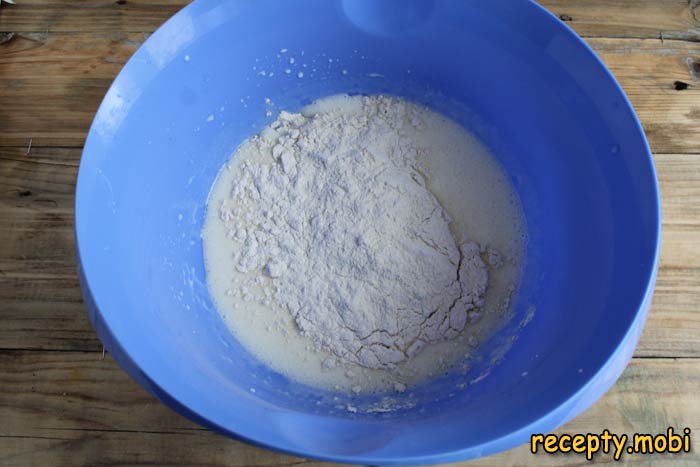
Sift the flour (600 g) with the baking powder (1/2 tsp) through a sieve once or twice to aerate it and remove any lumps. Gradually add the flour to the liquid mixture, stirring first with a spoon and then switching to kneading by hand. Adding the flour gradually lets you control the consistency of the dough.
Turn the dough out onto a clean, floured surface and gather it into a smooth, soft ball. KEY RULE: do not knead it long or vigorously – the dough will become dense and rubbery as the gluten develops. Yeast-free enriched dough does not like to be "worked" – handle it as little as possible.
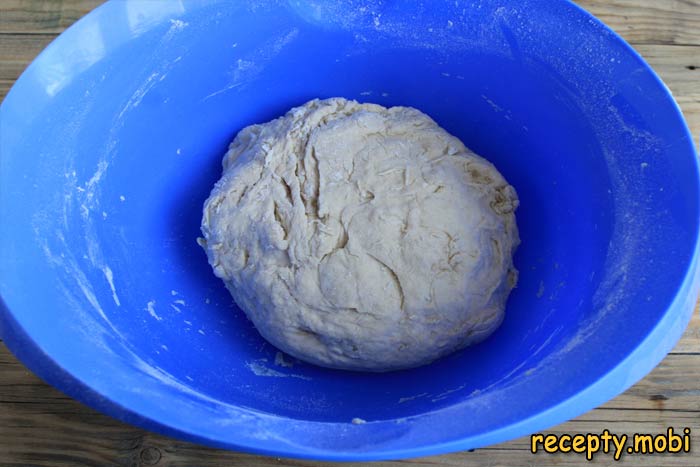
Cover the dough with a clean kitchen towel and let it "rest" for 15–20 minutes – the gluten will relax and the dough will become more pliable. Roll it out into a layer about 0.5 cm thick on a floured surface. Using a glass or a cutter, cut out round discs 7–8 cm in diameter. Place them on parchment and leave for another 15 minutes to rise from the baking powder.
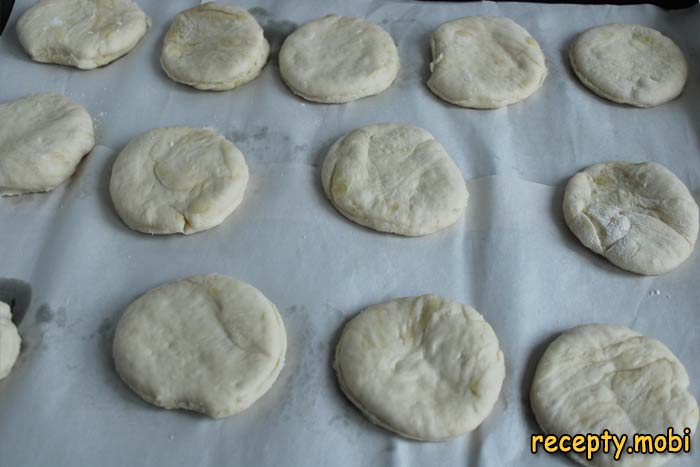
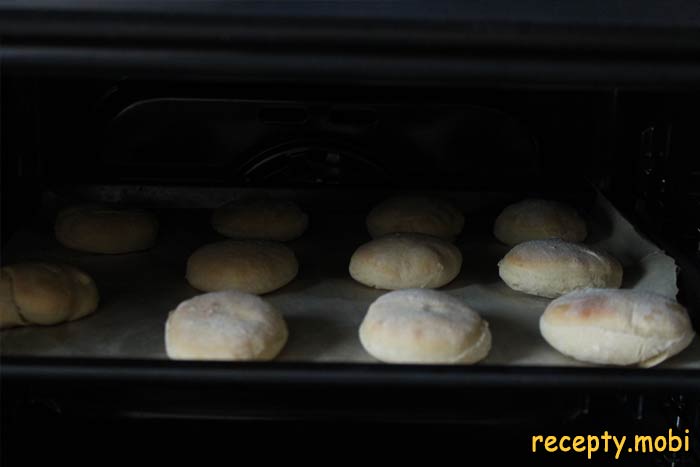
Bake the buns in a preheated oven at 180°C for about 25–30 minutes, until the tops are golden brown. Check for doneness with a skewer – it should come out dry from the centre of a bun. Do not open the oven door for the first 15 minutes – the temperature change will make the buns sink.
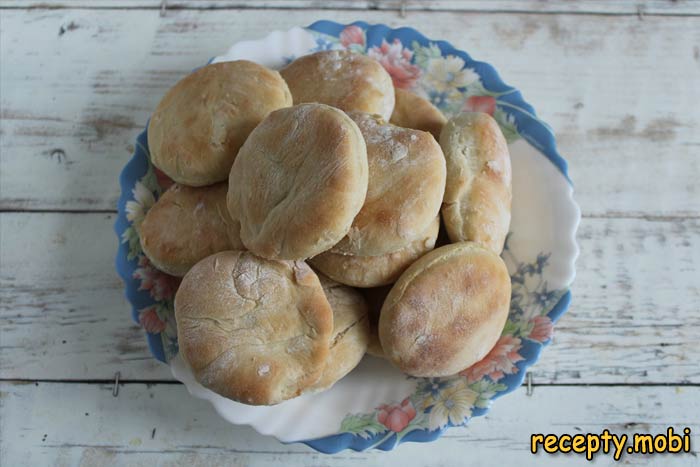
The sweet yeast-free kefir buns are ready! Let them cool a little on a wire rack (5–10 minutes) so the crust does not go soggy underneath. You can cut the "cap" off a finished bun and fill it with custard, condensed milk, fruit preserve, or jam – just like real pastries. Serve with tea, coffee, or cocoa.


Tips
- 1
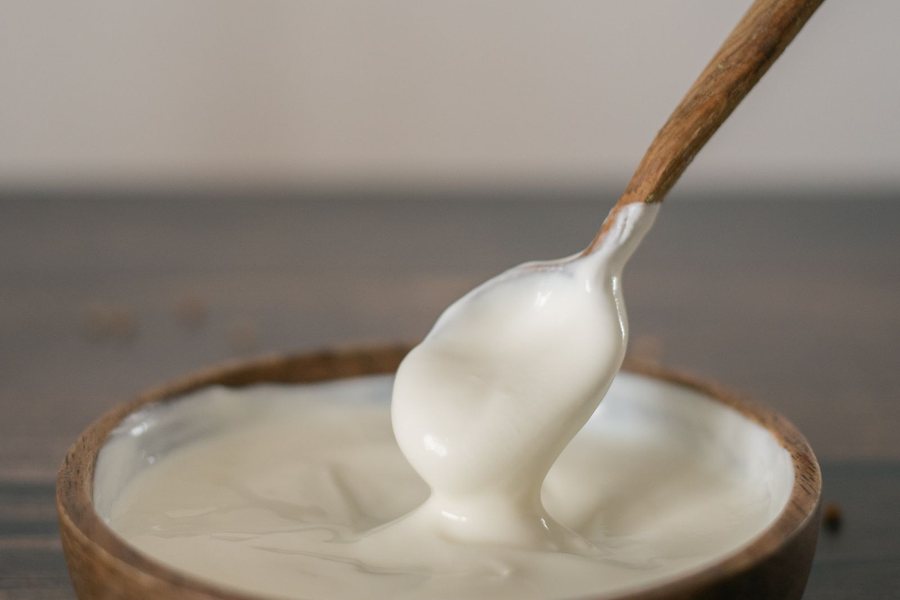
The kefir must be at room temperature – the dough will turn out twice as fluffy as with cold kefir. Take the kefir out of the fridge 1 hour before you start.
- 2
Do not "pack" the dough with flour or knead it for long – it should be soft and slightly sticky. A stiff dough gives "rubbery" buns.
- 3
Add vanilla (1 sachet), cinnamon (1/2 tsp), or lemon/orange zest to vary the flavour. I make yeast buns on a similar principle.
- 4
Yeast-free buns stay soft for a long time – up to 3 days if stored properly in a plastic bag at room temperature.
FAQ
Can I make these without baking powder? +
Yes, baking powder is easily replaced with baking soda (1/2 tsp) slaked with 1 tbsp of lemon juice or vinegar. Kefir is slightly acidic on its own, so the soda will be partly slaked in the dough – the result is similar to baking powder. You can use self-raising flour (which already contains a raising agent) – in that case leave the baking powder out of the recipe. Without any raising agent the buns will not rise and will turn out flat, dense "flatbreads". A "lifter" in some form is essential.
What can I use instead of kefir in this recipe? +
Any cultured dairy product with similar acidity works: soured milk (the classic swap with the same effect), plain unsweetened yogurt (a thick one gives a denser texture), milk that has gone sour (grandma’s option), or buttermilk (if you can find it). You can also make "homemade kefir" from ordinary milk: 250 ml of milk + 1 tbsp of lemon juice, left for 10 minutes – this gives a "pseudo-kefir" with similar acidity. Sour cream (10–15%) works too, but the buns will be richer and more filling.
How long do the finished buns keep? +
Sweet kefir buns keep in a plastic bag at room temperature for up to 3 days without losing their softness. In the fridge – up to 5 days (but they go stale faster). For longer storage, freeze them for 1 month in airtight bags – before eating, thaw at room temperature for 1–2 hours or in the oven for 5 minutes at 100°C to restore freshness. Do not reheat them in the microwave – the buns will turn "rubbery". Ideally, eat them fresh on the day of baking or the next day.
What can I fill the finished buns with? +
The most popular fillings: custard (the classic for pastries), condensed milk (the simplest), fruit preserve or jam (a fruity note), or berry jam. For "savoury" options – cream cheese with herbs, processed cheese, or vegetable spread. Cut off the "cap" on top, scoop out part of the crumb with a fork, fill with the filling, and put the lid back on – you get homemade "pastries". You can also simply serve them with tea, with butter and honey or jam on the side. A versatile enriched bake for any taste.
- Comment
or post as a guest
Be the first to comment.