avg —
Cinnamon Rolls from Yeast Dough

Instructions
First I make the starter – the classic way to begin when working with fresh yeast. I combine 25 g of fresh compressed yeast with 2 tablespoons of sugar in a deep bowl and rub the ingredients together thoroughly with a spoon to a paste-like consistency. The sugar "activates" the yeast and feeds it. I pour in 200 ml of warm water at up to 40 °C (hot water will kill the yeast, cold will slow it down) and stir with a whisk until dissolved. I put the starter in a warm, draught-free place to rise for 15 minutes – a fluffy, foamy cap should appear.
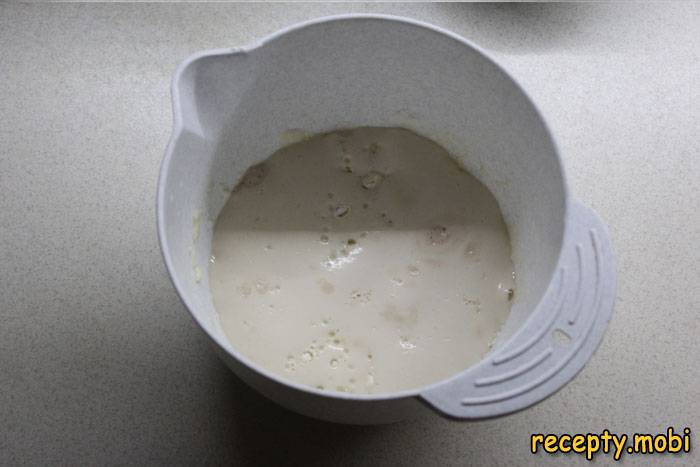
Into the active starter with its foamy cap I pour 2 tablespoons of odourless vegetable oil, add 1 teaspoon of salt and gradually 450–500 g of sifted flour (the amount depends on the moisture of the flour). I knead a soft, elastic dough by hand for 5–7 minutes – it should not stick to your hands but should stay soft. I put the finished dough into a deep bowl, cover it with a damp tea towel and leave it in a warm place to rise for about 40–60 minutes, until it has doubled in size – this is the key stage for fluffy rolls.
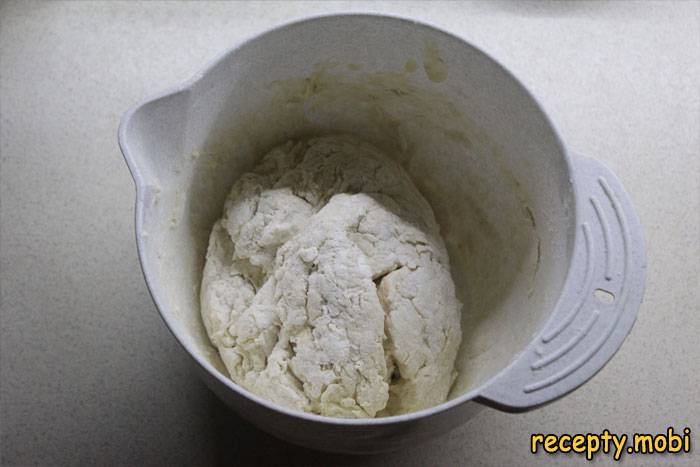
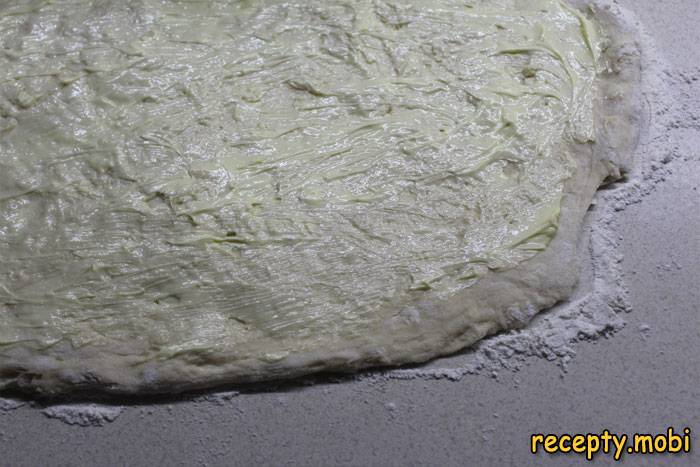
I knock back the risen dough by hand for 1 minute and roll it out with a rolling pin on a floured surface into a rectangular sheet 0.5–0.7 cm thick and roughly 30×40 cm. I generously grease the whole sheet with softened butter (60 g) using a pastry brush or the back of a spoon – an even layer gives the finished rolls their characteristic flaky layers.
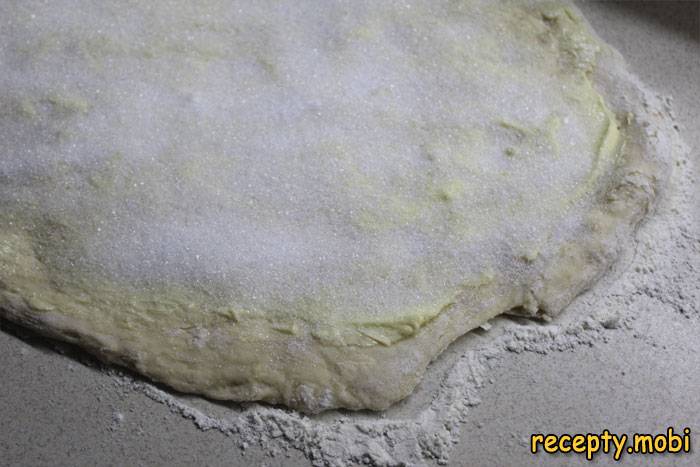
I sprinkle the buttered dough generously with sugar to taste – the amount depends on your preference (3–5 tablespoons for moderately sweet rolls, 6–7 for very sweet ones). Spread the sugar evenly over the whole surface of the dough – don't let it gather in one spot.
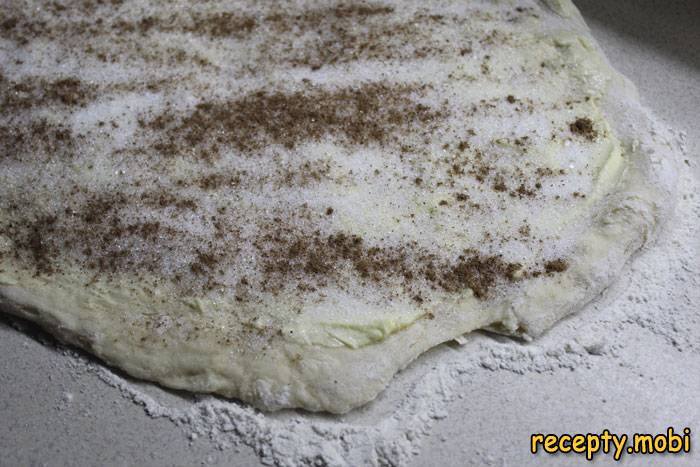
I add ground cinnamon to taste (2–3 teaspoons for a mild aroma, 4–5 teaspoons for a rich one). For a more interesting flavour you can also add ½ teaspoon of vanillin or ¼ teaspoon of ground nutmeg – these spices complement cinnamon beautifully in sweet baking. Distribute all the spices evenly over the layer of sugar.
I carefully roll the prepared sheet of dough into a tight, even roll along the long side – trying to keep the seam thin and on the underside. Pinch the edge of the roll lightly with your fingers so it stays sealed.
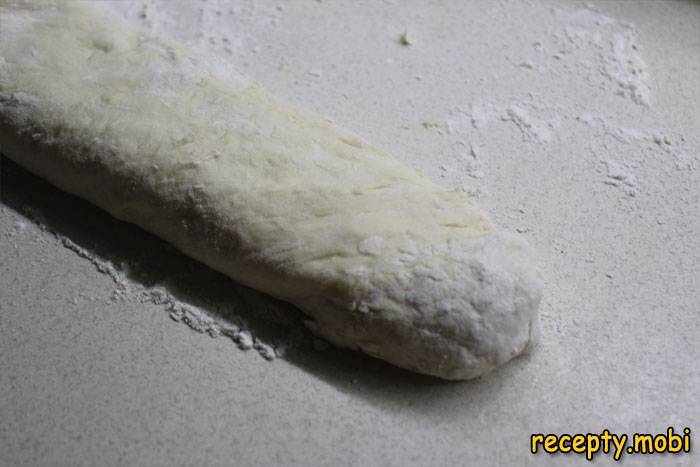
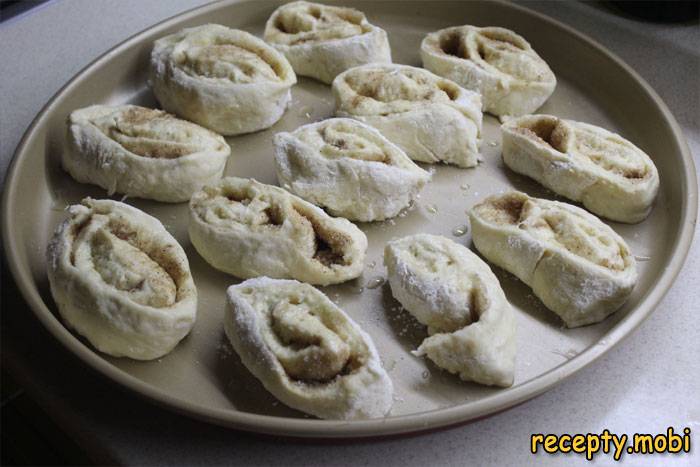
With a sharp knife or a piece of thread (the classic trick – kitchen thread gives a neater cut) I cut the roll into 11 small buns, each 3–4 cm wide. I place the pieces cut-side up on a baking sheet lined with parchment paper, leaving 2–3 cm between them (they will rise). I let them prove for another 15 minutes in the warmth for a second rise. I bake the rolls in an oven preheated to 220 °C for about 20–30 minutes, until a lovely golden-brown colour. Check for doneness by colour and aroma.
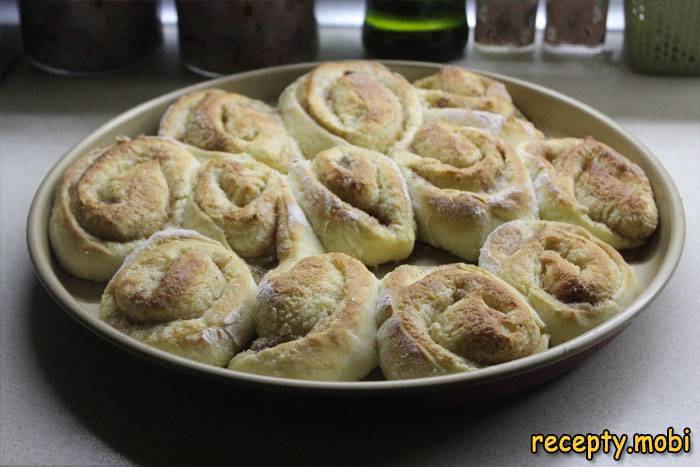
The fragrant, tasty and soft homemade cinnamon rolls are ready! I move them onto a wire rack to cool for 10 minutes – this keeps the bottoms from going soggy with steam. I serve them while still warm with hot tea, coffee or cocoa. For a festive version, drizzle the tops with an icing made from 100 g of icing sugar + 2 tablespoons of milk + ½ teaspoon of vanillin – you'll get a classic homemade "Cinnabon".


Tips
- 1
The water for the starter must be warm (up to 40 °C, not hot!) – hot water will instantly kill the live yeast and the dough won't rise. The ideal temperature feels warm to the touch but not scalding.
- 2
The dough should rise to exactly double its size while proving – this is the main sign that it is ready to shape. Under-proved dough makes dense rolls, while over-proved dough collapses during baking.
- 3
Grease the rolled-out dough generously with softened butter – this makes the rolls as moist, flaky and aromatic as possible. Don't be stingy with the butter – it is the basis of the right flavour.
- 4
Don't over-bake the rolls – they should be a lovely golden brown, not dark or burnt. Keep an eye on them for the last 5 minutes – the rolls turn dry very quickly.
FAQ
Can I use dry yeast instead of fresh? +
Yes, replace the 25 g of fresh compressed yeast with 7–8 g of dry yeast (this is the standard ratio – about 1:3). The method stays much the same: dissolve the dry yeast in warm water with sugar and wait 10–15 minutes for a foamy cap. Some kinds of instant dry yeast can be added straight into the flour without activating first – check the instructions on the packet. The result is practically identical to fresh yeast when the method is followed correctly. For larger batches of dough, increase the amount of yeast accordingly. The dry-yeast version is more convenient to store and use.
Why isn't the dough rising while proving? +
Three main reasons: the water was too hot (above 40 °C – the yeast dies instantly), the yeast was out of date or too old (check the use-by date and the look of it – live compressed yeast should be pale and crumbly, while dark and sticky yeast is already dead), or the room was cold (the proving temperature should be 25–30 °C). An excess of salt or sugar can also have an effect – they slow the yeast down. The fix: if the starter hasn't produced a foam within 15 minutes, throw it out and start again with fresh yeast. A handy trick: leave the dough to rise in a switched-off oven with the light on – the temperature there is perfectly warm.
How long do the finished cinnamon rolls keep? +
In a closed container or plastic bag at room temperature – up to 2–3 days without losing their softness. Before serving you can warm them slightly in the microwave for 10–15 seconds, or in the oven at 150 °C for 2–3 minutes – they will become fresh and aromatic again, just like freshly baked. In the fridge the storage time increases to 5 days, but the rolls become a little firmer. You can freeze them for up to 2 months in tightly sealed bags – defrost at room temperature for 1 hour or warm in the microwave on the "defrost" setting. Freshly baked rolls are always the tastiest.
Can I add a filling to the cinnamon rolls? +
Yes, this is a great way to vary the classic recipe. Excellent options include: raisins (2 handfuls of raisins soaked in boiling water), finely chopped nuts (walnuts, almonds, hazelnuts – 100 g), candied fruit (100 g, finely chopped), a berry filling (100 g of fresh or frozen pitted cherries), or apple jam (4 tablespoons in a thin layer). Add the filling on top of the cinnamon-sugar layer before rolling up. For a classic "Cinnabon", add a thin layer of Philadelphia cream cheese (100 g) – you'll get the American restaurant-style version. This homemade recipe adapts to any taste preferences in the family.
- Comment
or post as a guest
Be the first to comment.